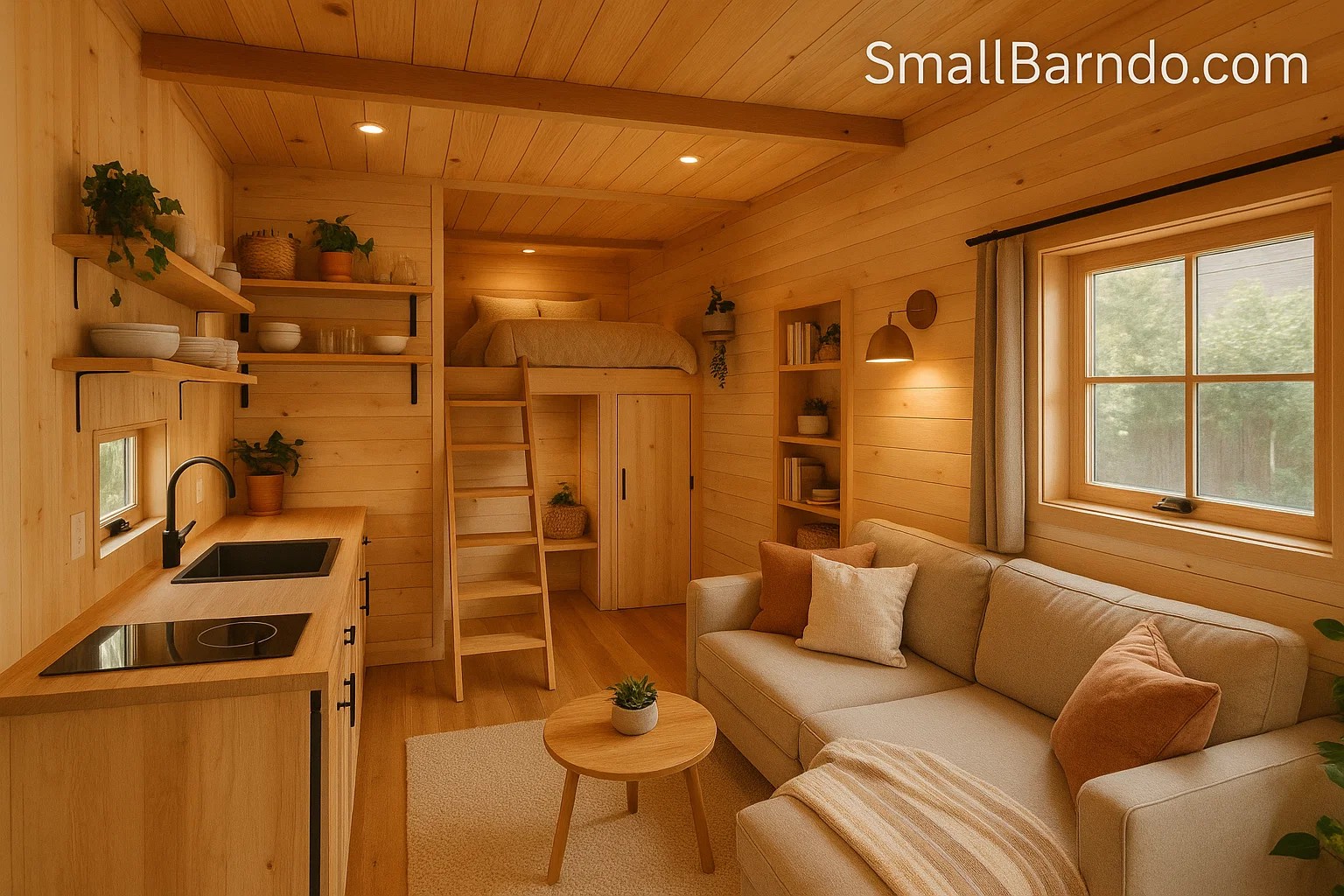
35 Dream Tiny Home Interior Designs and Layouts for Every Aesthetic
You stand at a crossroads of modern living. On one path is the conventional house, the constant cycle of maintenance, the debt that binds your future, and the sheer volume of possessions that demand your attention. The average US home size is over 2,100 square feet, but the average tiny house measures a mere 225 square feet. This profound difference is more than just a number; it’s a declaration of a new kind of freedom you can achieve.
Imagine waking up in a space where every item has a purpose, where your financial strain is dramatically reduced (an impressive 68% of tiny homeowners are mortgage-free, compared to less than 30% of working-age traditional homeowners), and where your entire world is curated to spark genuine joy. This is not simply about downsizing; it’s about designing a life of intention. We’re diving into 35 innovative tiny home layouts and design aesthetics that prove you never have to sacrifice style or function to live big in a little space. Whether you dream of a cozy, timber-framed cabin or a sleek, modern oasis, your next great adventure in deliberate living starts right here.
Table of Contents
Essential Tiny Home Interior Layouts: The Foundation of Function
The primary challenge of tiny living lies in the floor plan. The difference between a cramped box and a spacious sanctuary is rooted in clever spatial engineering. Before you can choose your aesthetic, you must establish the structural foundation. This section compares the most popular and efficient tiny house layouts.
The Three Primary Tiny Home Layout Structures
Choosing the right structure is the first and most vital step in designing your tiny home interior, directly impacting the vertical and horizontal space available to you.
- Lofted Layouts (The Vertical Solution):
- Key Feature: The sleeping area or dedicated storage is elevated, freeing up the main floor for living, dining, and cooking. This approach leverages the vertical space inherent in tiny homes on wheels (THOWs).
- Best For: Individuals, couples, or anyone who doesn’t have mobility issues and doesn’t mind utilizing stairs or ladders.
- Limitation: Requires a specific minimum ceiling height, and the loft itself can feel claustrophobic without strategic natural light sources.
- Design Tip: Incorporate a skylight or clerestory windows above the loft to draw light deep into the space and enhance the feeling of height, a crucial trick for tiny home interior design.
- Single-Level/Ground Floor Bedrooms (The Accessible Option):
- Key Feature: The bedroom is on the main level, prioritizing ease of access and a more traditional sleeping experience.
- Best For: Retirees, individuals with mobility concerns, or small families prioritizing safety and a non-climbing lifestyle.
- Comparison: This layout sacrifices some vertical storage space but creates a remarkably comfortable and accessible living arrangement. You gain a more conventional flow but must be hyper-efficient with built-in storage on the main floor.
- Dual-Loft or Two-Bedroom Layouts (The Family/Work Solution):
- Key Feature: Two separate sleeping areas, often lofts situated on opposite ends of the home, separated by the main living area.
- Best For: Small families or those who require a dedicated home office, guest space, or separate retreat.
- Condition: These often require the maximum allowable length for a tiny house on wheels (up to 40 feet) to ensure the central living area remains functional and doesn’t feel like a corridor between two rooms.
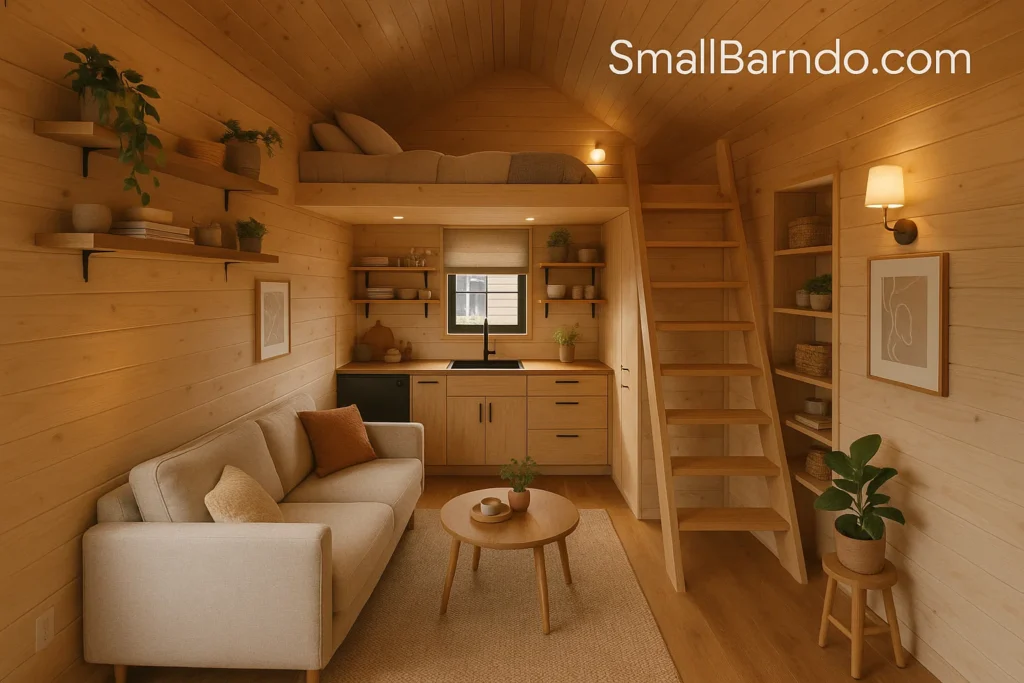
Space Maximization Techniques (The Designer’s Cheat Sheet)
Your greatest ally in a small space is design intelligence. You must shift your focus from simply placing furniture to integrating multi-purpose functionality:
- Vertical Storage is King: Utilize every possible inch from floor to ceiling. According to professional tiny home builders, thinking vertically is the #1 way to maximize the perceived and functional space. This means tall cabinetry, shelving above doors and windows, and integrated wall units.
- Multi-functional Furniture:Your furniture should serve dual or triple purposes. Think about:
- Murphy beds that fold into a wall-desk unit.
- Nesting tables that expand for entertaining and compact for daily life.
- Sofa beds with hidden under-seat storage compartments.
- Sliding and Pocket Doors: These are non-negotiable for maximizing flow. Traditional swing doors can consume up to 10 square feet of floor space when open, a massive loss in a 200 sq. ft. tiny home interior. Sliding doors allow you to define zones without sacrificing precious floor space.
Aesthetics and Style: 35 Dream Tiny Home Interior Designs
Once the layout is chosen, you can infuse your home with an aesthetic that reflects your personality. We explore the most compelling design aesthetics for tiny homes, offering a vision for every taste.
Natural & Cozy Tiny Home Interior Designs
These styles emphasize warmth, texture, and a strong connection to the outside world, creating a restorative and peaceful retreat.
| Aesthetic | Key Design Elements & Palettes | Layout Pairing & Trend Insight |
| Scandinavian Minimalism | Light, neutral color palettes (whites, muted grays, pale woods), simple, clean lines, and hygge-inspired layered lighting. | Pairs perfectly with Open Concept Layouts to amplify light and space. The trend for 2025 focuses on organic textiles (wool, linen) and maximizing natural wood grain. |
| Rustic Modern Farmhouse | Shiplap walls, reclaimed wood beams, matte black fixtures, exposed metal, and a cozy built-in electric fireplace or wood stove. | Ideal for Lofted Layouts where the exposed ceiling beams naturally integrate with the aesthetic. Exception: To avoid heaviness, you must balance dark wood elements with bright white shiplap walls. |
| Biophilic Design | Extensive use of indoor plants, natural materials (bamboo, cork, stone), large windows, and a strong indoor-outdoor flow (e.g., lift-and-slide doors). | Best utilized in Single-Level Plans with large glass openings to blur the line between interior and exterior. Source: Biophilic design, which incorporates elements of nature, is documented to significantly improve mental well-being and cognitive function in small, enclosed spaces. |
| Bohemian Chic | Mixed textures (rattan, macrame, woven rugs), warm, earthy color palettes (deep greens, terracotta, burnt orange), and unique, curated pieces of travel art. | Excellent for injecting personality into a standard 130-500 sq. ft. tiny home (the size segment favored by over 72% of tiny home owners) by layering color and textiles. |
Modern & Sleek Tiny Home Interiors
If your preference leans toward the crisp, clean, and technologically integrated, these designs offer maximum efficiency and a contemporary edge.
- Industrial Chic: Exposed metal piping, concrete-effect or dark wood accents, visible ductwork, and functional, utility-style lighting. This design is rugged, bold, and efficient, often using a Galley Kitchen Layout with stainless steel appliances.
- Ultra-Modern/Minimalist: Defined by handle-less cabinetry, hidden tech integration (built-in charging stations, smart home systems), and a strictly neutral palette (black, white, charcoal). The focus is on Personalized Minimalism, where the few items present are highly intentional, and surfaces are kept meticulously clear.
- Japandi (Japanese/Scandinavian Fusion): The harmonious balance of sleek Scandinavian function and Japanese rustic serenity. Clean lines, tranquil color palettes, and dark wood accents (like walnut or teak) combined with light, airy textiles. This style demands an absolute commitment to decluttering, as its beauty is in its simplicity.
Smart Kitchen and Bathroom Tiny Home Layouts
The wet areas, kitchen, and bathroom are the most complex and expensive in any tiny home interior. Functionality and conservation must take absolute priority in these high-utility spaces.
Kitchen Layouts: The Heart of the Tiny Home
Your cooking space needs to perform like a full kitchen in a fraction of the footprint.
- Galley Kitchen: Characterized by two parallel countertops facing each other, with the walking area between them.
- Pros: Extremely efficient use of space; maximizes counter surface and storage with floor-to-ceiling cabinets on both walls.
- Cons: Can feel narrow; requires compact, often European-style or all-in-one appliances (e.g., a two-burner induction cooktop instead of a four-burner gas range).
- L-Shaped Kitchen: Counter space runs along two perpendicular walls.
- Pros: Allows for a natural dining area (bar top or fold-out table) at the open end and provides better flow into the living area. Can more easily integrate a full-sized sink or refrigerator.
- Comparison: Generally preferred in slightly wider tiny homes (up to 10.5 feet wide) or park models to prevent the corner from becoming a dead, unusable space.
Bathroom Design and Efficiency: Engineering for Conservation
- The Wet Bath: The most space-efficient tiny home interior design solution, where the shower, sink, and toilet share the same fully waterproof floor space. This design is often necessary in homes under 150 sq. ft.
- Wall-Mounted Fixtures: You should choose fixtures that float above the floor wall-mounted sinks, vanities, and toilets. This technique not only creates the visual illusion of more space but also simplifies cleaning, as there are fewer hard-to-reach corners.
- Water Conservation and Utility Systems: Many tiny homeowners prioritize sustainable living, which often means installing systems that dramatically reduce water consumption.
- Composting Toilets: These are popular choices as they eliminate the need for a black water tank and significantly reduce water usage, aligning with the primary motivation of sustainability cited by many tiny house owners.
Addressing the Limitations and Challenges of Tiny Home Interiors
While the lifestyle offers tremendous appeal, it is vital to approach your design with a clear-eyed understanding of the real-world constraints.
Navigating Zoning and Size Restrictions
- The Regulatory Limiter: If you are building a tiny house on wheels (THOW) to bypass permanent foundation rules, remember that maximum highway-legal dimensions directly limit your layout: typically 8.5 feet wide, 13.5 feet high, and often no more than 40 feet long. This severely constrains the size of a ground-floor bedroom or the height of a loft.
- The Cost Paradox: Despite the low overall cost (average tiny home is $30,000 to $60,000 compared to a median traditional home price of over $400,000), tiny homes often cost 38% more per square foot ($300–$400 per square foot) than a full-sized home. This is due to the complexity of custom, built-in features, and the high concentration of expensive utility areas (kitchen and bathroom) in a small footprint. You are not just buying less space; you are buying highly engineered space.
Managing Privacy and Clutter
- Lack of Zone Definition: Open layouts, while essential for feeling spacious, can make it difficult to define “zones” for work, rest, and cooking.
- Solution: Use sliding screen dividers (Japandi style), heavy ceiling-mounted curtains, or different area rugs to visually segment the space without installing permanent walls. This allows you to have separation when needed and an open feeling the rest of the time.
- The Clutter Constraint: Clutter is the primary enemy of a serene tiny home interior. If your traditional home holds over 300,000 items (the reported average for a US household), you must commit to radical decluttering before, during, and after the move.
- Recommendation: Invest in closed storage, drawers under stairs, and built-in shelving. The rule for tiny living is: if it doesn’t have a dedicated, closed home, it shouldn’t be in your house.
Designing Your Dream Life with an Intentional Tiny Home Interior
Moving into a tiny home is a powerful, deliberate decision driven by a desire for financial freedom, a reduced ecological footprint, and a life free from unnecessary consumption. You have seen that even within the constraint of 200–400 square feet, there are 35 imaginative ways to design a space that fully reflects your desired lifestyle and aesthetic.
From the cozy, Biophilic cabin that seamlessly integrates nature, enhancing your well-being, to the sleek, Ultra-Modern minimalist studio that is a testament to cutting-edge efficiency, your design choices are centered on one powerful principle: intentional maximization. Your tiny home is not a restriction; it’s a meticulously designed blank canvas for intentional living. By choosing a smart layout and a cohesive design, you’re not just building a home; you are designing a better, more focused life.
Take the Next Step
Which of these 35 dream tiny home interior aesthetics speaks loudest to you? Start gathering design inspiration now! Share your favorite aesthetic, Scandinavian, Japandi, or Industrial in the comments below, and let us know what features you simply cannot live without!
FAQ: Frequently Asked Questions About Tiny Home Interior Design
Q1: What is the most important element of a functional tiny home interior?
The most critical element is a multi-functional design. Every piece of furniture or section of the layout must serve at least two purposes (e.g., a staircase that incorporates storage drawers, or a kitchen island that is also a fold-out dining table). This is the key to unlocking the full potential of your limited square footage.
Q2: How do I make my tiny home interior look bigger than it is?
Focus on three key techniques to create the illusion of space:
- Natural Light: Maximize windows, skylights, and glass doors to flood the space.
- Reflective Surfaces: Use large mirrors, glossy tiles, and light-colored walls/cabinetry to bounce light around the room.
- Visual Flow: Utilize open-concept layouts and ensure a continuous flow of sight lines from one end of the home to the other.
Q3: What is the average size of a tiny home?
The generally accepted average size for a tiny home on a foundation is under 400 square feet. However, the most common size for a tiny house on wheels (THOW), which offers maximum mobility, is approximately 225 square feet.
Q4: Are tiny homes truly cheaper than traditional houses?
While the overall purchase price is significantly lower, the cost per square foot for a tiny home is typically 38% higher than for a full-sized traditional home. This difference exists because a tiny house concentrates all the expensive parts of a home (plumbing, electrical, custom cabinetry, high-efficiency appliances) into a much smaller area, increasing the unit cost of every square foot.