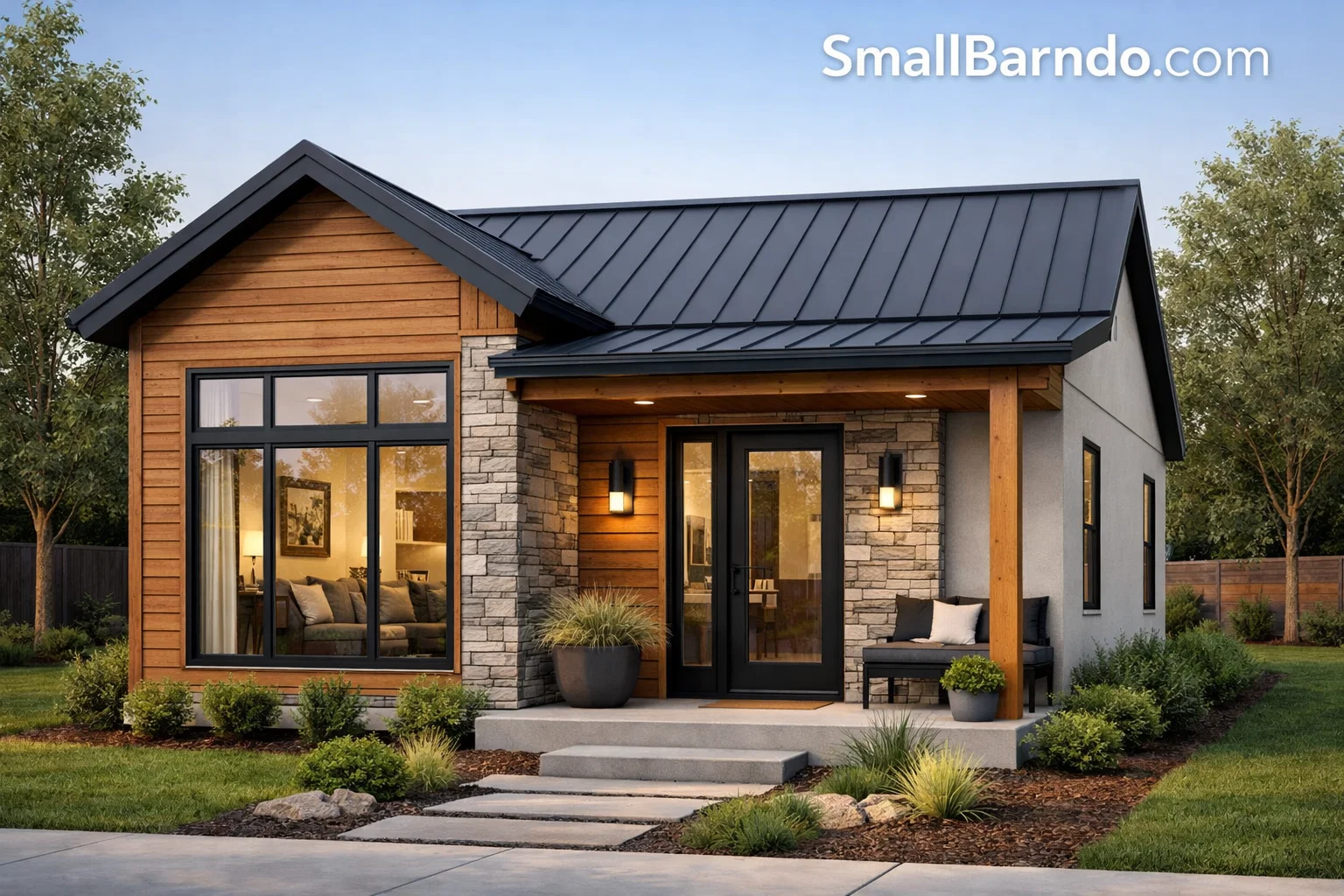
35 Genius Small House Design Ideas for 2026: Modern & Compact
You’ve likely felt it lately that creeping sense that the “more is more” philosophy of the past decade has finally hit a wall. Maybe you’re standing in a kitchen that takes twenty minutes to scrub, or you’re looking at a utility bill that feels like a second mortgage. You aren’t alone. As we move into 2026, the global conversation has pivoted. We are no longer obsessed with how many rooms we can brag about; we are obsessed with how much life we can squeeze out of the rooms we actually use.
Choosing a small house design isn’t about sacrifice anymore. It’s about a sophisticated, intentional rebellion against clutter. It’s the feeling of waking up in a home where every square inch serves a purpose, where the architecture breathes with you, and where your footprint on the planet is as light as your mental load. You’re looking for freedom, financial, physical, and emotional. These thirty-five ideas aren’t just trends; they are your roadmap to a more liberated way of living.
Table of Contents
1. The Evolution of Compact Living: Why 2026 is the Year of the Small House
If you look at the housing market today, in early 2026, you’ll see a fascinating shift. For years, “small” was a compromise. Today, it’s a luxury. Why? Because you’ve realized that time is your most precious commodity. A smaller home means less time cleaning, less money spent on maintenance, and more resources to pour into experiences, travel, or high-end finishes that would be unaffordable in a massive estate.
The “Quality over Quantity” Mandate
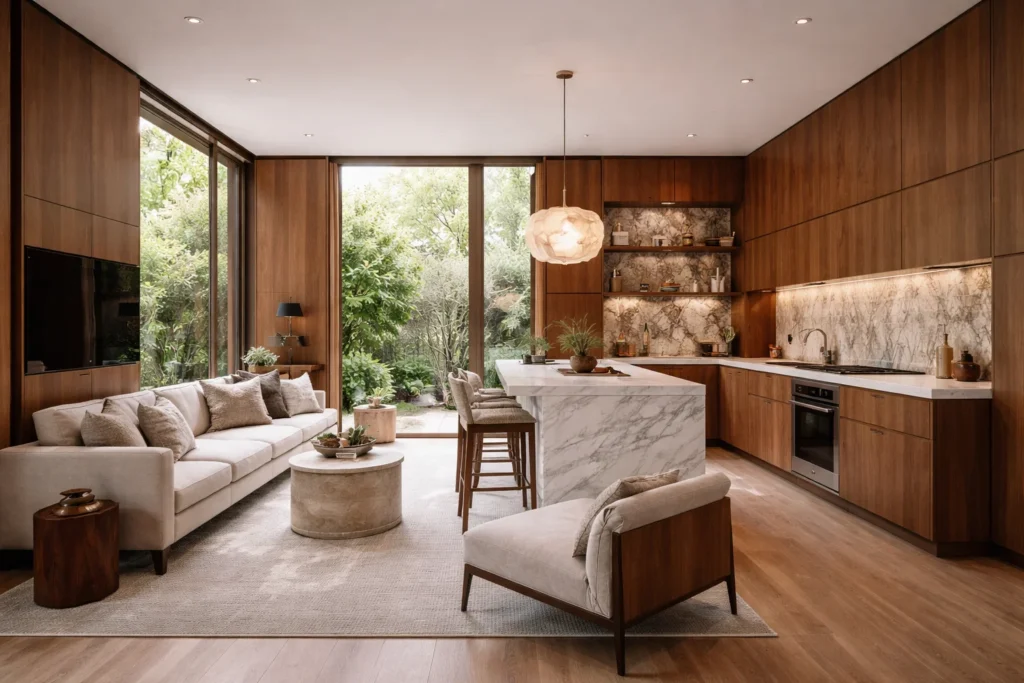
You no longer want 4,000 square feet of “builder-grade” beige. Instead, you’re opting for 800 square feet of architectural excellence. We are seeing a massive surge in homeowners choosing premium materials think sustainably sourced walnut, hand-tiled backsplashes, and integrated smart tech, because they only have to buy a fraction of what a larger home requires. This “jewel-box” approach to small house design ensures your home feels expensive and curated, rather than cramped.
The Sustainability Factor
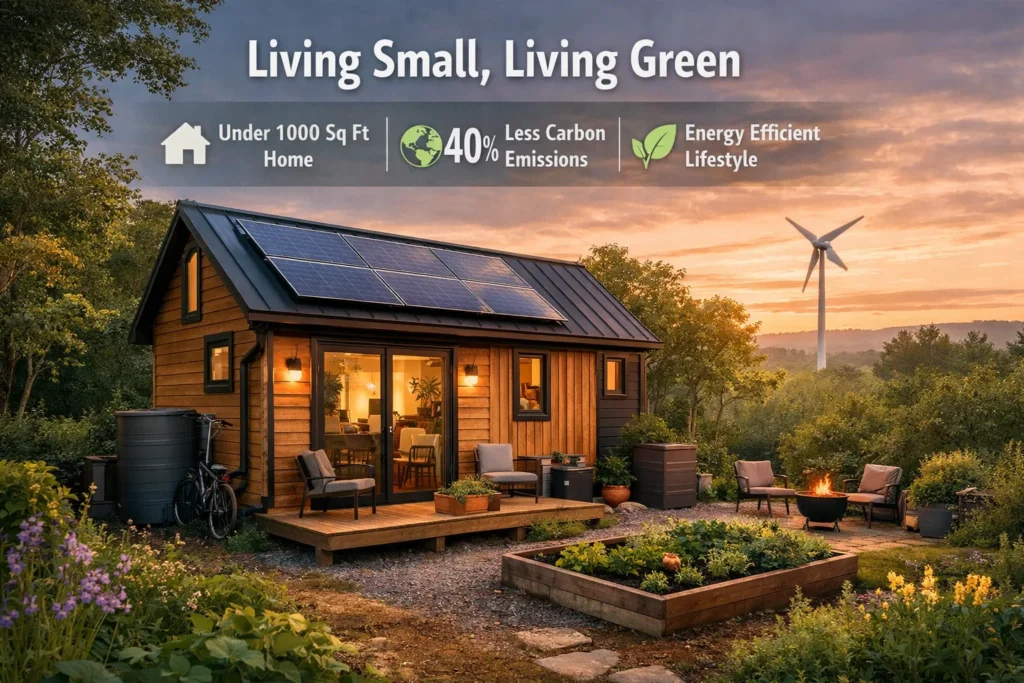
By 2026, climate consciousness isn’t just a buzzword; it’s a lifestyle requirement. You know that a compact home is inherently greener. Smaller volumes require less energy to heat and cool. According to 2025 environmental studies, homes under 1,000 square feet reduce lifetime carbon emissions by nearly 40% compared to average-sized suburban homes. You’re not just saving money; you’re participating in a global solution.
Economic Reality and Urban Density
Let’s be honest: land isn’t getting any cheaper. As urban centers become more crowded, the only way to live where the action is without spending millions is to go small. But “small” in 2026 doesn’t mean “studio apartment.” It means intelligently designed, detached, or semi-detached dwellings that utilize every vertical and horizontal millimeter.
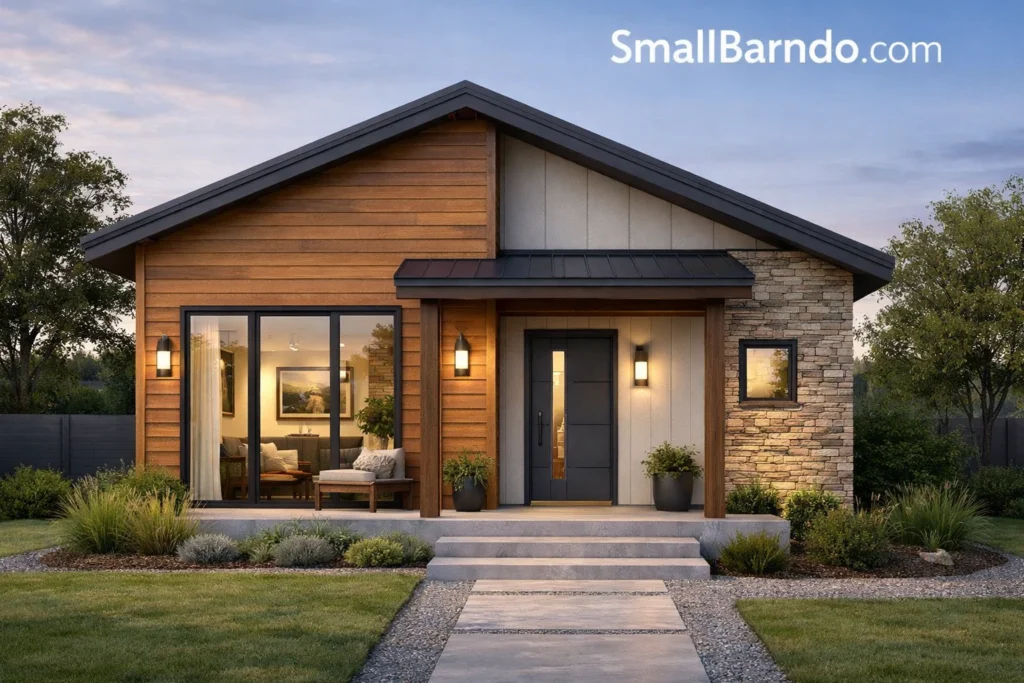
2. 35 Genius Small House Design Ideas for 2026
To help you navigate this transition, I’ve broken down the most effective design strategies into four key pillars: Architecture, Interiors, Tech, and Aesthetics.
A. Architectural & Structural Innovations
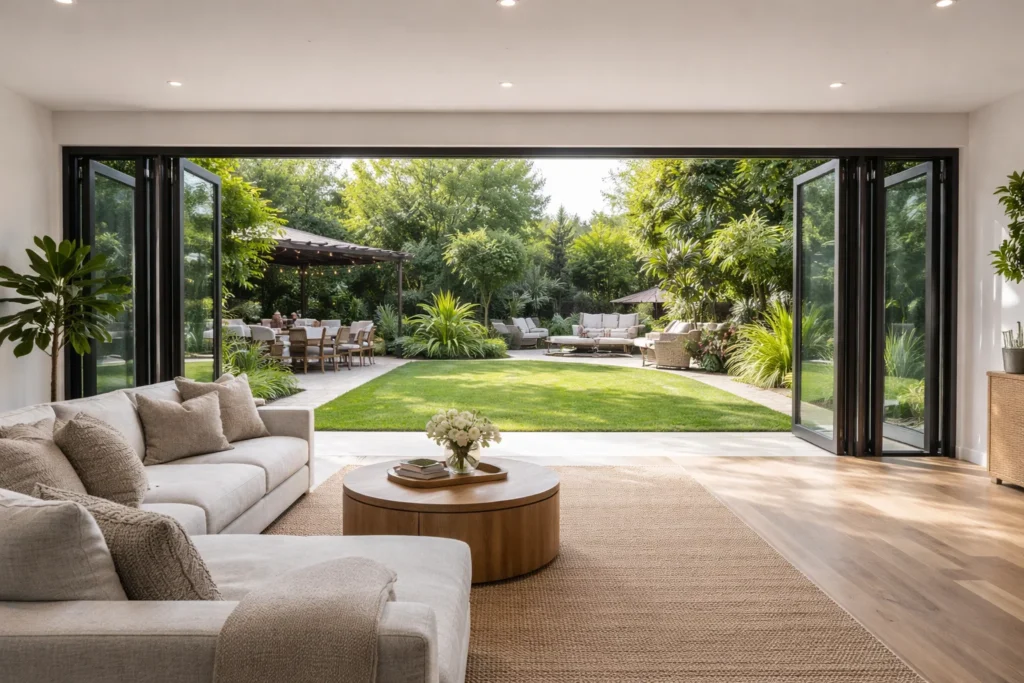
1. The “Glass Envelope.”
Forget traditional walls. By using floor-to-ceiling bifold glass doors on the primary living side of your home, you effectively eliminate the visual boundary between your sofa and your garden. When you open those doors, your living room doubles in size instantly.
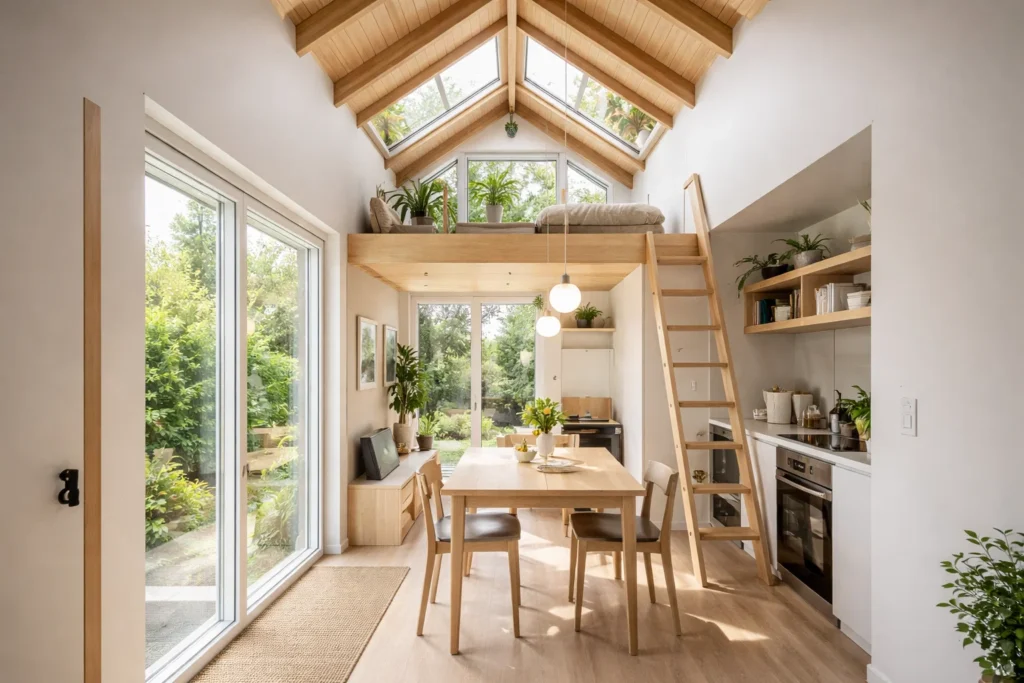
2. Vertical Voids
Even in a 25-square-meter microhome, you can avoid feeling trapped by incorporating a “vertical void.” This is a section of the house usually above the dining area, where the ceiling is omitted, allowing you to see straight up to the roof rafters. It draws the eye upward, creating an illusion of vastness.
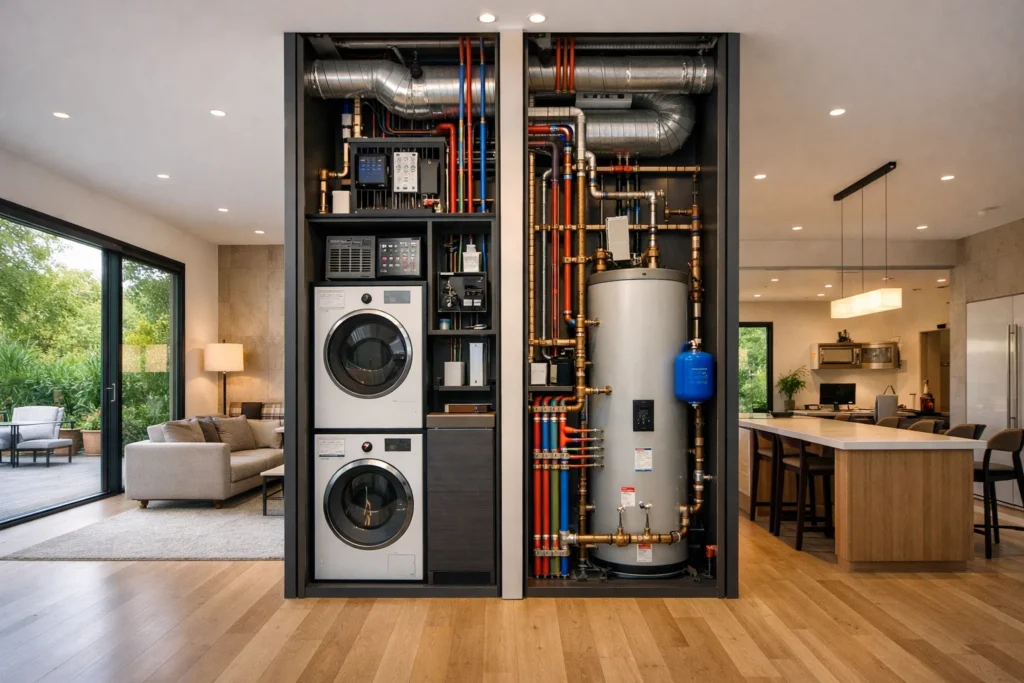
3. Split-Core Layouts
In 2026, smart designers are “splitting the core.” This means placing all the heavy utilities (pipes, wires, laundry, and water heater) in a central “spine” or wall. This leaves the outer perimeter of the house completely open and flexible for your living needs.
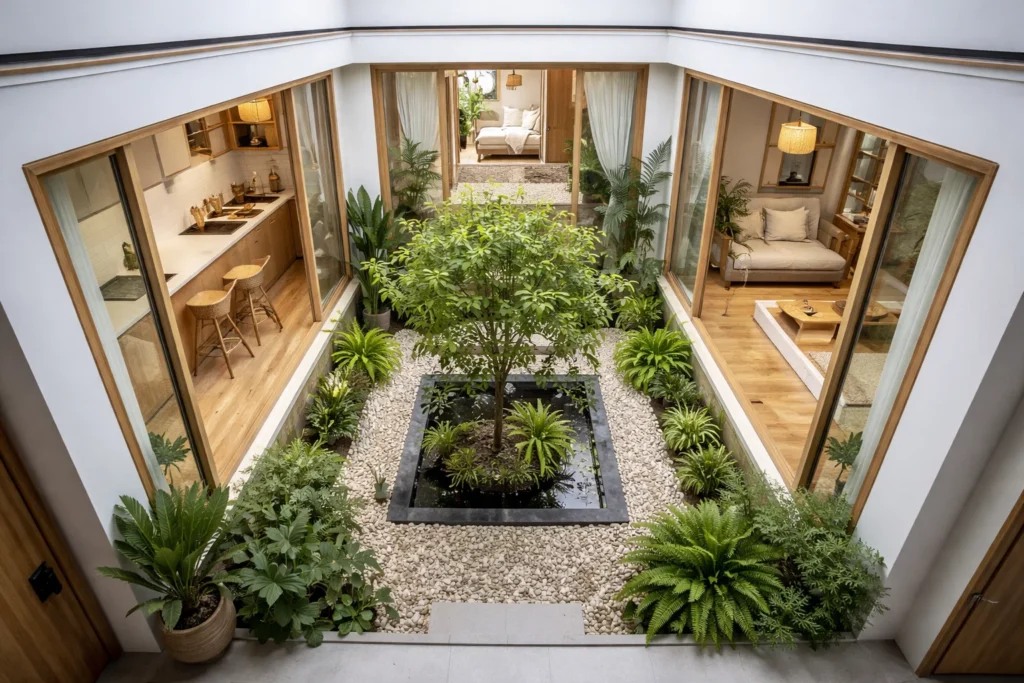
4. The Micro-Courtyard Loop
If you have a narrow lot, build your house in an “O” shape around a tiny central courtyard (even just 4×4 feet). This ensures that every single room has access to natural light and fresh air from two sides, making the small house design feel airy and connected to nature.
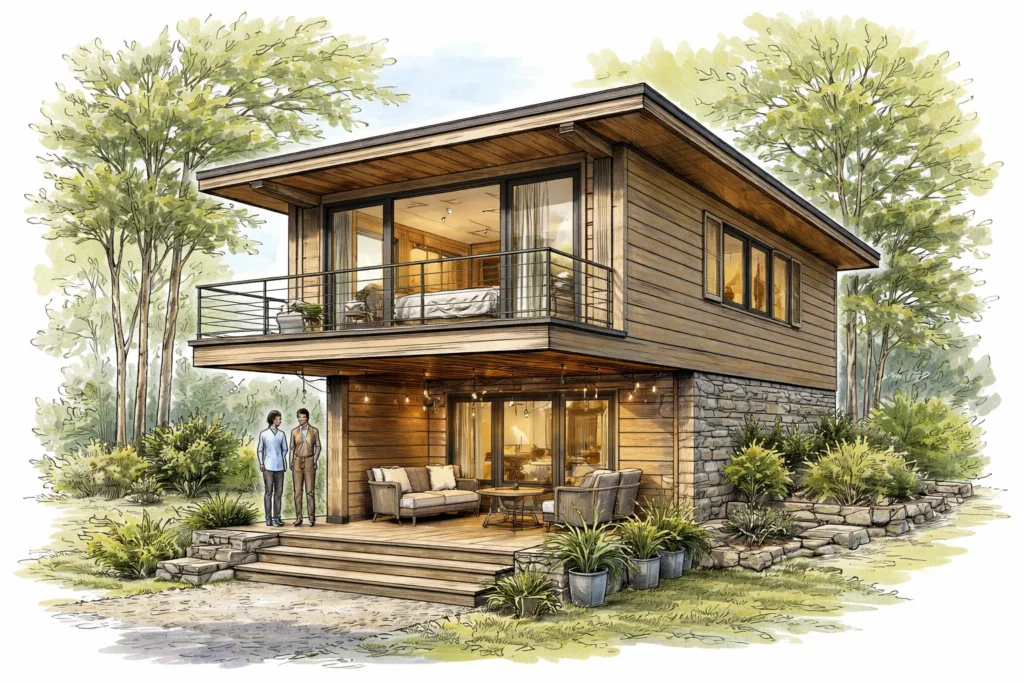
5. Cantilevered Sleeping Pods
Why take up floor space for a bed? By cantilevering (overhanging) the sleeping area 2 or 3 feet past the foundation wall, you gain extra room inside without increasing the footprint of the ground floor. It also creates a built-in porch or shaded area underneath.
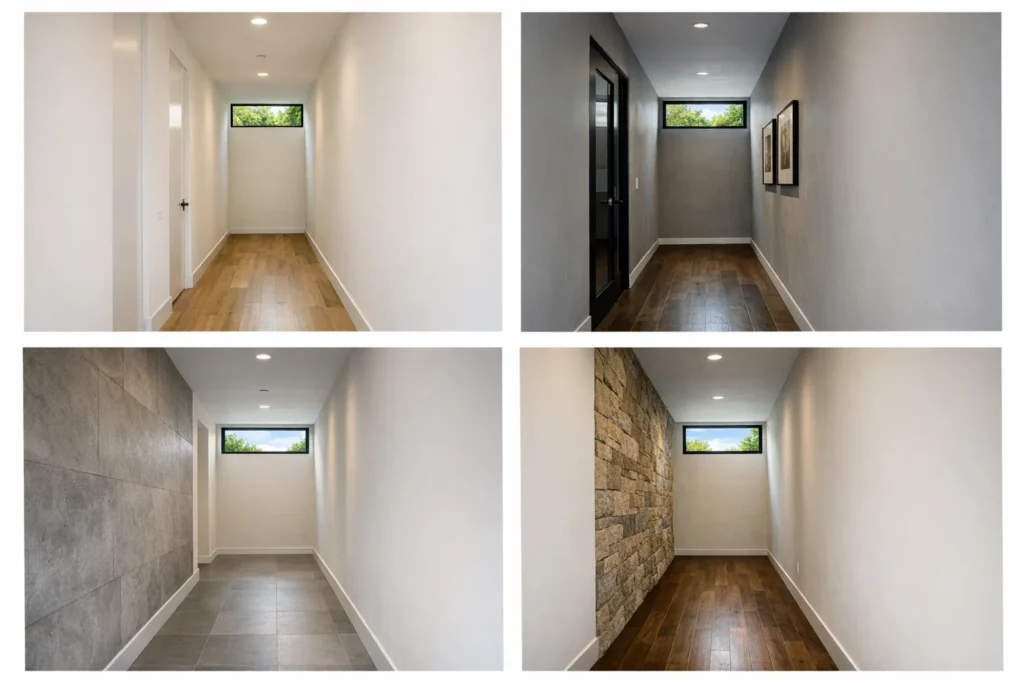
6. Sunlight Ledges
Place narrow, high windows (clerestory windows) at the very end of long hallways or corridors. This “pulls” the light through the house, making short transitions feel longer and more gallery-like rather than cramped.
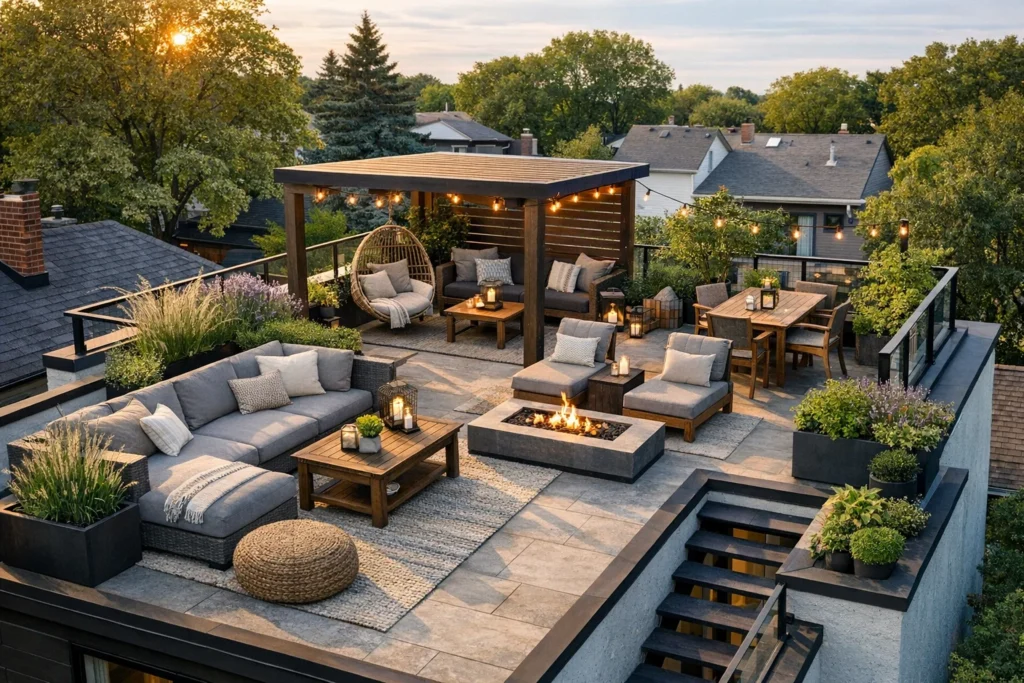
7. Adaptive Roof Terraces
Your roof is prime real estate. By using a flat-roof design with high-performance insulation, you can create a secondary living room or “sky garden.” In a small house, this effectively doubles your usable square footage for the cost of a staircase and some decking.
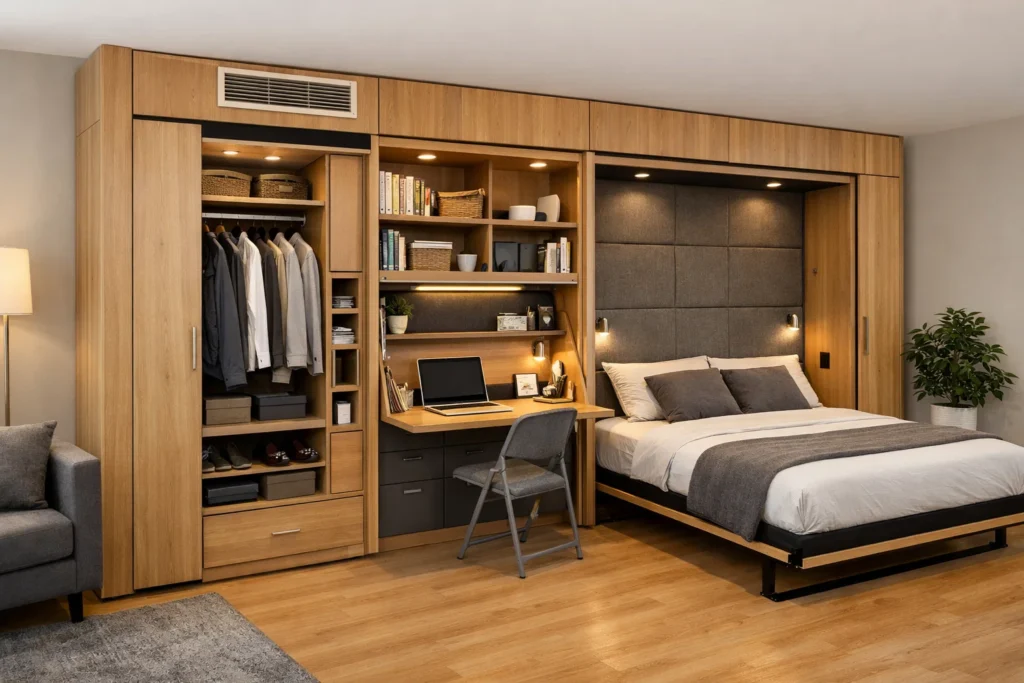
8. The “Sleeper Wall.”
Think of a wall that isn’t just a partition. A “Sleeper Wall” is a 2-foot-deep structural element that houses your closet, your HVAC vents, a fold-down desk, and even your Murphy bed. It’s the Swiss Army knife of architecture.
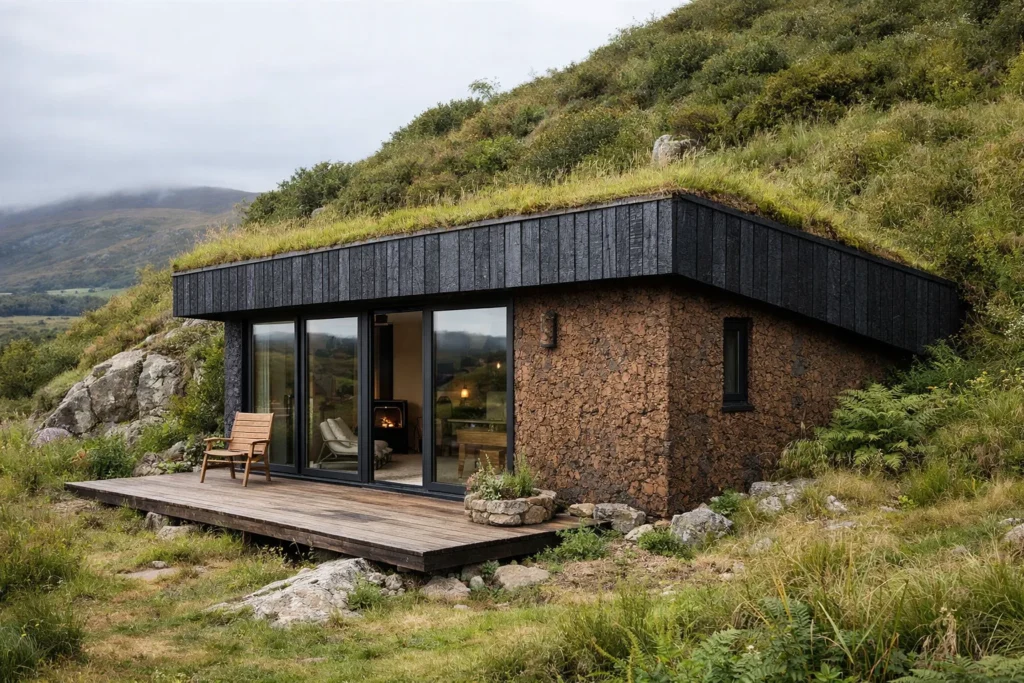
9. Biomimicry Exteriors
Using materials like recycled cork or charred timber (Shou Sugi Ban) allows the house to blend into the landscape. When a small house looks like part of the earth, it feels grounded and significant rather than “tiny” or temporary.
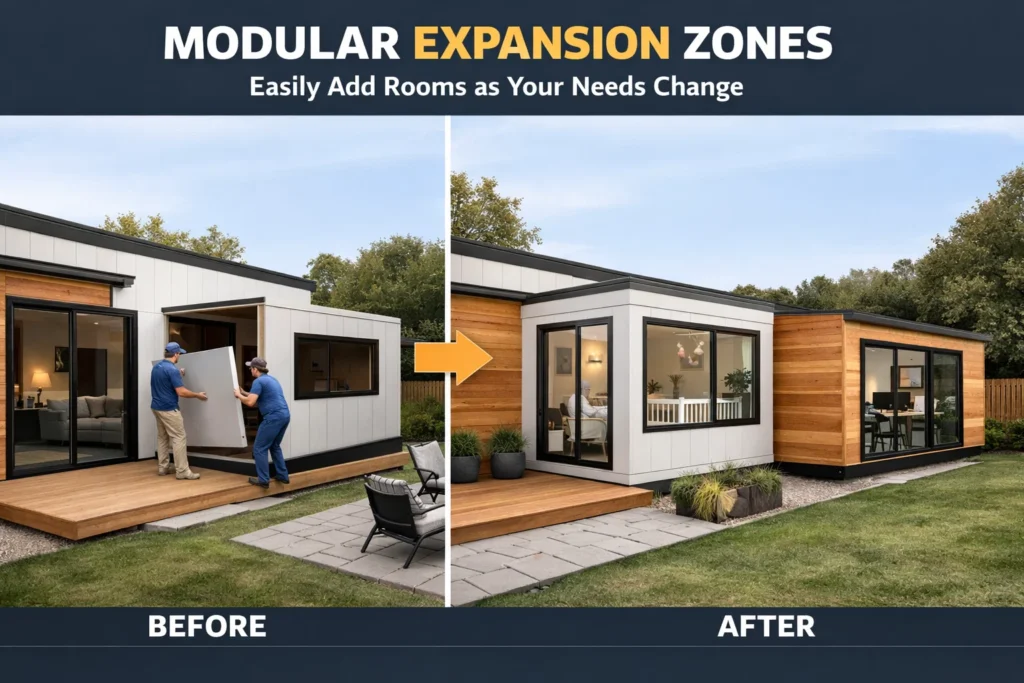
10. Modular Expansion Zones
Build your house with “knock-out” panels. If you decide you need a nursery or a home office in three years, these pre-engineered sections make it easy to “plug in” a new modular room without a full-scale renovation.
B. Smart Interiors & Space-Saving Hacks
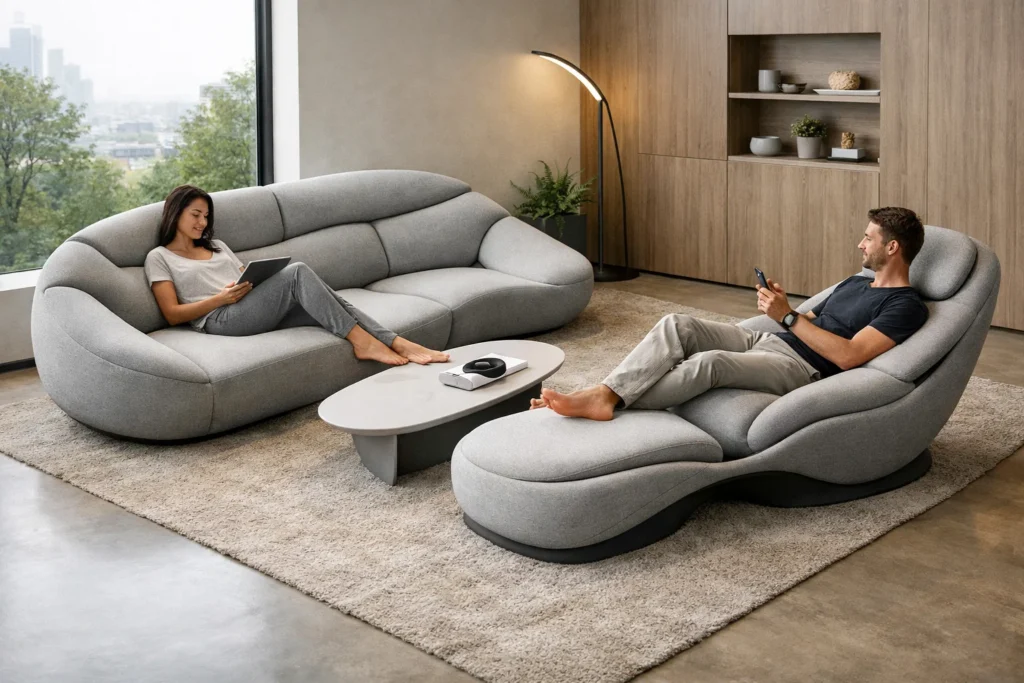
11. Algorithmic Ergonomics
In 2026, we use data to design furniture. Instead of a standard bulky sofa, look for pieces designed using “human-flow” algorithms. These pieces are shaped to support your body perfectly while occupying 20% less floor space than traditional furniture.
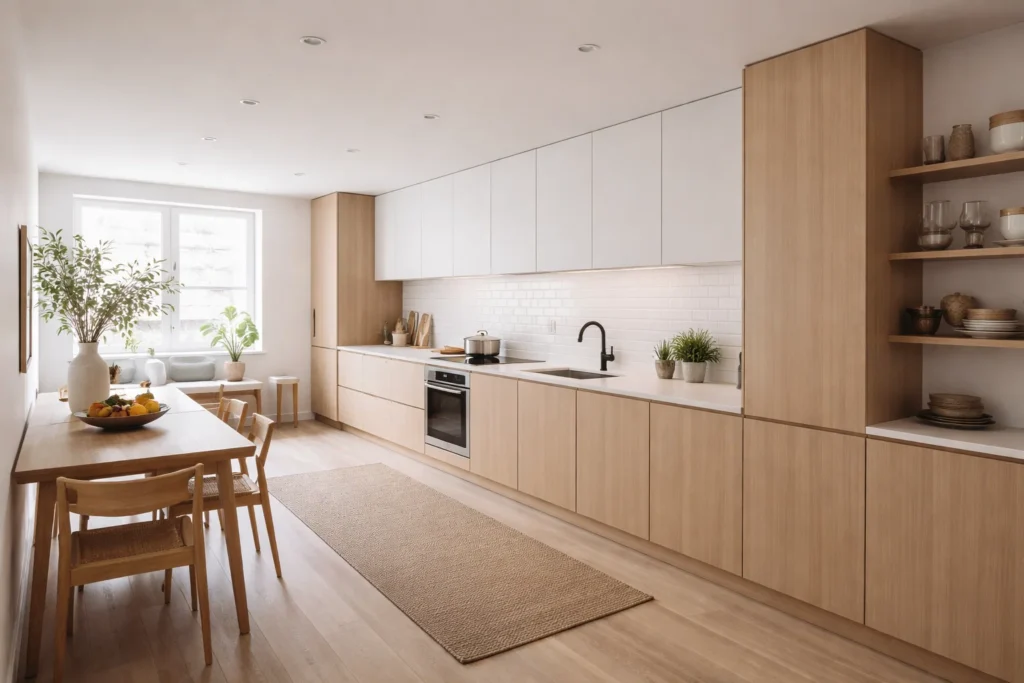
12. The “Linear Ribbon” Kitchen
Don’t break up your kitchen. A single, long “ribbon” of cabinets along one wall is far more efficient in a small house design than a U-shape or L-shape. It keeps the center of the room clear for movement and makes the space feel like a sleek gallery.
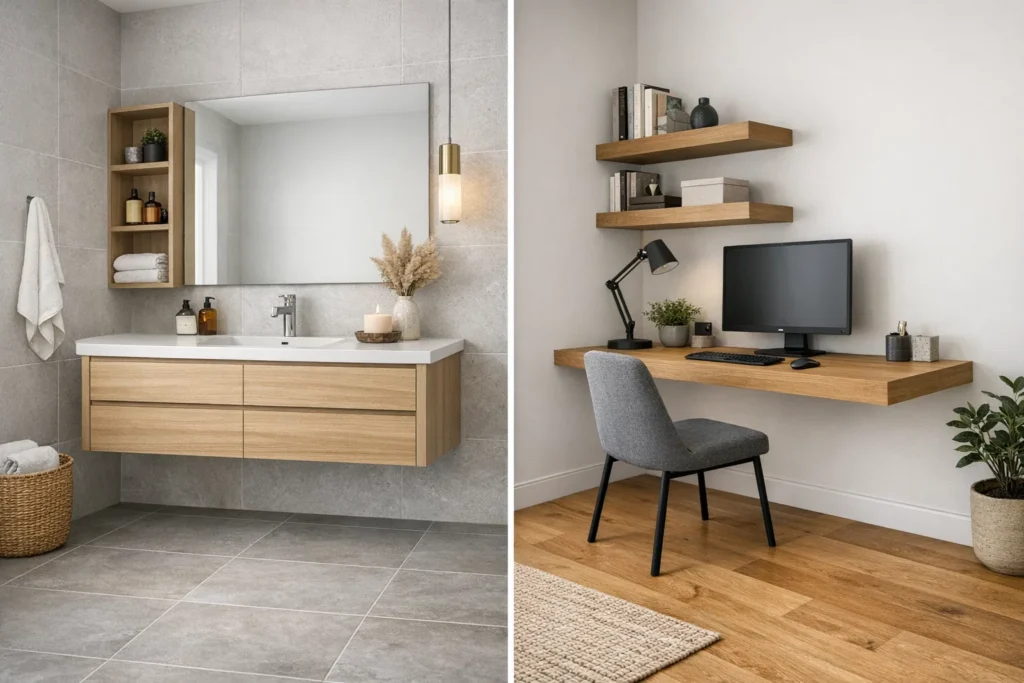
13. Floating Vanities and Desks
If you can see the floor under a piece of furniture, your brain perceives the room as larger. By wall-mounting your bathroom vanity and your home office desk, you keep the floor plane uninterrupted, which is a classic psychological trick for small spaces.
14. Toe-Kick Drawers
That 4-inch gap between your kitchen cabinets and the floor? That’s wasted space. Install toe-kick drawers to store flat items like baking sheets, specialized tools, or even your pet’s food bowls.
15. Fat Furniture
Counter-intuitively, one or two “fat,” rounded, sculptural pieces of furniture look better in a small room than ten tiny, spindly pieces. A large, curvy armchair creates a focal point and makes the room feel “full” rather than “cluttered.”
16. Pocket Doors Everywhere
A swinging door is a space killer; it “robs” you of about 10 square feet of usable radius. By switching to pocket doors that slide into the wall, you reclaim that space for furniture or movement.
17. Integrated Staircase Drawers
If you have a loft or a second story, every single step should be a drawer. This is the perfect place for shoes, out-of-season clothing, or bulky linens that usually clog up your main closet.
18. Banquette Dining Nooks
Trade the dining table and chairs for a built-in corner banquette. It uses less space, provides hidden storage under the seats, and creates a cozy, “cafe-style” vibe that’s perfect for the 2026 aesthetic.
19. Mirror-Backed Shelving
Install mirrors on the back wall of your open bookshelves. It adds a layer of “phantom depth,” making it look like the room continues behind your books. It also bounces light into the darker corners of the room.
20. Multi-Functional Loft Libraries
Don’t let the space above your hallway go to waste. A “bridge” library, with narrow shelves lining a walkway above the main living area, adds character and massive storage without taking an inch of living space.
C. Future-Forward Tech & Sustainability
21. AI-Powered Indoor Gardens
Vertical hydroponic walls are now mainstream. You can grow your own lettuce, herbs, and even strawberries in a 2-foot-wide wall panel. These systems are automated, using AI to adjust light and water, providing you with fresh food and natural air purification.
22. OLED Digital Murals
Instead of bulky art or TVs, use paper-thin OLED panels. When they’re off, they look like a textured wall or a piece of wood. When they’re on, they can display a “window” to a forest, a beach, or a digital art gallery, changing the mood of your small home instantly.
23. Smart Glass Partitions
Want an open-plan feel but need privacy for a Zoom call? Smart glass turns from transparent to opaque with a simple voice command. This allows you to maintain the visual flow of your small house design until the moment you need a “closed” room.
24. Decentralized Ventilation Systems
In a small, airtight house, air quality is everything. Decentralized Heat Recovery Ventilation (dHRV) units are small, wall-mounted fans that swap stale air for fresh air while keeping the heat inside, ensuring you never feel “stuffy.”
25. Modular Hybrid Lighting
Gone are the days of one big light in the middle of the room. 2026 trends favor “layering.” Use magnetic tracks that allow you to move spotlights and ambient globes around as you change your room layout.
26. Energy-Harvesting Windows
Your windows are now your power plant. New transparent solar coatings allow your glass to generate electricity from the sun without blocking your view. In a small home, this can often cover a significant portion of your daily energy needs.
27. Compact COB Downlighters
“Chip on Board” LEDs are tiny but incredibly powerful and warm. They allow you to hide light sources in the architecture (behind beams or under cabinets), creating a glow that makes a small space feel high-end and cozy.
28. Water-Recycling Shower Systems
These “closed-loop” showers filter and reheat the water you’re currently using, allowing you to have a 20-minute luxury shower while only using about 2 gallons of water. It’s the ultimate small-home luxury that respects the environment.
29. Robotic Furniture
We’re seeing the rise of “ceiling-retract” tech. Your bed can literally disappear into a ceiling cavity during the day, revealing a full home office or yoga studio underneath. When night falls, the bed lowers back down.
30. Smart Entryway Consoles
Your entryway is the “brain” of the house. Modern consoles feature integrated wireless charging, hidden UV-C sanitizing drawers for your keys/phone, and a master “off” switch for all non-essential electronics to save power.
D. Lifestyle & Aesthetic Touches
31. Monochrome Mastery
Pick one color, say, a soft “Oatmeal” or “Sage”, and use it for the walls, the trim, and the main furniture. Using different textures of the same color (linen, velvet, wood) creates depth without the visual “noise” of multiple colors, which can make a room feel small.
32. Organically Flowing Wood
Avoid sharp corners. Use CNC-routed wood panels with soft, wavy patterns. This draws the eye in a continuous line around the room, which prevents the brain from “stopping” at the corners and realizing how small the space is.
33. The “Utility Hub” Closet
Don’t scatter your tech. Dedicate one small, ventilated closet to your router, your vacuum, your breaker box, and your cleaning supplies. Keeping the “guts” of the house in one spot prevents clutter from bleeding into your living zones.
34. Small-Space Scale Furniture
Look for furniture with “high legs.” If you can see 6 inches of space between the bottom of your sofa and the floor, the room feels significantly more open. Bulky, “to-the-floor” furniture acts like a wall and shrinks the space.
35. The “Secondary Kitchen” Nook
Even in a tiny home, a “coffee station” or “morning bar” tucked into a hallway or a corner of the living room prevents everyone from crowding into the main kitchen at the same time. It’s about managing the “flow” of people.
3. Comparison: Traditional vs. Modern Compact Homes
When you’re deciding if a small house design is right for you, it helps to see the data side-by-side. The old way of thinking focused on “total square footage,” but the 2026 way focuses on “utility per square foot.”
| Feature | Traditional Home (2,500+ sq. ft.) | Modern Compact Home (Under 1,000 sq. ft.) |
| Average Construction Cost | High (Total cost) / Lower (Per sq. ft.) | Lower (Total cost) / Higher (Per sq. ft.) |
| Monthly Utility Burden | $400 – $700+ | $80 – $150 |
| Cleaning & Maintenance | 15–20 hours per month | 3–5 hours per month |
| Material Quality | Standard / Builder Grade | Premium / Custom Artisan |
| Flexibility | Static (Rooms have one purpose) | Dynamic (Multi-functional zones) |
| Environmental Impact | High carbon footprint | Low/Net-Zero potential |
As you can see, while the cost per square foot might be higher in a small house due to the density of technology and high-end materials, your lifestyle dividend the time and money you get back every single month is significantly higher.
4. Limitations and Exceptions of Small House Design
I want to be transparent with you: compact living isn’t a magic wand. There are specific hurdles you need to be aware of before you commit to this path.
- Zoning and Minimum Square Footage: Many local municipalities still have “minimum dwelling” laws from the 1970s. You might find a perfect small house design, only to realize your city requires every house to be at least 1,200 square feet. Always check your local zoning codes first.
- The “Moisture Trap”: Because small houses are built so tightly to save energy, moisture from cooking and showering has nowhere to go. If you skimp on a high-end ventilation system (like the dHRV mentioned earlier), you will deal with mold issues within two years. Ventilation is not an “extra”; it is a requirement.
- Acoustic Privacy: If you live with a partner or children, “open concept” can become a nightmare. In a small house, sound travels instantly. You must invest in sound-dampening materials like heavy rugs, cork wall panels, or “fat furniture” to absorb echoes.
- The “Guest” Problem: You won’t have a dedicated guest room that sits empty 350 days a year. You have to be okay with guests sleeping on high-end Murphy beds or staying at a nearby hotel.
5. FAQ: Mastering Your Small House Design
Q: Can I realistically raise a family in a small house design?
A: Absolutely. Many European and Asian cultures have done this for centuries. The key is the “Split-Core” layout and ensuring children have their own “Sleeping Pods” or vertical lofts. It encourages more time spent together in common areas and less “siloing” in separate rooms.
Q: Does a small house have a lower resale value?
A: Not anymore. By 2026, “Efficient Luxury” is a massive selling point. Smaller, well-built, tech-forward homes are often easier to sell than aging, inefficient mansions because the buyer pool (Millennials, Gen Z, and Downsizing Boomers) is looking for lower overhead.
Q: How do I choose the right “small house design” for a narrow lot?
A: Focus on the “Micro-Courtyard Loop.” By building around a central light source, you solve the problem of narrow lots usually being dark in the middle.
Q: Won’t I feel claustrophobic?
A: Only if you have low ceilings and small windows. If you use “Vertical Voids” and the “Glass Envelope” architecture, your brain will feel like the space is much larger than the actual floor measurements suggest.
6. Conclusion: The New Definition of “Living Large.”
The era of the “McMansion” is ending, not because we can’t build them, but because we’ve realized they don’t actually make us happier. The thirty-five ideas we’ve explored today represent a new philosophy: that your home should be a tool that serves your life, not a master that demands all your time and money.
In 2026, small house design is the ultimate sophistication. It’s the choice to live with less “stuff” so you can have more “space” space to breathe, space to create, and space to focus on what truly matters. Whether you’re building from scratch or renovating a compact footprint, remember that every inch is an opportunity for genius.