35 Revolutionary Container House Design Ideas Changing Modern Architecture
Have you ever stood before a traditional home, a monument to lumber and concrete, and felt a deep sense of limitation? The financial burden, the endless construction timelines, the environmental footprint… it can make the dream of homeownership feel rigid and out of reach. Perhaps you feel that your aspiration for a custom-built dwelling is currently trapped between crippling material costs and endless regulatory red tape.
But what if the solution to modern, sustainable, and affordable living wasn’t a new material, but an old, overlooked one? What if the very backbone of global commerce, the rugged shipping container, could be transformed into a beautiful, durable, and highly personalized abode?
That’s where the container house design revolution steps in. It’s a powerful movement that takes the humble shipping container, a durable, ubiquitous steel box, and transforms it into a canvas for architectural brilliance. This isn’t just about “tiny living”; it’s about reclaiming creativity, embracing genuine sustainability, and building a future where your home is as flexible as your life demands. From luxurious multi-story villas meticulously engineered for comfort to minimalist off-grid retreats built to withstand any climate, these 35 revolutionary designs are rewriting the rules of modern living and challenging established architectural norms. Get ready to see the world’s most impressive, innovative, and game-changing container house design concepts that will fundamentally change how you view your next dwelling.
Table of Contents
The Foundation of Innovation: Why Choose Container House Design?
Before we dive into the inspiring designs, it’s crucial for you to understand the fundamental shifts that make container house design a powerful and often superior alternative to traditional construction. When you choose a shipping container, you aren’t just selecting a construction material; you are adopting a completely different, streamlined methodology for building.
Comparative Analysis: Container vs. Traditional Homes
The decision to choose a container structure is often driven by three critical factors: cost, speed, and durability. Let’s look at how the container house design approach stacks up against the conventional stick-built method.
| Feature | Shipping Container Home | Traditional Stick-Built Home |
| Initial Cost | Significantly lower, leveraging pre-fabricated structure. Used containers cost around $3,000–$5,000 (as of late 2024), leading to basic shells starting at approximately $10,000–$60,000. | Higher costs for raw materials (lumber, concrete, masonry) and high on-site skilled labor. Basic small homes typically start at $150,000+. |
| Construction Speed | Rapid. The core structure the shell can be completed in a few weeks. The entire project can be finished in a few months due to modular, off-site pre-fabrication, reducing weather-related delays. | Slow. Typically 6–12 months or more, depending on structural complexity and local regulatory pace. |
| Durability | Extremely high. Constructed from Corten steel, they are designed to withstand harsh marine environments, extreme loads, and high winds (rated for up to 175 mph). They are inherently resistant to pests like termites. | Varies greatly with materials; susceptible to fire, water damage, and pest intrusion, requiring more preventative maintenance. |
| Sustainability | High. This method actively repurposes millions of unused cargo units, a vast waste stream, significantly reducing the demand for new building materials and minimizing construction debris. | Lower, associated with high energy consumption in material production and substantial construction waste filling landfills. |
- Cost Efficiency: The savings stem directly from the fact that you are acquiring the fundamental structure (walls, floor, and roof) at a fraction of the cost of building them from scratch.
- The Power of Corten Steel: The material used, Corten steel, is specifically formulated to develop a rust-like outer layer that actually protects the metal underneath from further corrosion, a key characteristic that lends itself perfectly to robust container house design.
10 Jaw-Dropping Single-Container House Design Ideas (Minimalist Living)
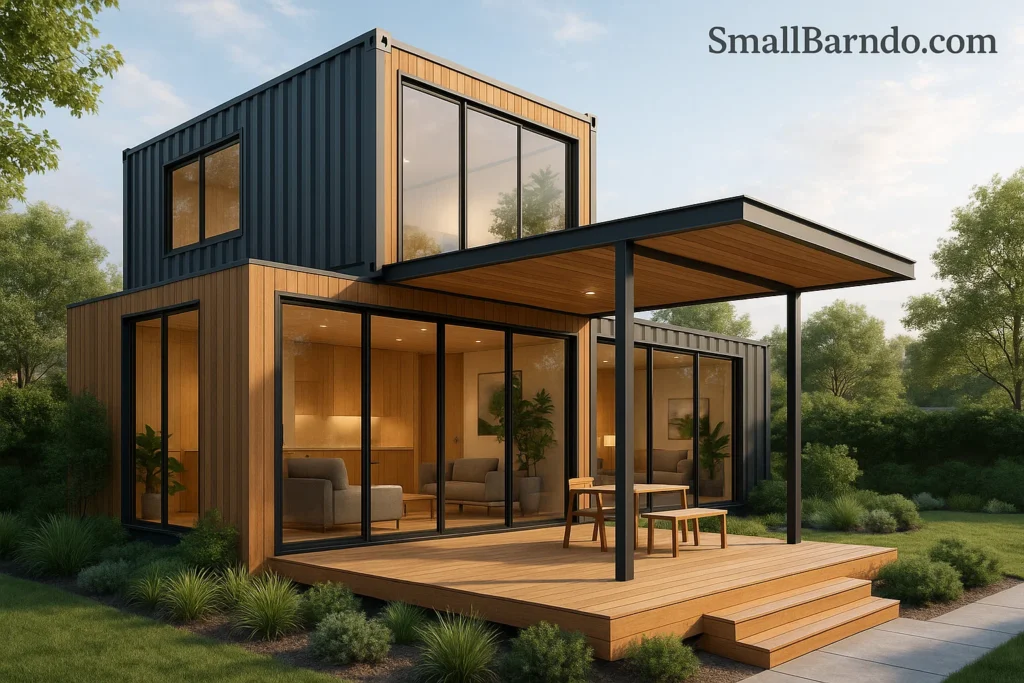
When you begin exploring container house design, the single-container unit, usually 20-foot or 40-foot ‘High Cube’ units, is the perfect starting point. These concepts prove that even a 20-foot (approx. 160 sq ft) or 40-foot (approx. 320 sq ft) unit can be a fully functional, stylish home. The challenge here is maximizing every square inch of the interior.
- The Off-Grid Micro-Cabin: Imagine a 20ft ‘High Cube’ container, the extra 1 foot of height makes a huge differenc,e wrapped in locally sourced wood cladding for superior aesthetics and thermal mass. This design features a fold-down deck that doubles as a security cover and integrated solar panels on the roof, making it a truly autonomous, self-sufficient shelter.
- The Glass-Fronted Studio: To combat the enclosed feeling of a steel box, this design maximizes light and view by having one entire end wall replaced by triple-glazed, floor-to-ceiling glass. The impact of this simple change is transformative, blending the interior seamlessly with the surrounding landscape.
- The Coastal Retreat: When building near saltwater, rust is a primary concern. This design utilizes marine-grade anti-corrosive epoxy paint and is elevated on robust concrete piers to combat moisture and salt spray, a necessary measure that demonstrates how the limitations of steel can be expertly engineered around.
- The Pop-Out Workspace: This innovative design overcomes the narrow 8-foot width limitation by incorporating a hydraulic ‘pop-out’ section. A portion of the wall hinges outward, expanding the interior width by several feet, providing a dedicated office, dining nook, or bedroom that feels dramatically larger.
- The Rooftop Garden Eco-Pod: A single container with a full green roof is not just visually appealing; it’s a passive design strategy. The vegetation and soil act as an excellent natural insulator, enhancing thermal performance and dramatically reducing the cooling load and noise pollution inside the structure.
- Design Strategies for Single Units: To make this size work for you, focus on space-saving furniture (like Murphy beds and folding desks), multi-purpose storage solutions, and maximizing vertical space with shelving that draws the eye upward.
15 Multi-Container House Design Masterpieces (Family & Luxury Living)
For families or those with aspirations of luxury and space, combining and stacking containers allows for expansive, architecturally complex homes that easily rival traditional custom builds. These concepts showcase how architects ingeniously overcome the standard 8-foot width limitation of a single unit.
Innovative Layout Configurations
Multi-container house designs utilize smart placement to create usable outdoor and transitional areas, providing both privacy and shared spaces.
- The L-Shape Courtyard: You can join two long 40-foot containers at a 90-degree angle to naturally frame an outdoor living space, such as a patio or garden. This design offers excellent flow and provides natural windbreaks.
- The Bridge Connection: This aesthetically dynamic approach involves staggering two separate container volumes, for example, a ground floor dedicated to communal living and an upper floor for sleeping, and connecting them with a glass-walled ‘bridge’ hallway. This separation is excellent for noise reduction and creating architectural drama.
- The U-Shape Entertainment Hub: Using three or more containers, you can enclose a central swimming pool or expansive deck. This layout is particularly popular in warm climates as it maximizes shade and provides an elegant, structured enclosure for entertainment.
Multi-Story & Cantilever Designs
When structural reinforcement is applied correctly, containers can be stacked and positioned in breathtaking ways.
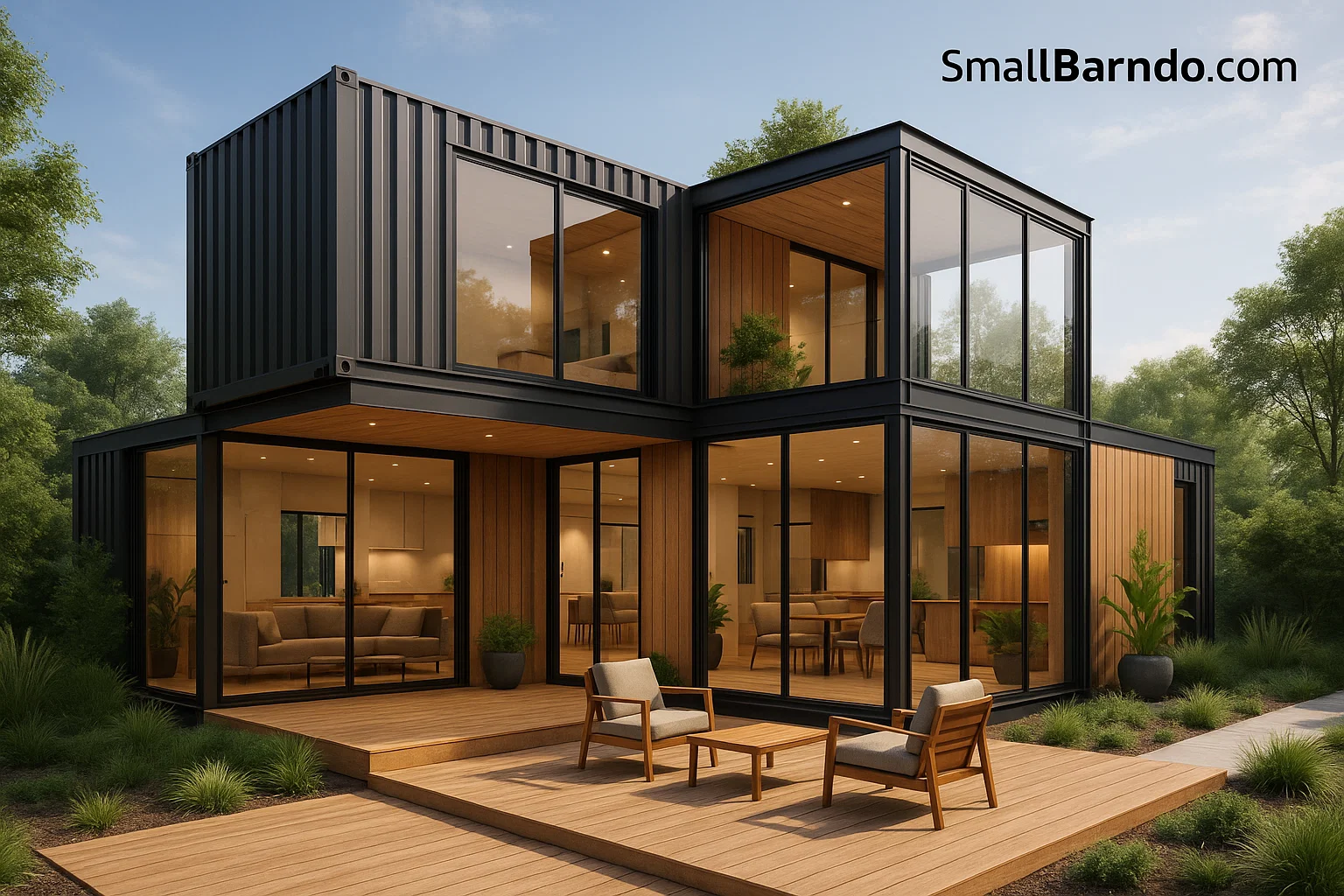
- The Staggered Double-Stack: This practical, popular approach involves stacking containers and deliberately offsetting the top floor unit. This offset immediately creates a covered carport, an entrance porch, or a shaded balcony below, enhancing both function and form.
- The Cantilevered Vista: This is where container house design moves into high architecture. A four-container home where the second story dramatically overhangs the ground floor, sometimes by as much as 10-15 feet, offers unobstructed views and a sense of dynamic movement. (Exception/Condition: This design is visually impressive but requires significant internal structural reinforcement. The original container frame must be strengthened with heavy-duty internal steel I-beams or columns to transfer the load safely and maintain integrity after large sections of the steel skin are removed for windows and doors.
- The Container Mansion (21+ Boxes): To understand the unlimited scale potential, you only need to look at projects like the Carroll House in New York (built from 21 containers) or large holiday resorts built entirely from stacked units. These illustrate that containers are a viable framework for substantial, luxurious dwellings, not just small homes.
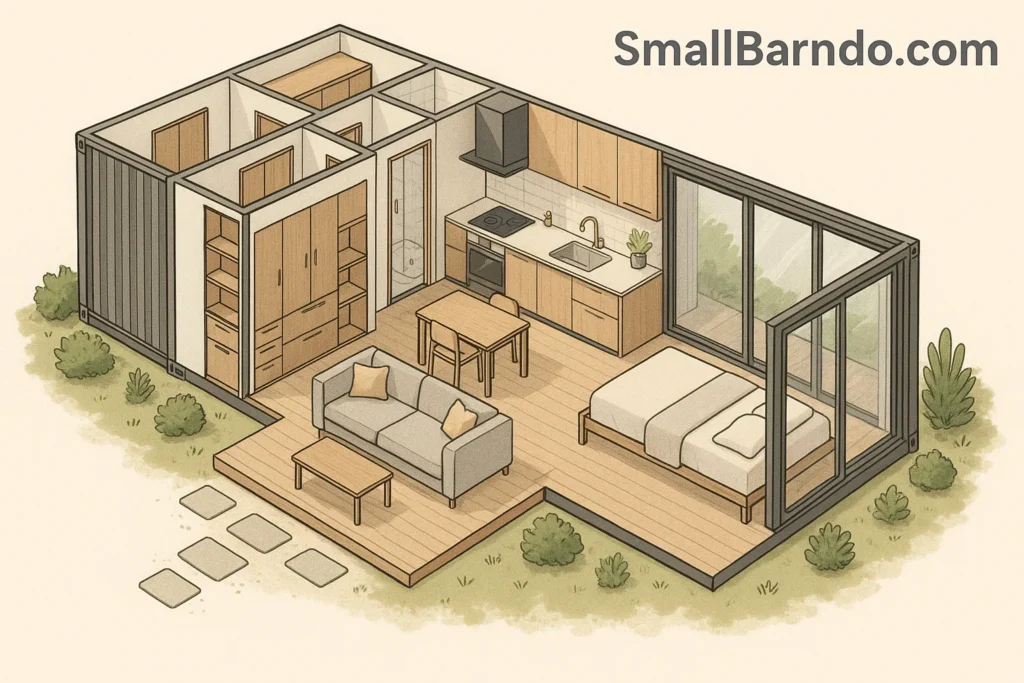
Interior & Exterior Design Strategies for Container Architecture
A successful container house design transcends just the metal shell; it involves thoughtful material choices and engineering to ensure comfort, energy efficiency, and longevity. Ignoring these crucial steps is the primary pitfall for DIY builders.
Overcoming Limitations: Insulation and Climate Control
The biggest initial challenge for steel homes is thermal transfer. Steel is an exceptional conductor, meaning an uninsulated container will be a furnace in the summer and a freezer in the winter. Proper insulation is non-negotiable for your comfort and energy efficiency.
- Insulation Methods Comparison: Choosing Your R-Value
- Spray Foam (Closed-Cell): Offers the highest R-value per inch, adheres directly to the metal (offering a second layer of corrosion protection), and acts as a superior vapor barrier. However, it can be the most expensive option.
- Rigid Foam Panels (Polyiso/EPS): Excellent R-value and generally less expensive than spray foam. It requires the builder to frame an internal wall structure first, slightly reducing the internal dimensions.
- Wool/Mineral Fiber: More natural and eco-friendly options, but they often require a significant internal wall thickness to achieve adequate thermal performance, which significantly reduces interior usable space.
- Ventilation Solutions: Proper airflow prevents condensation (a major cause of internal rust). Incorporating cross-ventilation (windows on opposing walls), clerestory windows (high windows), and even thermal chimneys can help moderate internal temperatures passively, especially in regions with high humidity or extreme heat.
Aesthetic Cladding and Finishes
You don’t have to live inside a corrugated box. Exterior cladding can transform the aesthetic appeal while adding another layer of insulation and weather protection.
- The Hybrid Look: This is the most popular strategy, combining the raw, industrial steel in select areas with natural materials like cedar, charred Shou Sugi Ban timber, bamboo, or composite wood cladding. This juxtaposition provides warmth and textural contrast.
- Industrial Chic Interiors: For a bold, modern look, you can retain the corrugated steel texture in select interior walls, often wire-brushed and sealed. This is beautifully juxtaposed with polished concrete floors, minimalist cabinetry, and exposed piping for a rugged, yet sophisticated, feel.
- Maximizing Light: Because the width is fixed at 8 feet, focusing on length and height is key. Using large sliding glass doors, strategically placed floor-to-ceiling windows, and abundant skylights overcomes the inherent narrowness of the container house design, creating an airy, bright space that feels far larger than its square footage suggests.
Navigating the Real-World Challenges of a Container House Project
Building a container house design is a specialized endeavor that comes with specific logistical, regulatory, and technical hurdles that you must be prepared for.
- Permitting and Building Codes: This is often the primary roadblock. Many small, local municipalities are unfamiliar with container house design, which can lead to bureaucratic delays and unnecessarily stringent permitting requirements. (Condition) Always hire a local licensed architect or engineer who is explicitly experienced in modular, steel-based construction. Their stamp of approval and familiarity with local codes will dramatically smooth the process.
- The ‘Not-So-Green’ Used Container Debate: The core appeal is recycling, but you must exercise caution. Used containers (often ‘WWT’ – Wind and Watertight) may have been treated with harsh pesticides (e.g., TBT) or transported hazardous materials. (Limitation): Thoroughly vetting the container’s history is crucial for health and safety. The alternative is paying more for ‘One-Trip’ or ‘New’ containers, which, while reducing the environmental impact of pure recycling, eliminate the guesswork and potential health concerns.
- Land and Foundation: Even modular homes require a stable, well-engineered foundation. You cannot simply drop the container on the ground. This foundation, be it concrete piers, a slab, or a full basement, requires excavation and engineering, which can add substantially to the overall budget and timeline. This is a common oversight for first-time builders.
Building the Future, One Steel Box at a Time
The 35 design ideas we’ve explored from the space-saving single-box studio built for rugged independence to the sprawling, multi-story luxury villa that defies expectations demonstrate that the future of architecture is adaptable, sustainable, and undeniably bold.
The container house design movement isn’t a fleeting trend; it’s a robust, structural answer to the global demands for affordability, quick deployment, and environmental responsibility. By embracing the incredible strength, global availability, and inherent modularity of the humble shipping container, architects and informed homeowners like you are proving that a truly customized, durable, and cost-effective dream home doesn’t have to break the bank or the planet. It just needs a little creative welding, smart insulation, and a vision for what’s possible within the confines of a steel box. You have the power to redefine your living space.
(FAQ) About Container House Design
How long do shipping container houses last?
- With proper foundational support, anti-corrosion treatments (especially on cut edges), and quality external cladding, a container house design can easily last 25–50 years or more. The longevity of the underlying Corten steel structure, designed for decades of maritime abuse, often surpasses that of many quickly erected traditional wood-frame homes, provided moisture and rust are managed correctly.
Is a container house cheaper than a traditional house?
- Yes, initially and for basic builds. A fundamental, pre-fabricated container home can cost substantially less, with reported DIY builds costing as little as $10,000–$40,000 for a single unit. However, highly customized, multi-container luxury projects where you pay for extensive structural modification, high-end finishes, and complex foundation work can often approach the per-square-foot cost of standard construction. The savings are highest in simplicity.
Do I need a building permit for a container house?
- In almost all cases, yes. Although they are initially defined as cargo units, once a shipping container is placed on a permanent foundation, connected to utilities (plumbing, electricity), and designated as a dwelling, it is legally considered a permanent structure. It must, therefore, comply with local zoning laws, building codes, and safety regulations. You must treat the process with the same diligence as traditional construction.
Are container homes difficult to insure?
- No, but the process may require a specialist. As the market matures, more major insurance companies are beginning to offer standard policies for these structures, classifying them as modular or prefabricated homes. You may need to work with an agent experienced in non-traditional home insurance, and the appraisal process may require an engineer to certify the structural modifications.
What is the main structural limitation of a container house design?
- The main limitation is the width (8 feet) and the necessity of structural reinforcement. The strength of the container house design is in its integrity as a complete box. When you cut large openings (for windows, doors, or connecting units), the integrity of the frame is compromised. This requires the installation of welded steel reinforcements (like headers or I-beams) around every large opening, which adds time, complexity, and specialized labor costs to the project.
Ready to start designing your own steel-frame masterpiece?
The journey from a simple cargo box to a revolutionary home requires careful planning and the right resources. See our “Container House Planning Checklist” to ensure you cover every step, from selecting a clean, certified container to navigating the local permitting process. Click here to See your free guide and take the first step toward building your innovative container house design today!