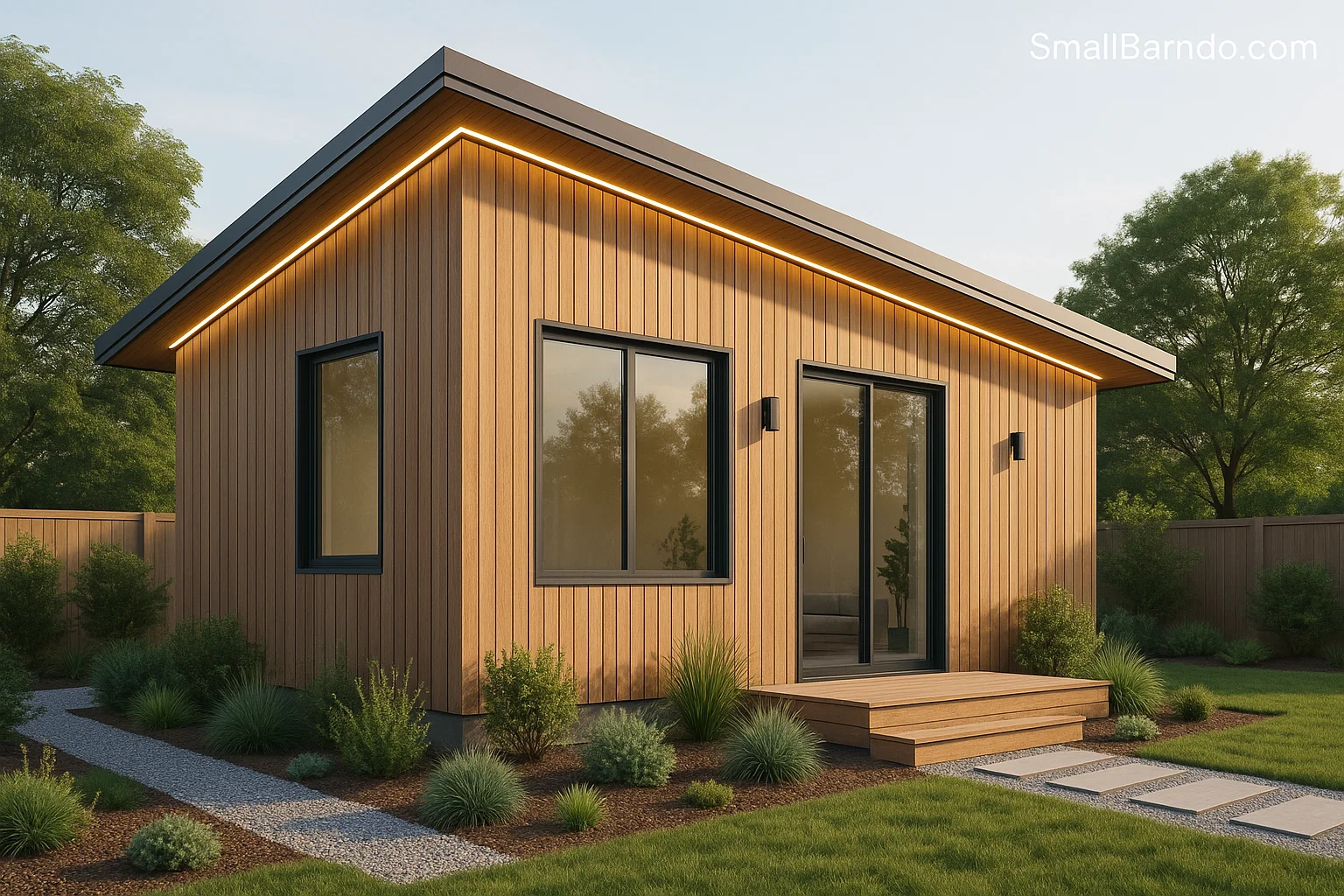
25 Maximized Tiny House with Shed Roof Plans for Full-Size Lofts
Have you ever scrolled through images of cozy tiny homes only to feel a familiar pang of disappointment at the thought of a cramped, crawl-in loft? The dream of minimalist living, financial freedom, reduced ecological footprint, and a simpler life is often overshadowed by the practical reality of limited headroom. We all yearn for that open, airy feeling, even in a micro-dwelling, especially when considering the loft, which is often intended to be your primary sleeping space.
You deserve a tiny home that doesn’t demand you bow down every time you enter your bedroom.
This article is your guide to solving that exact problem. We are diving into the world of the Tiny House with Shed Roof, a design masterpiece that fundamentally transforms the upstairs experience. The single-sloping roofline, often called a skillion or lean-to, grants a dramatic increase in vertical space, making a full-size, stand-up, or near-stand-up loft a reality. This simple architectural shift is the key to unlocking true multi-story functionality in a small footprint.
Prepare to discover 25 maximized plans that prove you don’t have to sacrifice comfort, accessibility, or stand-up freedom to live tiny. The future of tiny living is building up, not out, and it all starts with the right roof.
Table of Contents
The Shed Roof Advantage: Why It’s the Key to a Full-Size Tiny House Loft
The roof style you choose for your tiny home is the single most important factor in maximizing vertical space. Traditional tiny house with Shed Roof designs, often featuring a standard gable roof, inherently limit loft height, pushing you into that crouched or crawling space (where heights often hover around $36-48 inches}$).
The shed roof, however, offers unparalleled volumetric benefits by strategically shifting the entire volume to one side. This asymmetrical design creates one tall wall and one short wall, perfectly positioning the high side directly over your loft.
- Key Design Benefits for a Full-Size Loft:
- Maximizing Headroom: The single, high-side slope allows for significantly greater ceiling height. In a tiny house with Shed Roof on wheels (THOW), where the maximum exterior height is capped at $13 feet 6 inches}$, this design can deliver a usable loft height of 6 to 7 feet at its peak, a genuine game-changer compared to the limiting angles of a symmetrical roof.
- Superior Natural Light and Views: The high vertical wall created by the shed roof is ideal for installing tall windows, stunning clerestory windows, or large glass sliders. This dramatically improves natural light, creating a much airier feel and offering superior cross-ventilation, helping to mitigate the issue of rising heat in the loft space.
- Simpler, Cost-Effective Construction: A shed roof is structurally simpler than multi-pitched or hip designs, requiring fewer complex cuts and reducing both material and labor costs. This simplicity can help you allocate more of your budget toward premium interior features like a proper staircase or high-quality insulation.
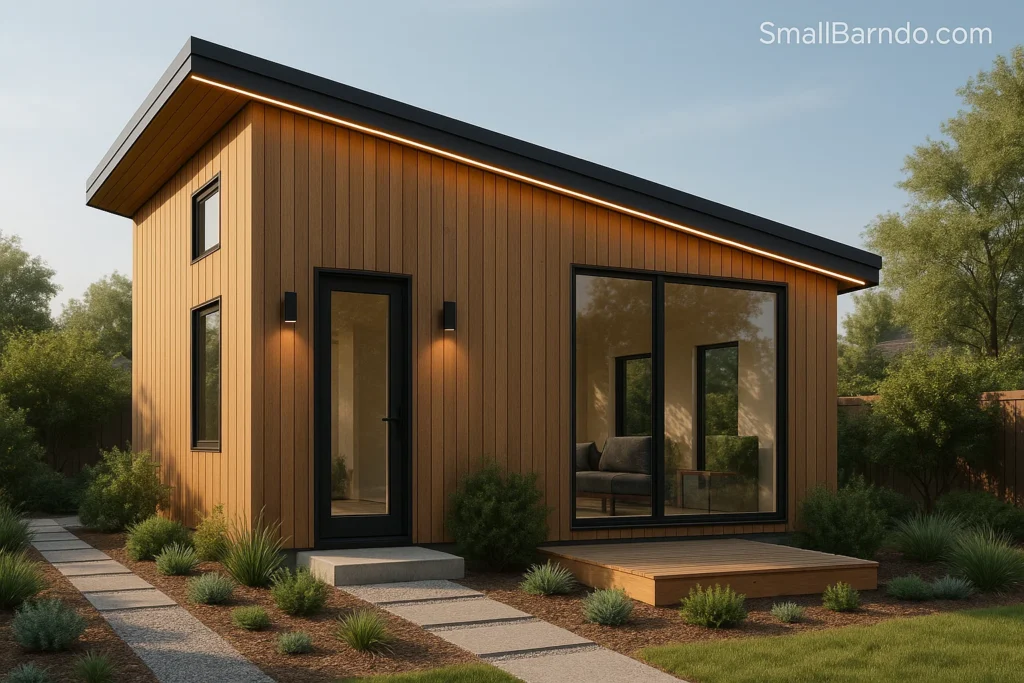
Shed Roof vs. Gable Roof: A Direct Loft Comparison
To fully grasp the magnitude of this difference, consider how each roof type impacts the space you actually inhabit:
| Feature | Shed Roof (Skillion) | Gable Roof (Traditional A-Frame) |
| Loft Headroom Potential | Excellent – High ceiling on one side; allows for full-size or near full-size standing room ($6 ft} +$). | Limited – Angled slopes severely restrict usable floor area and standing height (often $\le 5 ft}$). |
| Natural Light Intake | Superior – High vertical wall accommodates large/clerestory windows, maximizing light entry. | Moderate – Light is generally limited to end walls or small dormers built into the slope. |
| Solar Optimization | Ideal – The single, flat plane can be perfectly oriented (e.g., south-facing) and pitched for maximum solar panel efficiency. | Good – Requires more panels or a complex mounting system to cover the dual slopes efficiently. |
| Construction Complexity | Simple – Single slope requires minimal complex framing and is fast to build. | Moderate – Requires more framing and precise cuts for the ridge and rafters, slightly increasing labor. |
Essential Design Elements for Maximized Tiny House Lofts
A full-size loft is not just about the roof; it’s about cohesive, smart interior planning that respects the vertical space the shed roof provides. If you want a loft that feels like a real bedroom or office, not a storage attic, you must commit to these structural and design choices.
- The Code Standard for Comfort: While lofts are often legally exempted from the 6′ 8″ (80 inches) minimum ceiling height required for habitable space on the main floor (IRC Appendix Q), achieving this height, or close to it, in the tallest section of your loft is the functional definition of a “full-size” space. You should design the floor system to be as thin as structurally possible to conserve every precious inch of vertical clearance.
- Strategic Plumbing and Utility Stacks: Place the low-headroom areas, like the bathroom, kitchen, and any plumbing stacks, directly under the low-sloping side of the shed roof. This shrewd move maximizes the valuable, high-ceiling area for your primary living and loft spaces.
- Loft Placement: Always align your loft with the high-side wall. This may sound obvious, but ensuring the loft floor sits where the roof is already highest is non-negotiable for stand-up functionality.
Access Solutions: Beyond the Ladder
The difference between an inaccessible storage attic and a full-size second story is the way you ascend. Climbing a ladder at 2 a.m. is not conducive to long-term, comfortable living.
Here are the optimal ways to utilize the shed roof’s height for genuine accessibility:
- Straight or U-Shaped Staircase: The increased main floor ceiling height afforded by the shed roof often provides the necessary vertical clearance to accommodate a standard, less-steep staircase. You can integrate massive storage underneath the treads and landing, turning a necessary item into a multifunctional powerhouse.
- Storage Stairs (Box Stairs): These stairs use individual boxes or drawers as treads, maximizing every cubic foot. They are steeper than a traditional stair but offer unparalleled integrated storage and far greater safety than a ladder.
- Ship’s Ladder or Alternating Tread Stair: A necessary compromise for the narrowest tiny homes. These are steeper than a standard stair but are regulated to be safer than a simple ladder, offering a better path for daily use while conserving maximum floor space.
Featured Plans: 25 Maximized Tiny House with Shed Roof Plans
The true potential of the tiny house with shed roof lies in its versatility. These 25 design concepts demonstrate how you can leverage the single-slope roof to create specific, highly functional zones within your micro-dwelling.
Category 1: Plans Optimized for Full-Size Master Lofts
These designs prioritize the loft as a primary sleeping sanctuary, ensuring it feels like a real master bedroom with the space for a full or queen-size bed, plus storage and dressing area.
- The “Skyview” Model: This plan features the high side of the shed roof facing the most desirable view (and often the south) and is dominated by a continuous band of clerestory windows. This floods the loft with light and gives you a panoramic view, allowing a true $6 ft } 6 inch}$ ceiling height over the main sleeping area.
- The “Urban Retreat”: A plan focused on extreme vertical clearance, using a shallow roof pitch to achieve a $11 foot}$ high-side wall. This permits a true stand-up dressing area inside the loft, complete with a built-in dresser along the high wall, transforming the typical storage issue.
- The “Double-Duty”: This design uses the shed roof to create a primary, full-size sleeping loft, and a smaller, secondary storage loft positioned above the bathroom on the low side. This separation keeps the primary loft uncluttered and functional.
Category 2: Plans Focused on Multi-Purpose Lofts (Office/Flex Space)
For those who work from home or need a dedicated hobby area, the maximized headroom creates the perfect second-story multi-use room.
- The “Creative Cube”: The loft is explicitly designed as a dedicated home office. The high-side window is perfectly positioned above a built-in, continuous desk running the width of the house. You have enough headroom to use a standard office chair and stand up for video calls, a requirement no cramped gable loft can truly meet.
- The “Library Loft”: This concept uses the high wall to create full-height, built-in bookshelves, accessible from the loft floor. The generous space creates an enviable reading nook with a low-profile sofa or beanbag under a large skylight, making it a place of peace and quiet.
Category 3: Plans Integrating Sustainable & Off-Grid Features
The simple, large, single plane of the shed roof makes it the ideal platform for environmental enhancements, optimizing your off-grid capabilities.
- The “Solar Sloper”: The shed roof’s pitch is specifically engineered (often a low $2/12$ to $3/12$ pitch) to face the optimal solar direction. This offers a huge, uninterrupted surface area for mounting solar panels, significantly increasing your energy generation potential compared to smaller, fragmented surfaces on other roof styles.
- The “Rain Harvester”: Because all rain runoff is concentrated along a single, continuous low-side gutter, this design is perfect for maximizing rainwater collection efficiency. The water is channeled directly into a large cistern, simplifying the plumbing and ensuring you harvest nearly all available precipitation.
Limitations and Considerations of Tiny House with Shed Roof Designs
While the benefits are clear, it is crucial that you understand the conditions and limitations inherent in any maximized tiny home design. Excellence requires a realistic perspective.
- The Egress Requirement (Condition): Regardless of how much headroom you have, if your loft is used for sleeping, it must comply with emergency escape and rescue opening (egress) requirements. This typically means you need an operational window that is large enough and positioned correctly, which can sometimes conflict with the high-side clerestory window design. Always consult your local building inspector.
- Building Code Height Restrictions (Limitation): If you are building a THOW, the overall height cannot exceed 13 feet 6 inches to be legally towed on most US highways without special permits. Maximizing loft headroom directly reduces the ceiling height on your main floor, or vice versa. The balance is critical: a $7 ft}$ main floor combined with a $6 ft } 6 in}$ loft (at the peak) is a tight but achievable balance within the $13 ft } 6 in}$ envelope.
- Heat Stratification and Management: The high vaulted ceiling, which is the shed roof’s greatest strength, is also its biggest thermal challenge. Hot air naturally rises and will collect at the highest point of your loft. You must include a robust ventilation strategy: installing a small ceiling fan or a high-mounted mini-split AC unit to circulate or extract the hot air is essential for summer comfort in your new full-size bedroom.
Conclusion: Build Up, Not Out
The Tiny House with Shed Roof plan is arguably the most effective architectural solution for anyone committed to tiny living but unwilling to compromise on the comfort and functionality of a full-size loft. By strategically elevating one wall, the single-slope roof grants you the vertical space needed for standing, walking, and true bedroom or office functionality, transforming the traditional cramped loft into a genuine second story.
Choosing one of these maximized plans is more than a design choice; it’s an investment in a more comfortable, livable, and sustainable future, where every inch of your space truly works for you. You don’t have to sacrifice your posture for your dream.
Ready to start designing your own maximized tiny home? Take the next step:
FAQ: Your Questions About a Tiny House with Shed Roof Answered
Is a Tiny House with Shed Roof more expensive to build than a gable roof version?
- Answer: Generally, no. The shed roof is one of the most economical and easiest roofs to build due to its simple, single-slope design. It uses fewer complex materials, requires simpler framing, and reduces labor time compared to a standard gable or hip roof. While you may spend slightly more on a tall clerestory window on the high side, you save on the materials and complexity of a symmetrical roof ridge, making the overall cost often a wash or slightly lower.
How much standing room can I realistically get in a Tiny House with Shed Roof loft?
- Answer: For a THOW (limited to $13 feet } 6 inches}$ total height), a well-executed shed roof design can deliver between 6 feet to 7 feet of standing height in the highest part of the loft. This is achieved by using low-profile floor assemblies and minimizing the main floor ceiling height slightly (e.g., $7 feet}$ instead of $8 feet}$). Always measure carefully, factoring in the thickness of your mattress or any potential structural beams.
Are shed roofs better for solar panels on a Tiny House with Shed Roof?
- Answer: Yes, they are generally considered superior for solar optimization. The single-slope design provides a large, uninterrupted plane that can be perfectly oriented (ideally south-facing in the Northern Hemisphere) and pitched to maximize the sun’s efficiency. This eliminates the need for complex, less-efficient panel arrangements required on dual-pitched gable roofs.
Do I need special drainage for a shed roof?
- Answer: Yes, but it is simple to manage. Because all water and snow runoff are concentrated onto a single, low side, you must install robust guttering and a well-planned drainage system. The benefit is that this single-point drainage is ideal for routing water directly into a rainwater collection cistern, simplifying your water management setup.