35 Innovative Modern Home Exterior Designs: Cutting-Edge Trends
There’s a unique, deeply personal feeling that washes over you when you pull up to your home a feeling of pride, security, and true arrival. Your home’s exterior is more than just a façade; it’s the opening sentence of your life’s story, a reflection of your vision, and the first handshake you offer the world. If that initial impression is currently falling flat, or you’re simply dreaming of building a place that truly belongs to the future, you’ve arrived at the right destination.
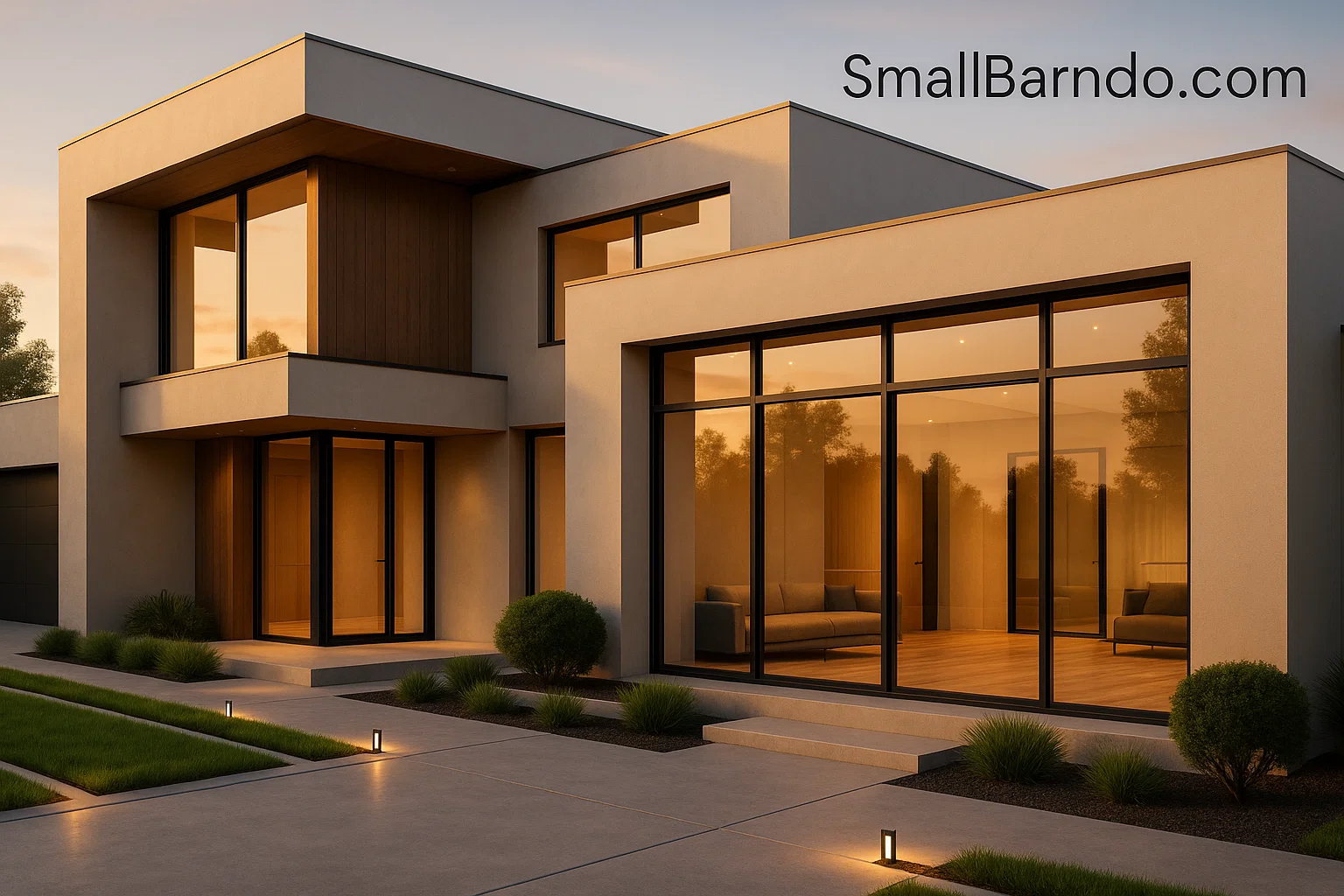
The world of architecture is moving faster than ever, driven by technological innovation and a profound desire for sustainability. The modern home exterior of 2026 is a masterful blend of sleek aesthetics, high-performance materials, and a seamless connection to nature. We’ve compiled 35 of the most innovative designs and cutting-edge trends to not just inspire your next project, but to future-proof your investment and create a legacy of sophisticated, sustainable living. This comprehensive guide will illuminate the principles and materials that define the look of tomorrow’s architecture, providing you with the exact knowledge to elevate your home’s curb appeal and functionality far beyond the current standards.
Table of Contents
Architectural Foundations: The New Modern Home Exterior Geometry
The hallmark of truly modern design is a commitment to clean lines and intentional, often asymmetric, geometry. This section details how architects are moving beyond simple boxes to create dynamic, visually striking silhouettes. Your decision on the fundamental shape of your home dictates its character and its relationship with the surrounding landscape.
Embracing the Bold and Asymmetric
Architects are challenging traditional symmetry to introduce drama and visual interest. This approach allows the structure to interact more dynamically with natural light and shadow throughout the day.
- Cantilevered Structures: Defying Gravity. Cantilevers are the ultimate expression of structural innovation in a modern home exterior. These are overhanging structural elements like extended balconies, floating rooms, or roof sections anchored at only one end. They give the appearance of the volume floating in the air.
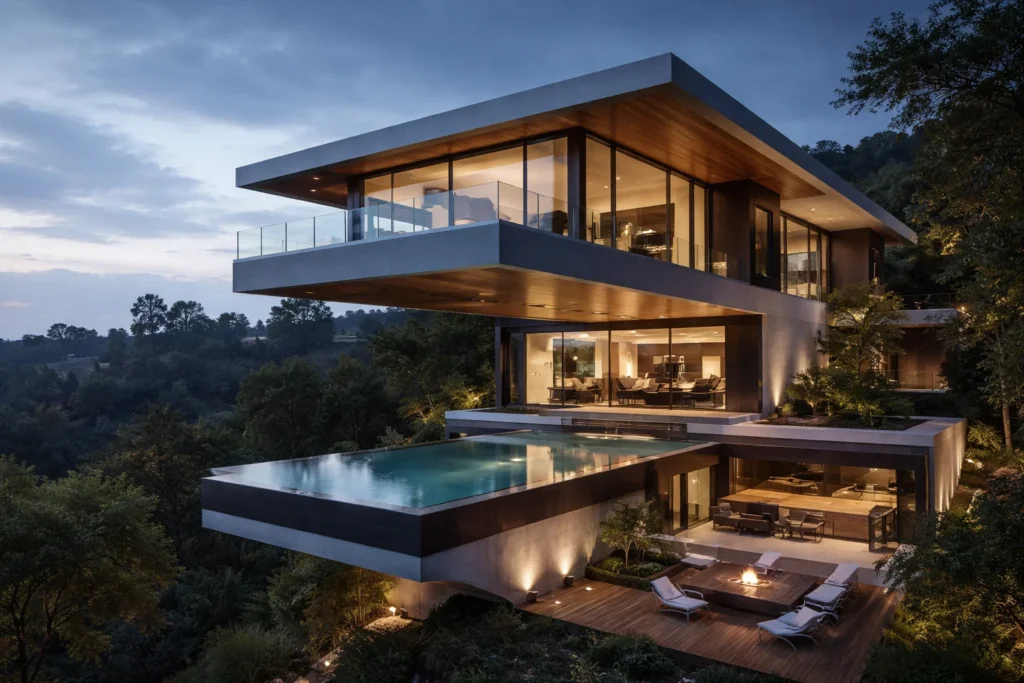
- Engineering Note: While traditional cantilevers were limited, modern designs, often employing sophisticated steel mega-trusses or engineered reinforced concrete, allow for spans exceeding 20 meters in commercial projects and proportionally significant overhangs in residential builds, creating dramatic, protected outdoor spaces underneath. They are a smart choice for maximizing space on compact or irregularly shaped urban lots.
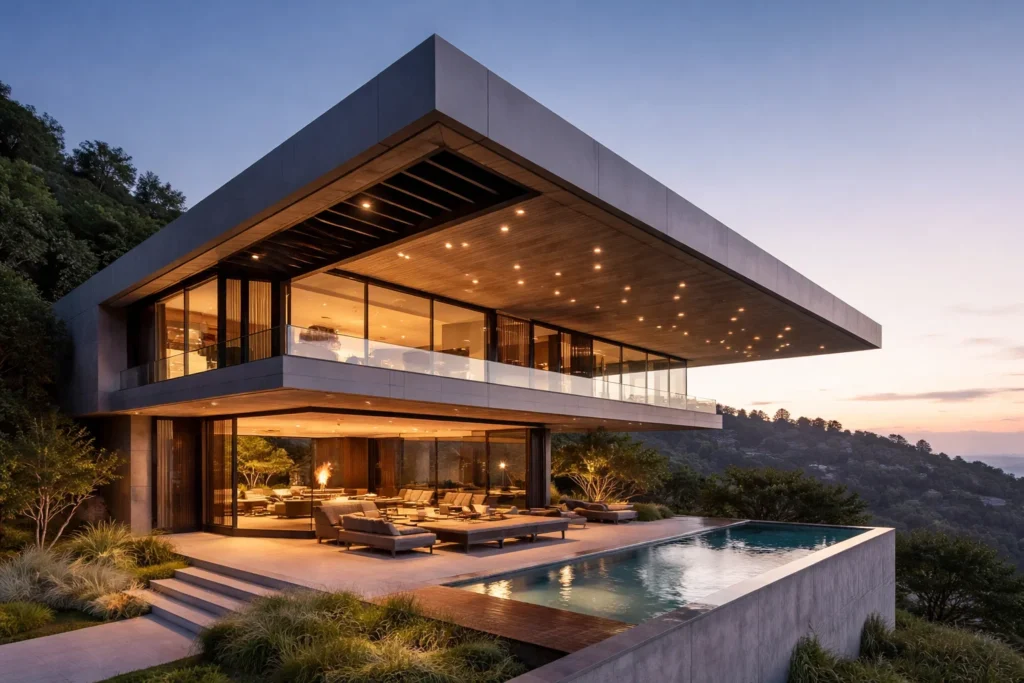
- Aesthetic Impact: The bold, unsupported extension adds depth, creates dynamic shadows, and enhances the home’s connection to the landscape.
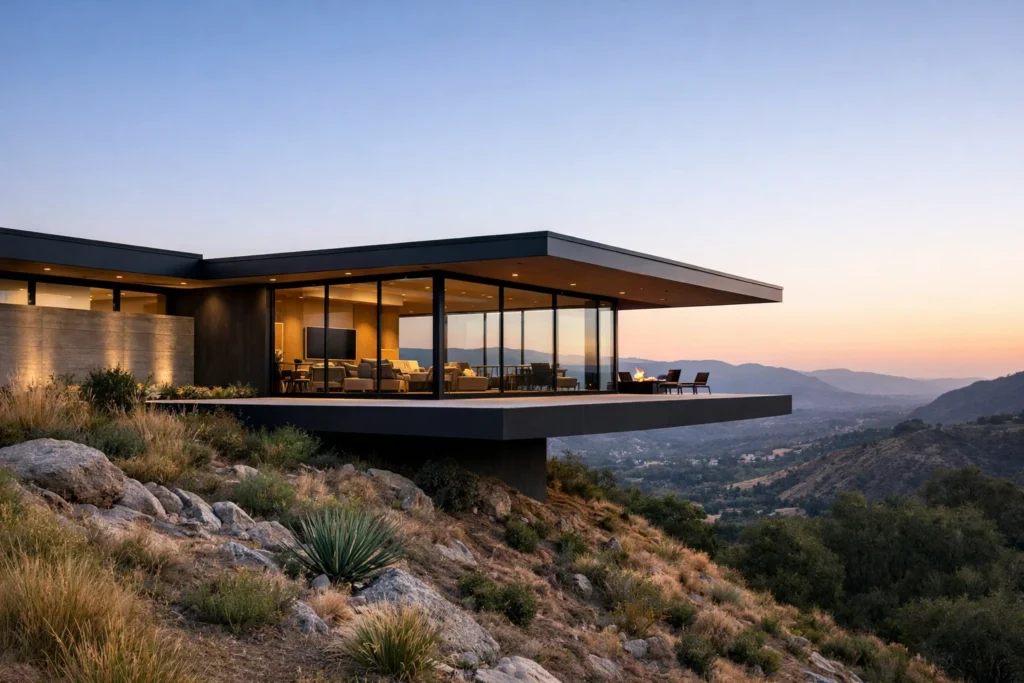
- Flat and Mono-Pitched Rooflines. These low-profile roof styles offer a clean break from the visual clutter of traditional gables. They maintain the sleek, horizontal lines that define modernism.
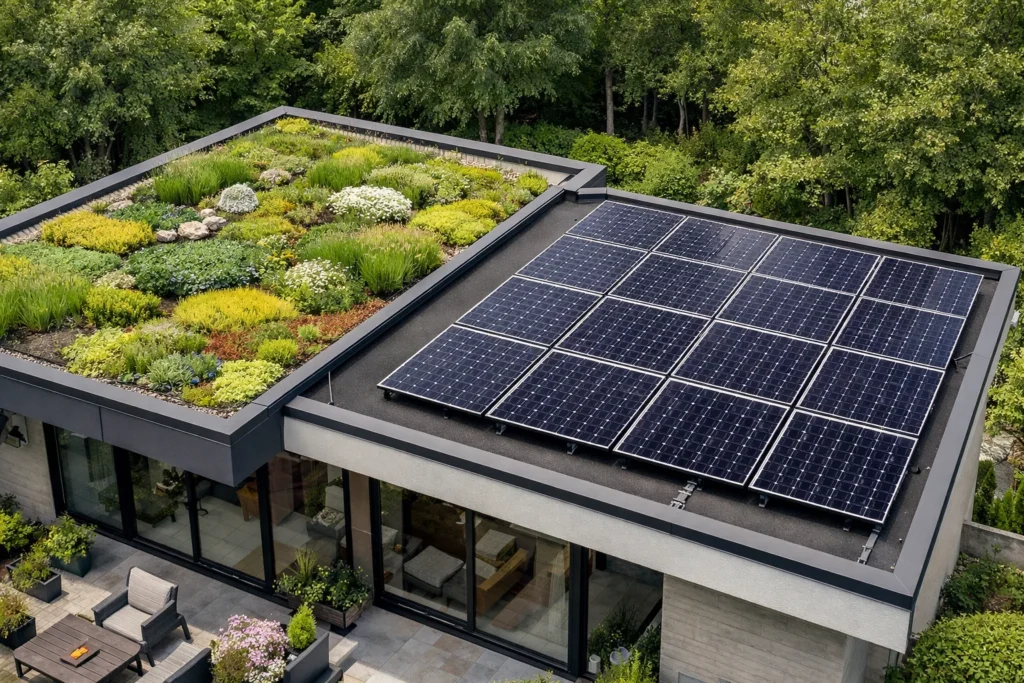
- Flat Roofs: Ideal for integrating features like green roofs (providing insulation and biodiversity) or solar photovoltaic arrays that are hidden from street view. Limitation: They require meticulous detailing and internal or hidden drainage systems to prevent water pooling.
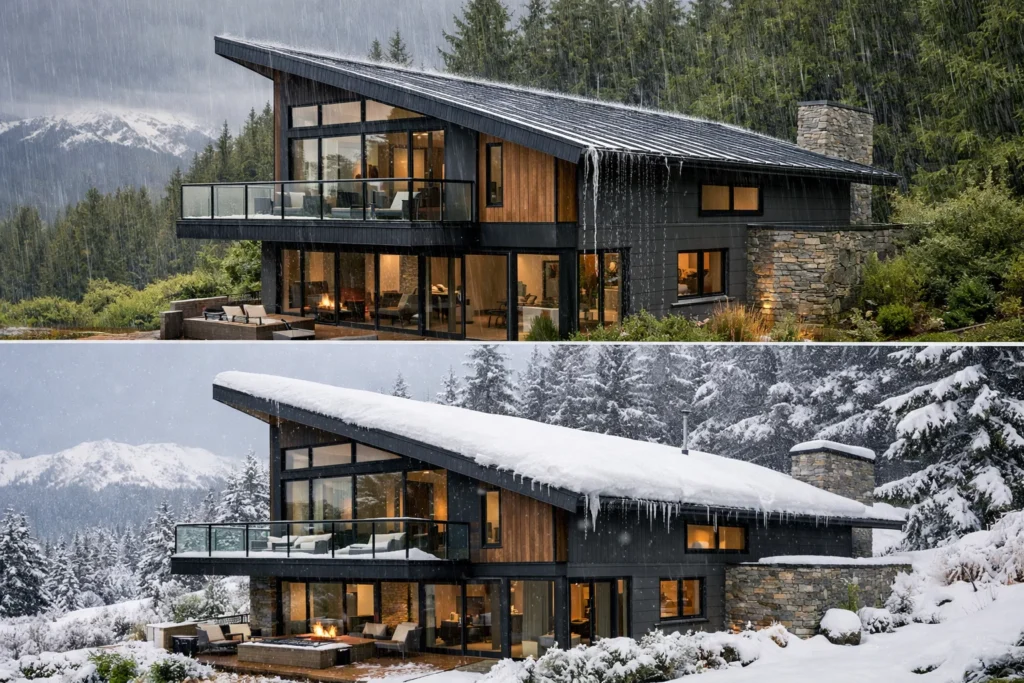
- Mono-Pitched (Shed) Roofs: Preferred in high-rain or snowy climates as they provide superior water run-off compared to truly flat roofs, while maintaining a contemporary, angled silhouette.
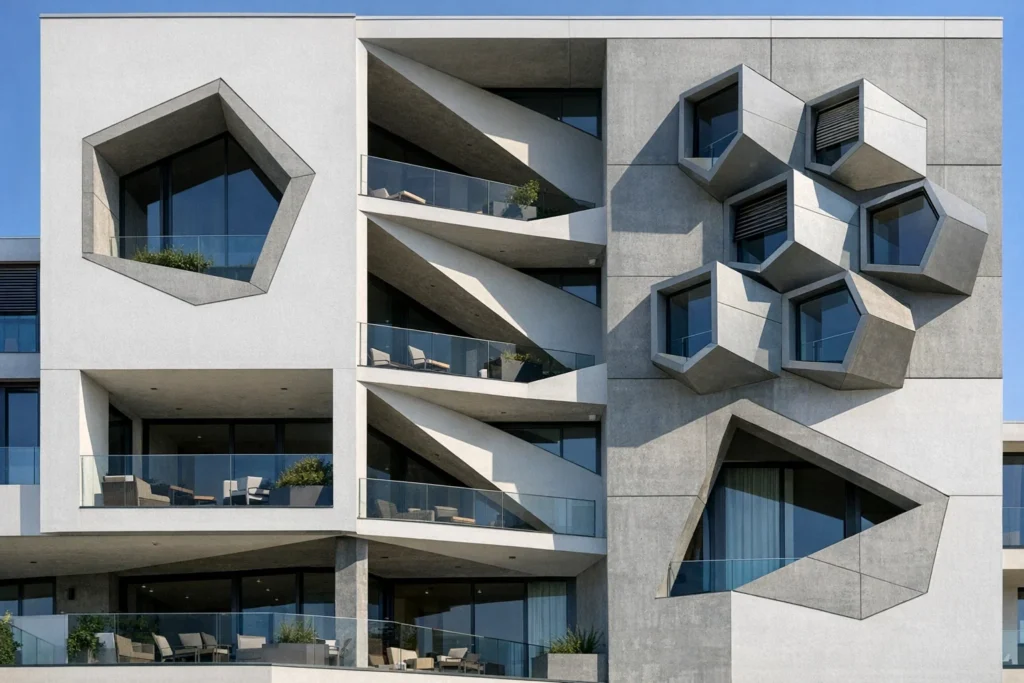
- Geometric Cut-Outs and Polygonal Forms: Look for recesses, inset windows, and polygonal additions (like hexagons and triangles) integrated into the facade. These elements are not merely decorative; they serve functional purposes such as providing solar shading, enhancing privacy, or directing views.
The Power of Seamless Indoor-Outdoor Harmony
The highest form of luxury in modern design is the blurring of the division between interior and exterior spaces. Your home should feel like an organic part of its environment.
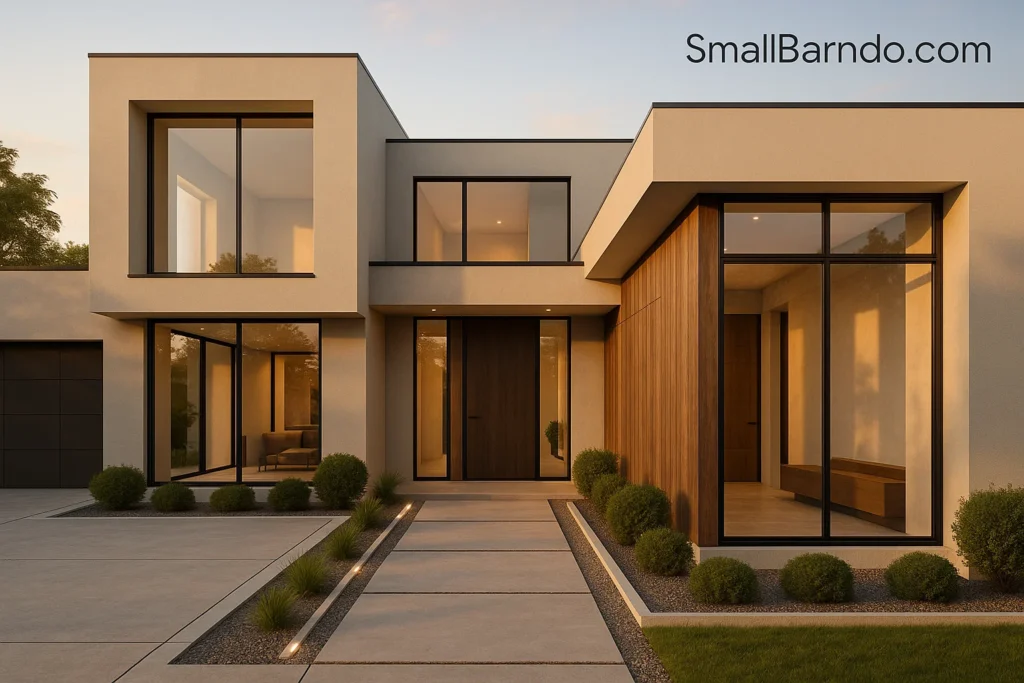
- Floor-to-Ceiling Glass Walls: Expansive glass is the lifeblood of a modern facade, dissolving walls to flood your living spaces with natural light and frame the views.
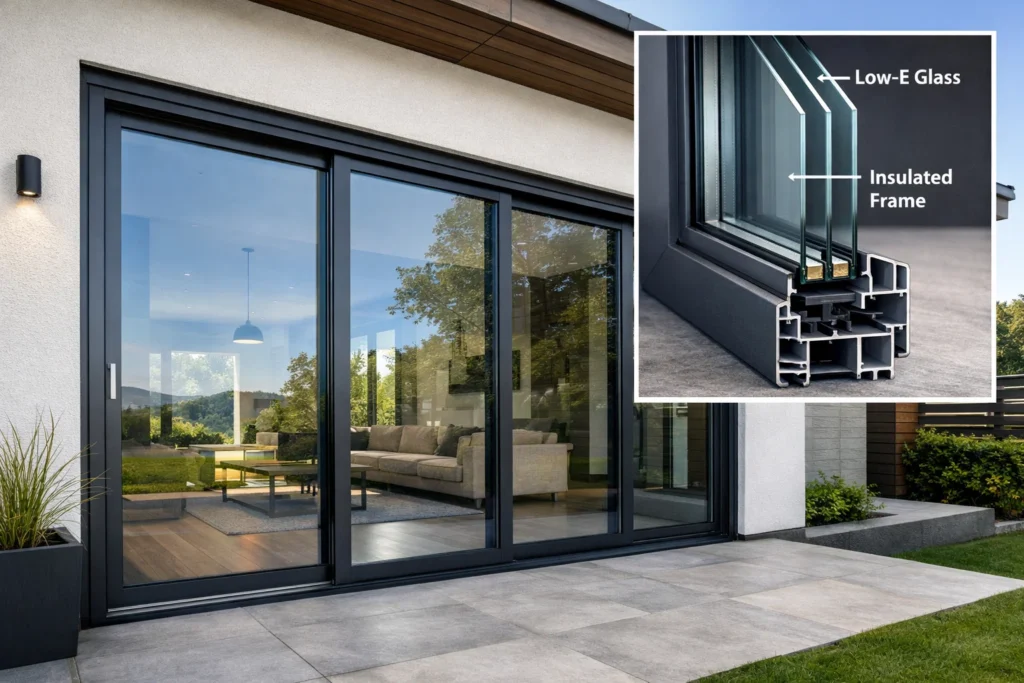
- Energy Consideration: To maintain efficiency, choose triple-glazed, low-emissivity (Low-E) glass with insulated frames. While a high initial investment, this is non-negotiable for a truly high-performance modern home exterior and significantly reduces long-term heating and cooling costs.
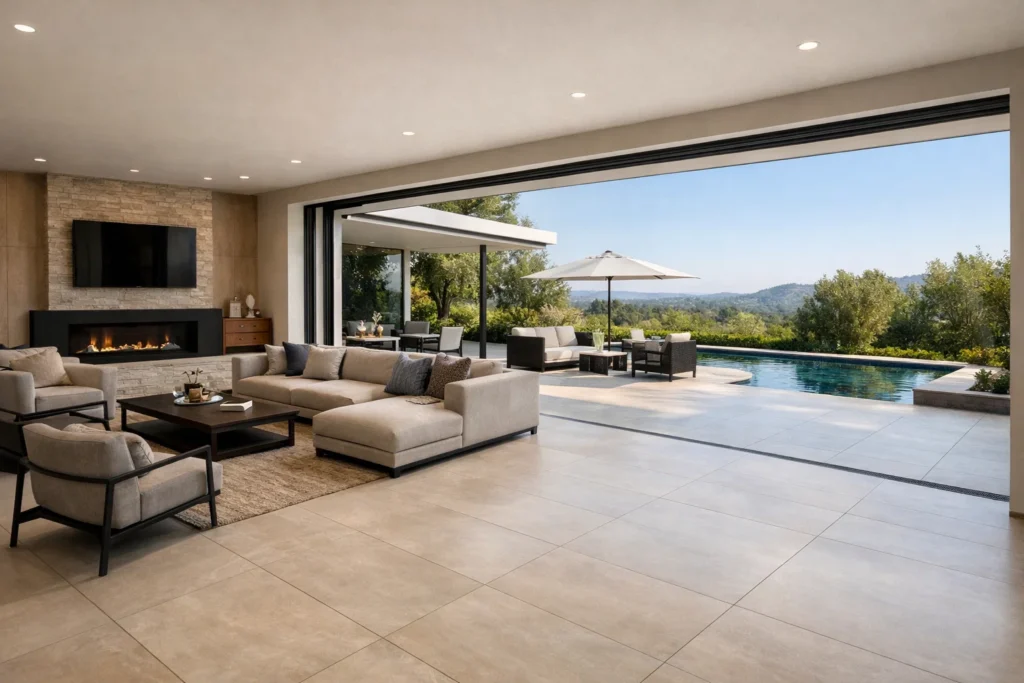
- Continuous Flooring and Open Transitions: Using the same large-format porcelain slabs, smooth concrete, or thermally-modified wood decking that runs uninterrupted from your interior living room out to the patio creates the illusion of continuous space.
- The Seamless Connection: This transition is enhanced by retractable or pocketing glass doors that slide entirely out of sight, physically erasing the wall between inside and out.
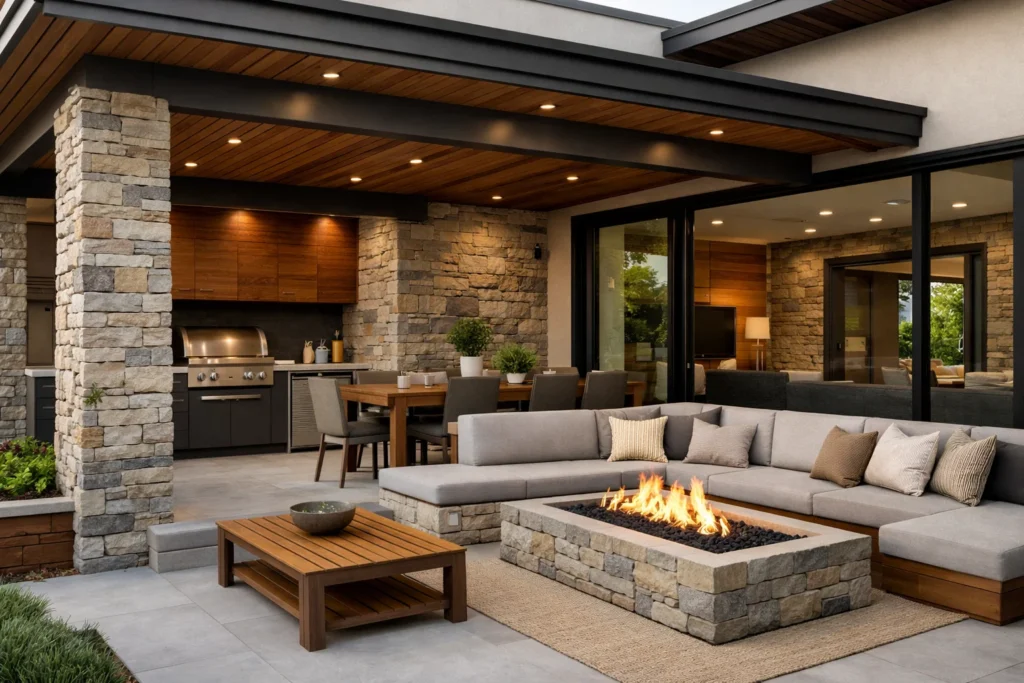
- Integrated Outdoor Living: Outdoor spaces are no longer afterthoughts. They are designed as true architectural extensions, featuring built-in seating, outdoor kitchens, and covered pergolas that share the same material palette as the house itself. This multi-functional approach maximizes your home’s usable space.
Material Innovation: High-Performance Facades for the Modern Home
The skin of your home is crucial for both aesthetics and long-term performance. Cutting-edge materials offer superior durability, fire resistance, and low maintenance, while delivering a diverse palette of textures and tones. When selecting the materials for your modern home exterior, prioritize longevity and climate compatibility.
The Dominance of Mixed Textures and Layering
The days of the monolithic facade are over. Contemporary design embraces a thoughtful contrast of textures to create visual depth and a sense of luxury. Rule of Thumb: Limit yourself to three primary materials to maintain harmony.
| Material Group | Common Application | Texture/Tone | Function |
| Heavy/Grounded | Base levels, columns, entryways | Natural Stone (Granite, Limestone), Exposed Concrete (smooth or board-formed) | Anchors the structure; provides visual weight and permanence. |
| Warm/Organic | Accent walls, soffits, entry doors | Wood (Charred Cedar, Thermally-Modified Pine), Wood-look Fibre Cement | Introduces warmth and a natural feel; contrasts well with cold materials. |
| Sleek/Industrial | Main cladding, trim, roofing | Metal Panels (Zinc, Aluminum, Weathered Steel), Large-Format Porcelain Slabs | Adds sharp, crisp lines; ensures durability and low maintenance. |
- Key Material Pairings for 2026:
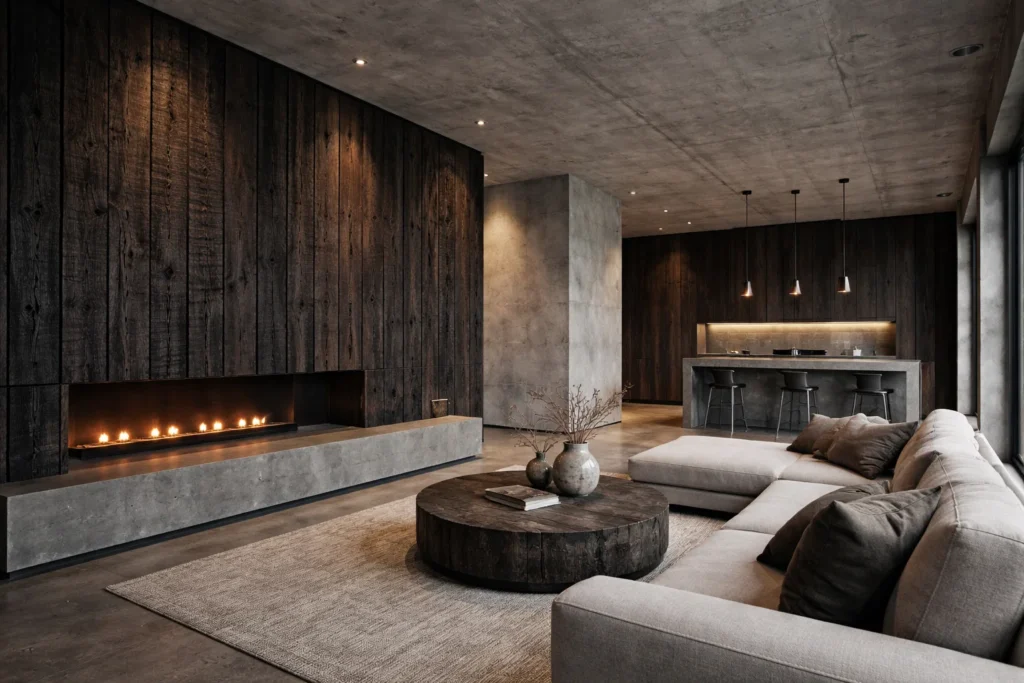
- Charred Timber (Shou Sugi Ban) and Exposed Concrete: The intense, dark, rustic texture of the timber offers a compelling, warm contrast to the smooth, cool industrial feel of the concrete. The charring also makes the wood highly resistant to fire, rot, and insects.
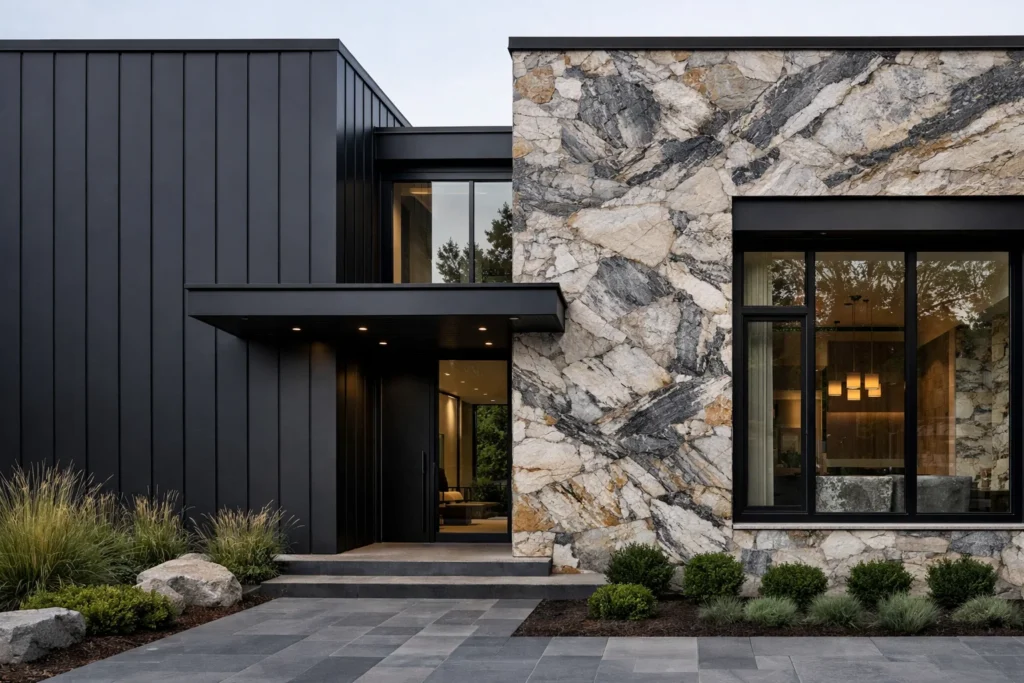
- Sleek Metal Cladding and Natural Stone: Matte black or dark bronze standing seam metal panels provide a sharp, linear element, juxtaposed against the timeless luxury and unique veining of local natural stone. This is the definition of sophisticated contrast.
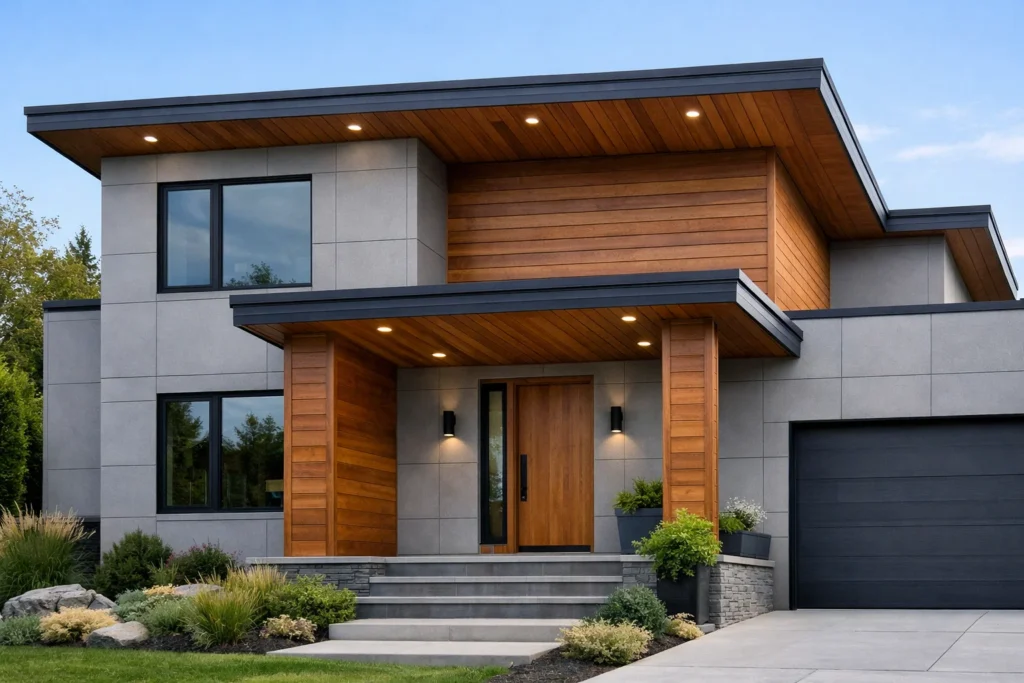
- Fibre Cement Panels and Warm Wood Accents: Fibre cement is a low-maintenance, fire-resistant choice that can mimic the look of wood or stucco. Using it for the main body and reserving rich natural wood only for protected areas (like soffits or porch ceilings) gives you the best of both worlds: durability and organic warmth. Comparison: Fibre cement often provides an A1 non-combustible fire rating, a significant safety advantage over natural wood, making it a “future-proof” investment.
Sustainable and Smart Facade Solutions
Choosing sustainable materials for your modern home exterior is no longer a niche choice; it’s a responsibility and a way to increase your property’s value through certified performance.
- Photovoltaic (BIPV) Facades: The next generation of solar power. Instead of large, clunky rooftop panels, BIPV integrates solar technology directly into the building materials. Think dark, uniform glass panels or sleek shingle systems that look like regular cladding but are actively generating clean electricity. This is crucial for achieving net-zero goals.
- Rainscreen Cladding Systems: These are high-performance assemblies (often using porcelain, terracotta, or fibre cement panels) that are installed over a ventilated air cavity.
- Mechanism: This gap creates a continuous drainage and drying system behind the facade, which dramatically improves thermal performance, prevents moisture buildup, and significantly enhances the long-term weather resistance of the structure.
- Recycled and Composite Materials: Beyond natural wood, look at innovative options like cladding made from recycled steel or high-density cork panels. Cork is naturally antimicrobial, offers phenomenal insulation, and is harvested renewably. Limitation: While long-term savings are significant, the initial cost for some advanced sustainable systems, like BIPV or smart glass, can be up to 50$ per square foot, requiring careful budget planning.
Color Palettes and Accents: Defining Your Modern Home’s Curb Appeal
The right combination of colors and accents transforms a technically sound design into a stunning masterpiece. Modern trends have evolved from stark white and grey into a richer, more nuanced spectrum that feels both sophisticated and timeless.
The Shift to Deeper, Earthier Tones
Your color palette should ground the home, allowing the architectural forms to take center stage. The current trend favors bold, saturated neutrals that offer high contrast without feeling dated.
- Dominant Color Trends for 2026:
- Matte Charcoal and Deep Blues: These dark, moody hues absorb light beautifully, making architectural lines appear sharper and more intentional. They pair exquisitely with warm wood accents for a balanced look.
- Weathered Grays and Greiges: A mixture of grey and beige, ‘greige’ offers a versatile, warmer neutral that complements both light natural stone and dark metal. It provides a more organic feel than pure, cold grey.
- Earthy Greens (Sage/Moss) and Sandy Beiges: Aligned with the rising popularity of biophilic design, these colors help the structure harmonize with its natural surroundings, making the transition from garden to home feel seamless.
Statement Windows, Doors, and Lighting
The small details on your modern home exterior, the trim, the entry, and the lighting serve as the final touch that dictates the home’s personality.
- Sleek Window and Door Frames: The current standard favors black-on-black or bronze-on-bronze aluminum or thermally-broken vinyl window frames. This dark outline creates a crisp, clean break against lighter facades, emphasizing the geometry of the openings.
- The Statement Entryway: Your front door is the home’s most personal feature. Make it a focal point with:
- Oversized Dimensions: Taller and wider than standard doors for a feeling of grandeur.
- Luxurious Materials: Solid teak, dark metal, or a glass pivot door.
- Bold Color: Use a vibrant, unexpected color (like turquoise or deep red) here to introduce personality without disrupting the main palette. Condition: If the facade is dark (charcoal), a natural wood door offers the necessary warmth and contrast.
- Minimalist Architectural Lighting: Modern lighting is designed to be felt, not seen. Integrated LED strip lights are tucked seamlessly into overhangs, under recessed entryways, and along pathways. This cove lighting technique highlights the home’s sharp geometry and texture by creating soft, focused light and shadow, rather than exposing the light fixtures themselves.
Conclusion: Investing in a Future-Forward Modern Home Exterior
Your journey to a visionary modern home exterior is an investment that transcends mere aesthetics. By embracing the cutting-edge trends of 2026, from dynamic, gravity-defying geometry and seamless indoor-outdoor integration to sustainable, high-performance materials, you are creating a home that is more energy-efficient, requires less maintenance, and provides a healthier, more beautiful living environment.
The synergy of design and technology today ensures that your home will not just look good, but will perform exceptionally for decades to come, significantly boosting your property value and your daily quality of life. The 35 innovative designs emerging now all share a common DNA: they are honest about their materials, they are focused on functionality, and they strive to maximize your connection to the world outside.
Start with the materials, define your palette, and let the architecture tell your unique, forward-thinking story. Don’t just build a home; build a legacy that looks toward the future.
(FAQ) About Your Modern Home Exterior
What is the main characteristic of a modern home exterior design?
The main characteristic is an emphasis on clean, unadorned lines, minimalist forms, and a focus on materiality, letting the selected wood, stone, or metal speak for itself rather than excessive ornamentation. Key elements include flat or low-pitched roofs, large expanses of highly efficient glass, and an intentional, often asymmetrical, balance of geometric shapes. The goal is a look of effortless sophistication and ultimate functionality.
Which exterior materials are considered the most sustainable for new modern homes?
The most sustainable materials are those with low embodied energy, are recyclable, or are renewable. Top choices include reclaimed wood (which adds character and reduces waste), recycled metal cladding (like aluminum or steel, which are durable and highly recyclable), high-density cork panels (for insulation and texture), and advanced, low-maintenance materials like fibre cement siding. Furthermore, integrating BIPV (Building-Integrated Photovoltaics) into the facade is the ultimate step toward a truly sustainable modern home exterior.
How do modern home exteriors address energy efficiency?
Modern exterior design actively integrates energy-saving features into the structure itself. This is achieved through the use of highly insulated rainscreen cladding systems (which create a thermal break), triple-glazed, low-emissivity windows to minimize heat transfer, and the strategic use of large roof overhangs or cantilevers to provide passive shading during the hottest parts of the day. These design choices dramatically reduce the home’s reliance on artificial heating and cooling.
Is it risky to use dark colors on a modern home exterior in hot climates?
While dark colors naturally absorb more heat, modern architecture mitigates this risk through advanced techniques. Dark cladding materials are often used in conjunction with a ventilated rainscreen system. This system allows for continuous airflow behind the cladding, preventing heat transfer into the wall assembly and keeping the interior cool. For best results, use matte finishes and ensure superior wall insulation.
What is the recommended balance when mixing materials on a modern facade?
Architects typically recommend adhering to the “Rule of Three” for exterior materials. You should designate one material for the majority of the surface area (the body, about $60, a complementary material for a secondary area (the accent, about $30, and a third, high-impact material for small focal points (the pop, about $10, such as the entryway or a chimney stack. This ensures the facade is layered and interesting without appearing busy or disjointed.