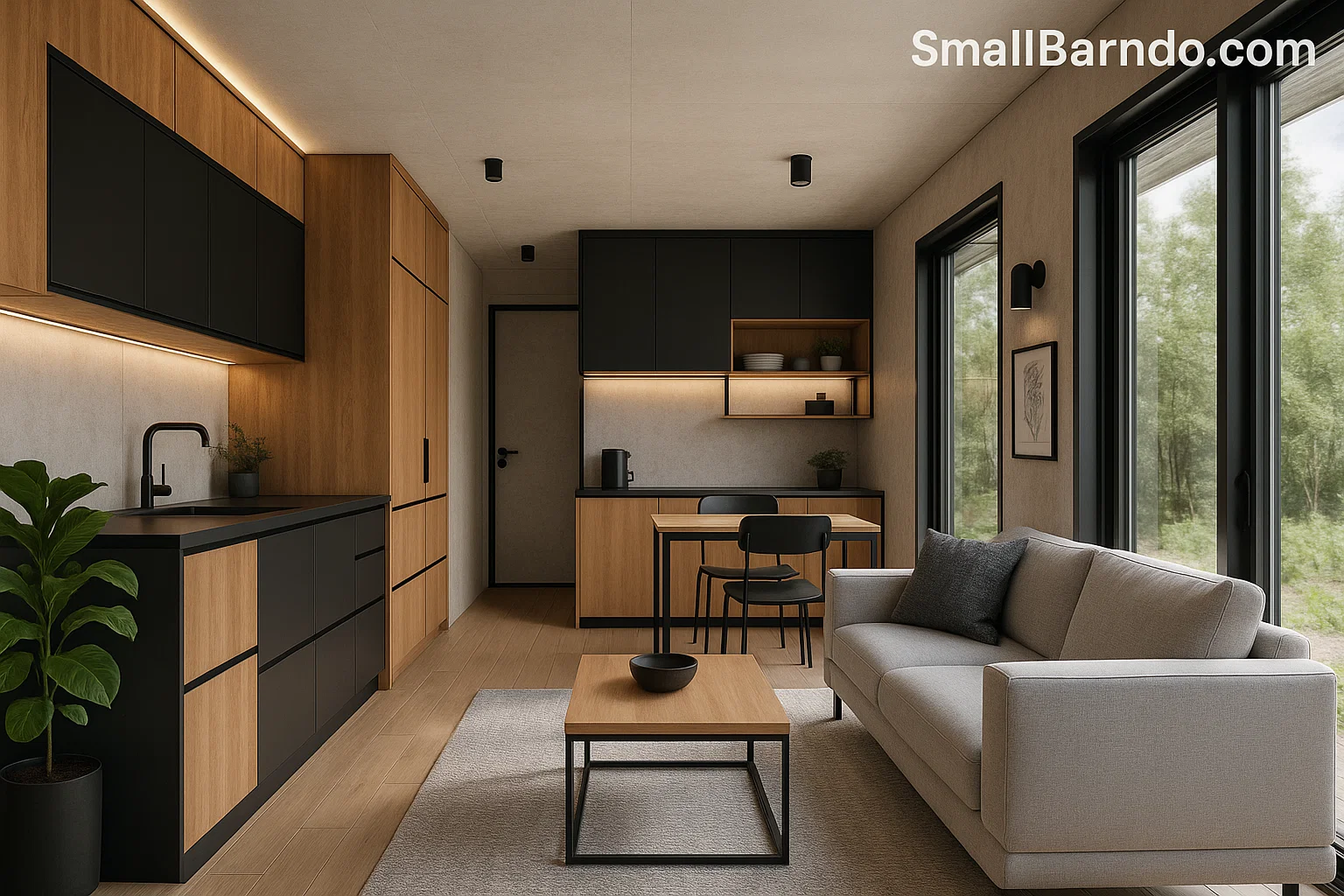
The Transformative Guide to Container Home Designs: Floor Plans and Building Costs
The idea of building a home is often tied to overwhelming stress, astronomical costs, and years of construction. It’s a dream that feels out of reach for many. But what if the solution to a sustainable, modern, and affordable home was already sitting at a port, waiting for a new purpose? We’re talking about shipping container homes, a revolutionary alternative that has transformed the housing market.
For years, you have likely watched friends and family struggle with traditional mortgages, feeling chained to a system that offered little flexibility. That’s why, when you first encountered the ingenious concept of using reclaimed steel shipping containers for housing, something clicked. It’s a fusion of minimalist living, rugged durability, and conscious design that speaks to a deeper desire for financial freedom and self-sufficiency.
This isn’t just about saving money; it’s about building a future where your home reflects your deepest values. This definitive guide is your map to navigating the world of container home designs, from clever floor plans to realistic building costs, empowering you to turn that sturdy steel box into the customized, eco-friendly sanctuary you’ve always imagined.
Table of Contents
Why Choose a Container Home? Comparing Cost, Speed, and Sustainability
The journey into container home ownership typically begins with a desire for something different something faster, cheaper, and kinder to the planet. Before diving into floor plans, you must first confirm if this structural shift aligns with your financial and lifestyle goals.
Container Homes vs. Traditional Builds: A Quick Comparison
When you evaluate the choice between a traditional stick-built home and a container home, the contrast in financial commitment and timeline is stark.
| Feature | Container Home | Traditional Stick-Built Home |
| Average Cost (Total) | $25,000–$250,000+ | $150,000–$500,000+ |
| Cost Per Square Foot | $150–$350 | $150–$400+ |
| Construction Time | 2–8 Months | 8–18+ Months |
| Material/Structure | Durable, Weather-Resistant Corten Steel | Wood/Concrete Frame |
| Sustainability Factor | High (Repurposing existing materials) | Variable (Depends on sourcing) |
- Cost-Effectiveness: You will find that while a highly customized, multi-container luxury build might rival a traditional home in cost, a basic single-container studio or cabin can start as low as $25,000 for a DIY project. The ability to control the core structure cost is one of the biggest appeals of container home designs.
- Construction Speed: The fundamental structure is already complete when the containers arrive on your site. This prefabricated nature drastically cuts down the build time. For you, this means potentially moving into your new home in as little as three to six months, rather than the year or more often required for conventional construction.
- Sustainability: By choosing a used or “one-trip” container, you are actively participating in the “upcycling” of a massive steel structure that would otherwise sit idle or be scrapped. This commitment to reduced waste is a powerful motivator for many modern homeowners.
Essential Container Home Designs: Understanding Sizes and Layouts
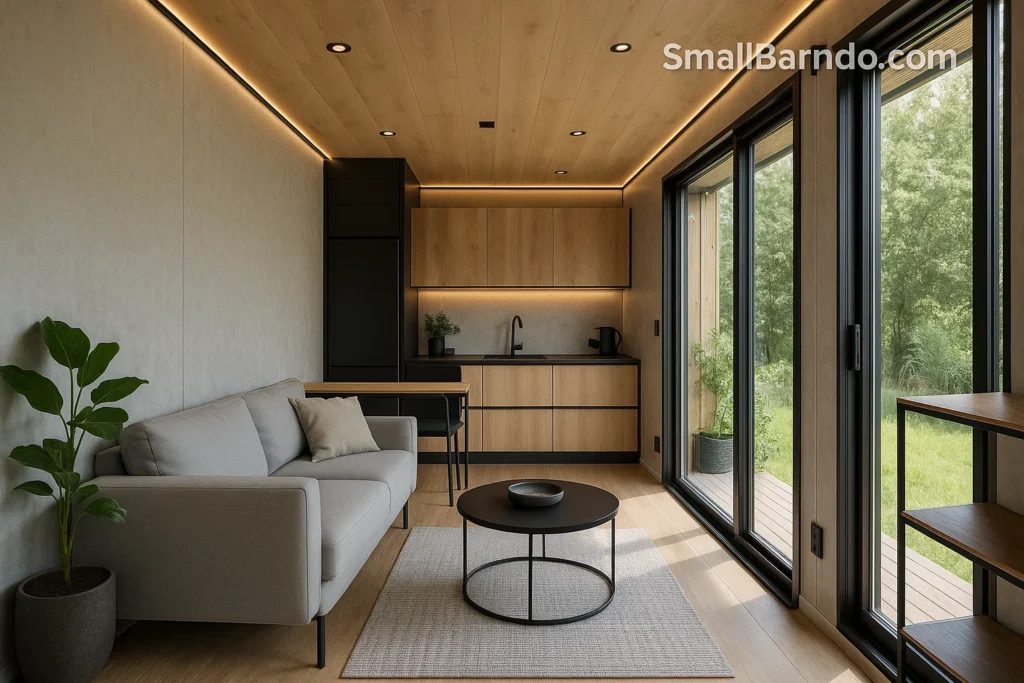
The key to successful container home designs is respecting the fixed dimensions of the box while maximizing the interior volume. Creativity within constraint is where the magic happens.
Standard Container Dimensions and Types
Before sketching your dream floor plan, you must know your canvas. Standard ISO (International Organization for Standardization) shipping containers come in specific sizes, and for residential use, two are dominant:
- 20-Foot Standard Container:
- External Dimensions: 20’ L x 8’ W x 8’6” H.
- Approx. Living Space (before insulation/framing): 160 sq. ft.
- Ideal For: Compact studios, guest houses, single-person offices, or off-grid cabins.
- 40-Foot Standard Container:
- External Dimensions: 40’ L x 8’ W x 8’6” H.
- Approx. Living Space (before insulation/framing): 320 sq. ft.
- Ideal For: Comfortable 1-bedroom layouts or the foundation of a larger multi-container home.
Crucially, you should prioritize the 40-foot High Cube container. This unit offers an external height of 9 feet 6 inches, giving you a precious extra foot of vertical space. This extra height is critical once you factor in the necessary layers of floor, ceiling, and wall insulation, helping your final ceiling height feel comfortable and conventional.
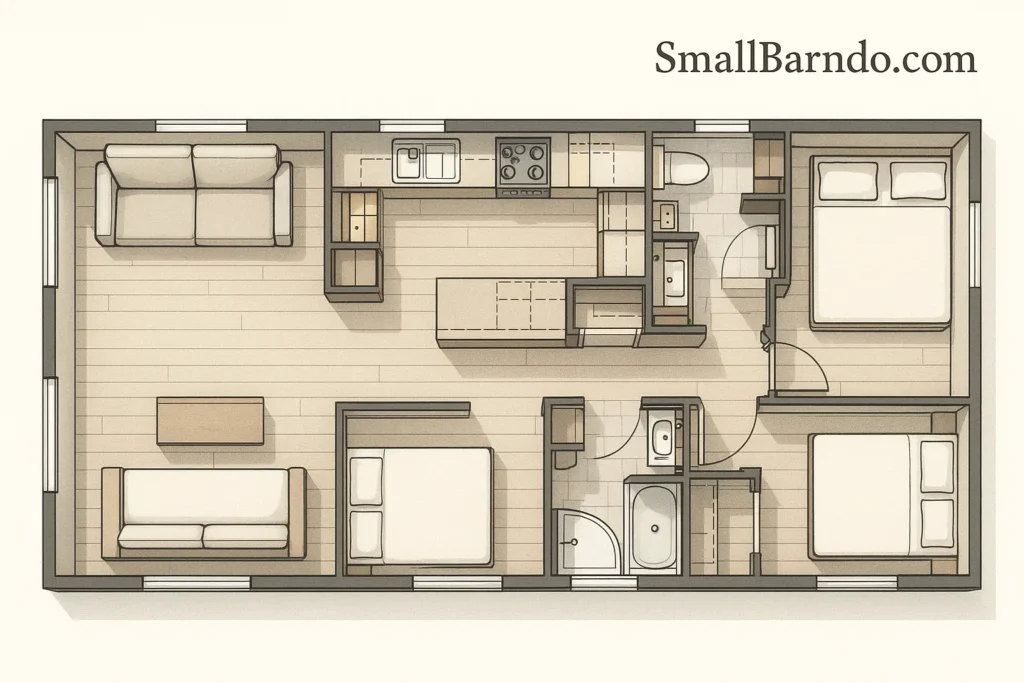
Popular Container Home Floor Plans for Every Need
Your choice of layout will be driven by the number of containers you use and how you orient them.
- Single-Container Designs (The Minimalist Approach):
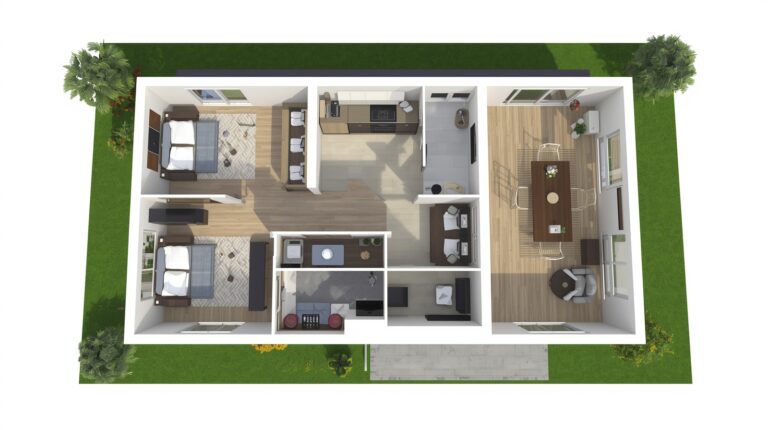
- The 40-ft Minimalist Cabin: This common design places the bedroom at one end, a small wet bath in the middle, and the kitchen/living area at the other end. Key Design Tip: Using a long counter or custom-built shelving to separate the living space from the bedroom can enhance functionality without requiring a solid, space-consuming wall.
- Multi-Container Designs (Expanding Your Living Space):
- Side-by-Side (2×40 ft): By placing two 40-foot containers parallel and cutting out a section of the interior wall, you create a wide, open-concept home of approximately 640 sq. ft. This layout allows for 2 bedrooms and a much more spacious common area.
- L-Shaped Layout: A dynamic design that uses 2–3 containers to create a sheltered corner. This is ideal for integrating an outdoor space, allowing you to design a large deck or courtyard into the protective nook of the ‘L’ shape. This configuration often maximizes natural light penetration.
- Stacked (2-Story) Design: For maximizing space on a small footprint, stacking containers is an option. However, be aware that this requires substantial structural reinforcement at the corner columns and must be signed off by a structural engineer, adding both cost and complexity to your project.
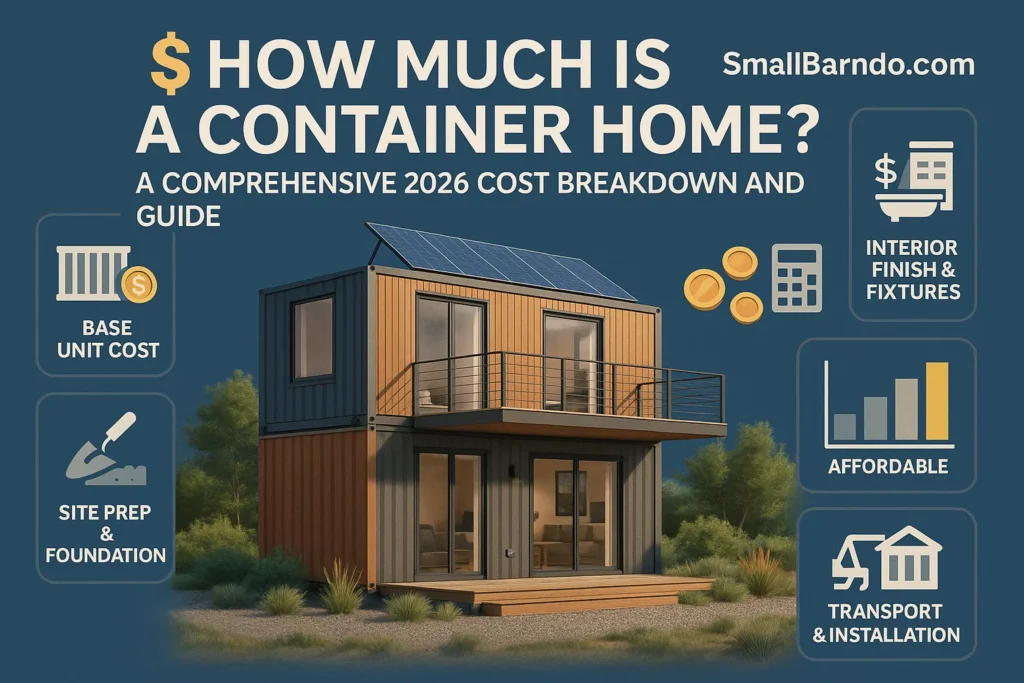
Deconstructing the Cost: Building a Container Home Budget
The misconception that a container home is automatically cheaper often leads to budgeting mistakes. While the container itself is affordable, the total cost depends heavily on your choice of finishes, modifications, and professional labor. Your budget must be structured to cover all phases of construction.
Key Cost Components and Their Ranges (2024 Estimates)
Use these ranges to begin building your realistic project budget, keeping in mind that the highest costs often appear after the container purchase.
- Container Purchase & Delivery:
- Cost: $1,500 – $10,000 per container. Used “cargo-worthy” containers are the cheapest, but “One-Trip” containers, which are essentially new, cost more but are the safest and cleanest to build with.
- Note: Delivery requires a specialized truck and crane for placement, potentially adding $500 to $3,000 depending on your site’s distance and accessibility.
- Architectural Plans, Engineering, & Permits:
- Cost: $3,000 – $10,000. This is a non-negotiable step. Your local zoning regulations and building codes must be followed. Failing to secure the necessary permits or engineering stamps (especially for multi-container or stacked container home designs) can result in stop-work orders or forced demolition.
- Site Work and Foundation:
- Cost: $3,000 – $15,000. This covers grading, utility trenching, and the foundation itself.
- Comparison: A concrete pier foundation is often cheaper and simpler for container homes, whereas a full concrete slab offers superior structural support and thermal mass but is a larger initial investment.
- Structural Modifications (Cutting, Welding, Reinforcement):
- Cost: $3,000 – $15,000+ per unit. This is a hidden expense. Every time you cut a hole for a window, door, or connecting passageway, you compromise the container’s structural integrity. Professionals must weld in steel tube reinforcement around these openings to maintain the load-bearing capacity of the box.
- Insulation and HVAC:
- Cost: $4,000 – $15,000. Because steel conducts heat readily, insulation is one of the most important components of your project.
- Depth of Analysis: Closed-cell spray foam insulation is widely regarded as the best option, offering an excellent R-value (around R-6 to R-7 per inch) and acting as a seamless vapor barrier, which is essential to prevent condensation (sweating) on the steel walls. HVAC is often handled by ductless mini-split systems for efficient, zoned heating and cooling.
- Interior Finishes, Utilities, Windows/Doors:
- Cost: $10,000 – $50,000+ (Highly Variable). This covers plumbing, electrical wiring, drywall, flooring, kitchen cabinetry, and bathroom fixtures. Your choice here determines the final cost per square foot, which can range from $150 for basic finishes to over $350 for luxury, custom elements.
The Build Path Comparison: DIY vs. Prefab vs. Custom
Your level of involvement dictates the cost, timeline, and quality control.
| Build Path | Average Total Cost Range | Pros for You | Cons for You |
| DIY Conversion | $25,000–$80,000 | Maximum control, highest potential savings, phased construction possible. | Longest timeline, requires advanced skills (welding, electrical), highest risk of errors. |
| Prefab/Modular | $50,000–$150,000 | Fastest completion, predictable pricing, built to code in a factory setting. | Limited customization options, higher upfront cost, still requires land and foundation work. |
| Architect-Led Custom | $150,000–$250,000+ | Unique, complex container home designs possible, professional risk mitigation. | Highest cost, longer design phase, relies entirely on the expertise of your contractor/architect. |
Overcoming the Challenges: Common Limitations and Solutions
While the appeal of container homes is strong, you must be prepared to face and mitigate certain material-specific challenges.
The Thermal and Condensation Challenge
- The Problem: The steel structure of the container is a massive thermal bridge, meaning it rapidly transfers outside temperatures inside. Cold steel also facilitates the formation of condensation, which, if not controlled, leads to mold, rust, and degradation of your interior finishes.
- The Solution:
- High-Performance Insulation: As previously noted, closed-cell spray foam is highly effective. Aim for insulation that achieves a minimum of R-13 in walls and R-30 in the ceiling, adjusting higher for extreme climates (e.g., R-19+ walls and R-38+ ceilings).
- Vapor Barrier: The insulation itself must be completely sealed to the steel to act as a proper vapor barrier, preventing warm, moist interior air from meeting the cold steel surface.
- Exterior Roofing: Consider a “fly-over roof” a secondary roof structure above the container’s ceiling. This creates a shaded air gap, which dramatically reduces solar heat gain in summer and protects the container roof from moisture and snow.
Structural Integrity and Corrosion
- The Problem: Shipping containers are engineered to bear massive loads primarily on their corner posts. Cutting out large sections of the corrugated steel walls weakens the structure’s ability to support itself, especially if containers are stacked or exposed to heavy wind/snow loads. Furthermore, even Corten steel (which is rust-resistant) will rust rapidly where it is cut open and exposed to the elements.
- The Solution:
- Mandatory Structural Engineering: Engage a licensed structural engineer early in the design process. They will specify the gauge and location of reinforcing steel tube columns and beams that must be welded into every large opening to transfer the structural load effectively.
- Aggressive Rust Treatment: Before any internal finishes are applied, all interior and exterior surfaces must be cleaned, prepped, and sealed. All cut edges require meticulous application of industrial-grade, marine-level primers and epoxy paints to prevent corrosion and extend your home’s lifespan.
Health Concerns (The “Dirty Container” Myth)
- The Problem: If you opt for a used container, it may have a history of carrying chemicals, pesticides, or other toxic residues. The original marine-grade plywood flooring is often treated with pesticides to comply with international shipping laws.
- The Solution:
- Source Carefully: Prioritize “One-Trip” containers or, if buying used, request the container’s cargo history.
- Remove and Replace: For your long-term health, remove the original plywood floor entirely. This is the safest way to eliminate potential chemical exposure.
- Thorough Cleaning: If using a used container, professional cleaning services that specialize in industrial decontamination should be employed before any construction begins.
Conclusion
The transformative journey of building with container home designs offers a compelling path toward sustainable, affordable, and highly personalized living. While the initial vision of a steel box might seem restrictive, this guide has shown that creative floor plans and diligent budgeting can unlock designs ranging from minimalist studios to expansive family homes. The key to your success lies in preparation: securing the right permits, prioritizing high-performance insulation, and understanding the true cost breakdown beyond the initial container price.
By embracing the principles of smart design and efficient construction, you are not just building a house; you are participating in a movement that redefines what a dream home can be: a durable, responsible, and beautifully customized sanctuary built on a foundation of industrial strength.
If you are ready to take the next step toward a future of financial flexibility and sustainable living, the time to begin your research is now.
(FAQ) about Container Home Designs
Do I need a building permit for a container home?
Answer: Yes, in almost all residential areas, a container home built on a permanent foundation is considered a dwelling and must comply with local building codes, zoning regulations, and require the same permits as any traditional home. Always consult your local planning and zoning department before purchasing your containers to confirm your specific project is permissible on your land.
How long do shipping container homes actually last?
Answer: A well-maintained container home, properly insulated, reinforced, and protected against rust, can last for 25 to 50 years or more. The Corten steel used in containers is inherently durable and designed for decades of harsh maritime conditions. Longevity is highly dependent on how well you execute the initial structural reinforcement and rust protection measures.
Can I build a large, multi-story home using container home designs?
Answer: Absolutely. Multi-container and multi-story designs are common and result in striking architecture. However, stacking containers requires significant consultation with a structural engineer to ensure the loads are properly transferred through the corner posts, which will increase both the complexity and the building costs considerably compared to a single-story design.
What is the average cost per square foot for container home designs?
Answer: The average cost is typically between $150 and $350 per square foot for a finished home. This range is determined by your chosen build path: a DIY single-container home is on the low end, while a luxury, multi-container custom home with high-end finishes and professional installation will fall on the high end.