Masterful Barndominium Exterior Ideas: The Best Siding Combinations (Wood, Stone, Metal)
For many of us, the decision to build a barndominium is the culmination of a lifelong dream, a desire for a home that marries the sprawling space and rugged charm of the country with the modern efficiency and durability of steel construction. You’ve already chosen a structure that makes a unique statement, but now you face the exciting and critical task of designing the façade.
The exterior is more than just a shell; it is the visual language of your home, defining its style, determining its maintenance demands, and guaranteeing its defense against the elements. If you are exploring barndominium exterior ideas, you understand that the goal isn’t just to choose a single material, but to orchestrate a harmonious symphony of textures. The combination of metal, wood, and stone is the key to unlocking a look that is both visually stunning and engineered to last.
This comprehensive guide is designed to empower you with the knowledge of material science, design principles, and cost considerations, ensuring that your barndominium exterior ideas are not just built, but masterfully designed to stand the test of time and reflect your personal style. We will dive deep into the unique advantages and limitations of each material, showing you exactly how to combine them for maximum impact and minimal upkeep.
Table of Contents
The Essential Trio: Comparing Wood, Stone, and Metal Siding
Every successful barndominium exterior ideas design begins with a foundational understanding of the three primary players: wood, stone, and metal. Each material offers a distinct personality, longevity profile, and price point. Your project’s success hinges on selecting materials that align with your climate, budget, and desired aesthetic.
Metal: The Industrial Backbone of Barndominium Exterior Ideas
Metal, typically corrugated, R-panel, or standing seam steel, is the quintessential barndominium material. It defines the structure’s rugged, industrial heritage and is the non-negotiable choice for most of the roofing and a significant portion of the wall cladding.
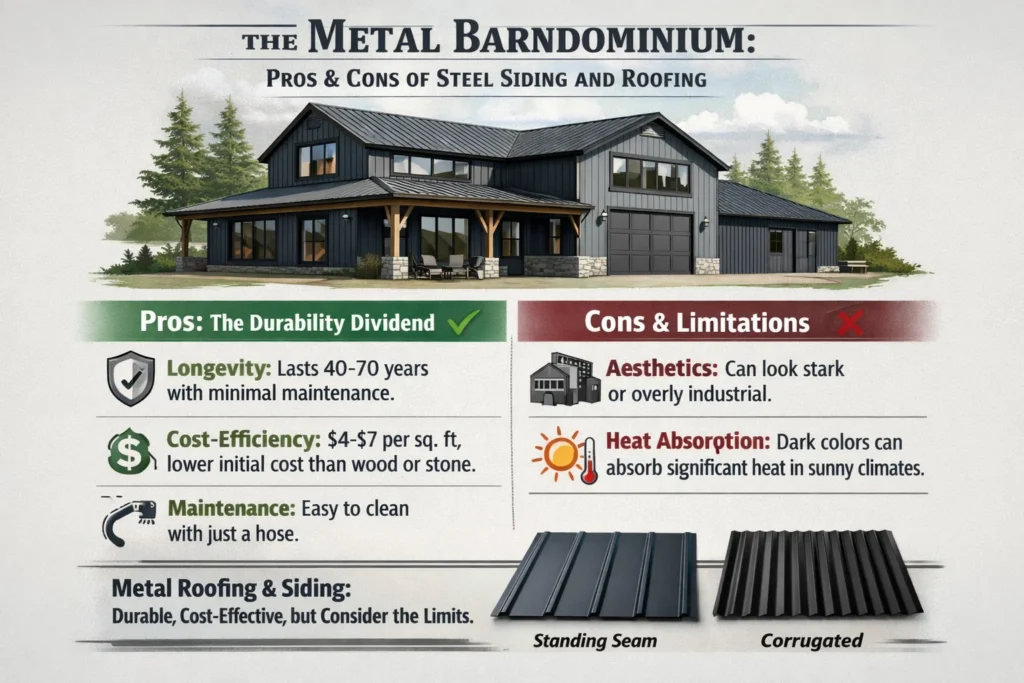
- Key Points & Aesthetic: This choice immediately provides a sleek, modern-industrial, or classic agricultural look. Modern advancements offer matte finishes and crinkle textures that reduce glare and elevate the aesthetic beyond a simple farm building (Source 4.1).
- Pros (The Durability Dividend):
- Longevity: High-quality metal siding and roofing can last 40 to 70 years with minimal maintenance, thanks to its superior resistance to rot, fire, and pests (Source 1.3, 2.1).
- Cost-Efficiency: Its initial cost, averaging $4 to $7 per square foot for material, is often lower than wood or stone, providing excellent long-term value (Source 1.1, 3.3).
- Maintenance: A simple rinse with a hose is often all that is required to maintain its appearance (Source 1.1).
- Cons & Limitations:
- Aesthetics: If used exclusively, it can appear stark, cold, or overly industrial.
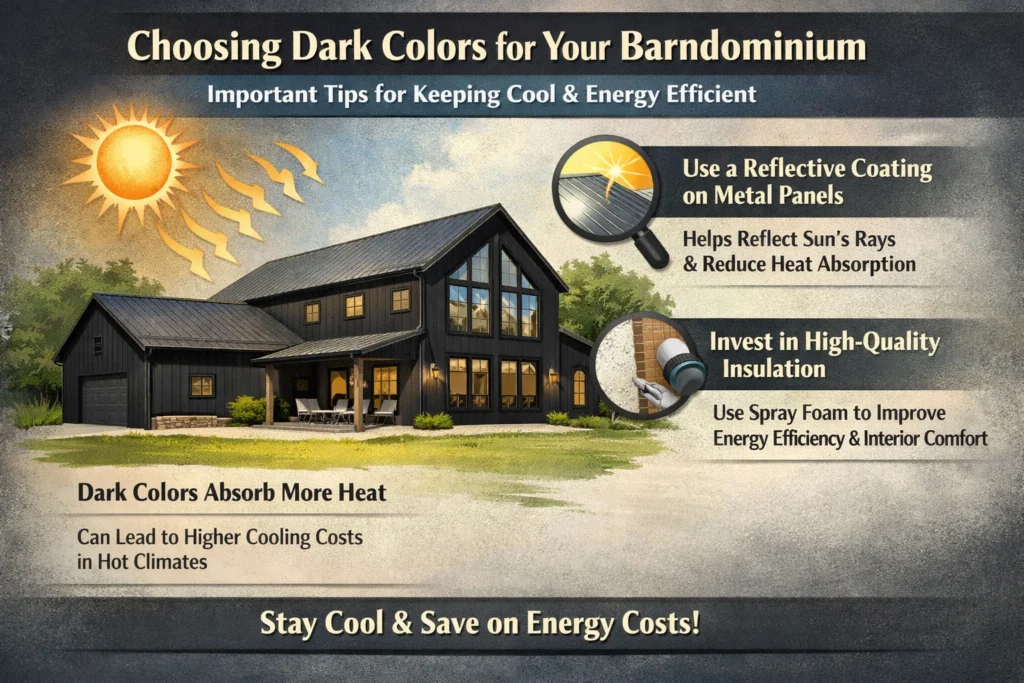
- Heat Absorption (Condition): Dark colors can absorb significant heat in sunny climates, making reflective coatings and proper insulation crucial for energy efficiency (Source 4.1).
Wood: The Timeless Warmth and Rustic Charm
Wood introduces the organic texture and warmth that is often necessary to prevent a barndominium from feeling too sterile. It connects the steel structure to the natural, pastoral landscape.
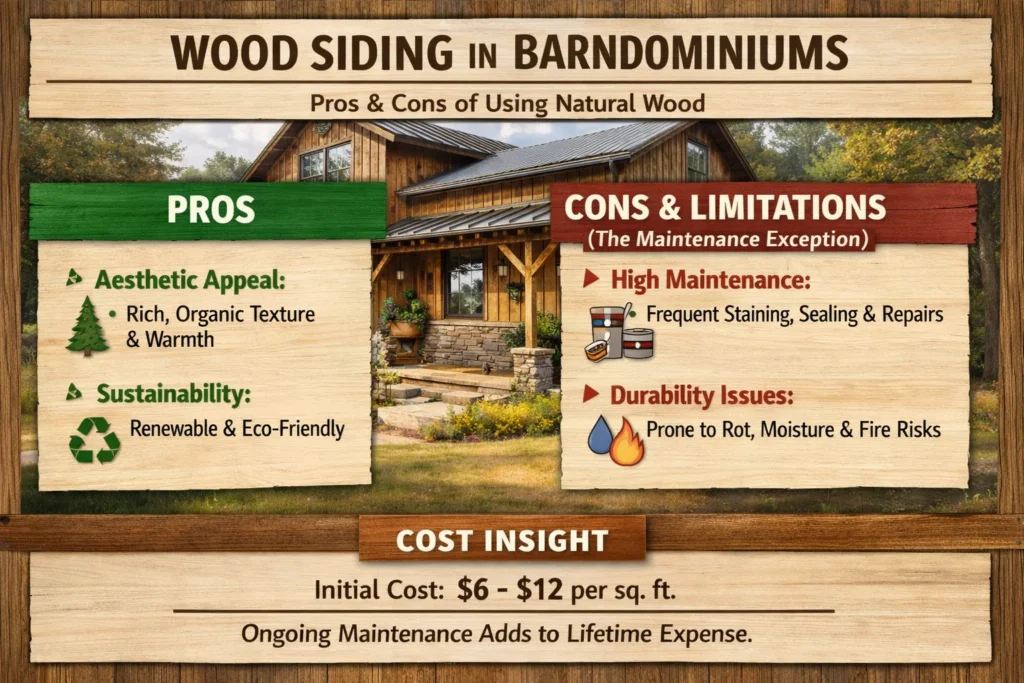
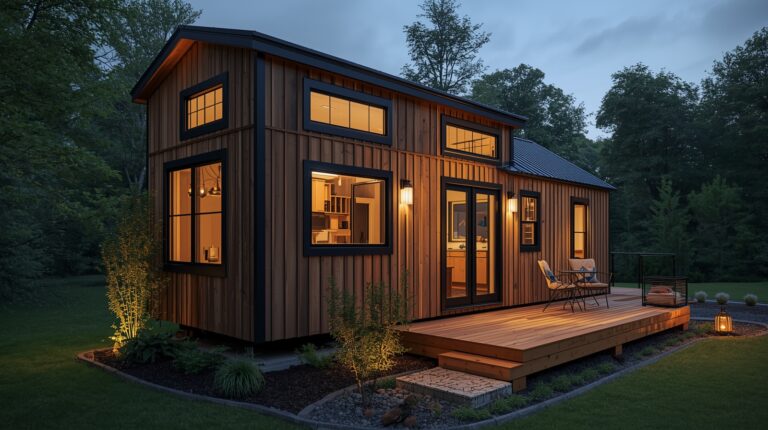
- Key Points & Aesthetic: Options like cedar, pine, or shiplap are excellent for creating a classic farmhouse or cozy lodge vibe. Board and Batten vertical wood siding is especially popular for accenting gables and porches (Source 1.2, 1.4).
- Pros:
- Aesthetics: Provides an unmatched, rich, organic texture and color that softens the harsh lines of metal.
- Sustainability: When sourced responsibly, wood is a renewable material (Source 1.1).
- Cons & Limitations (The Maintenance Exception):
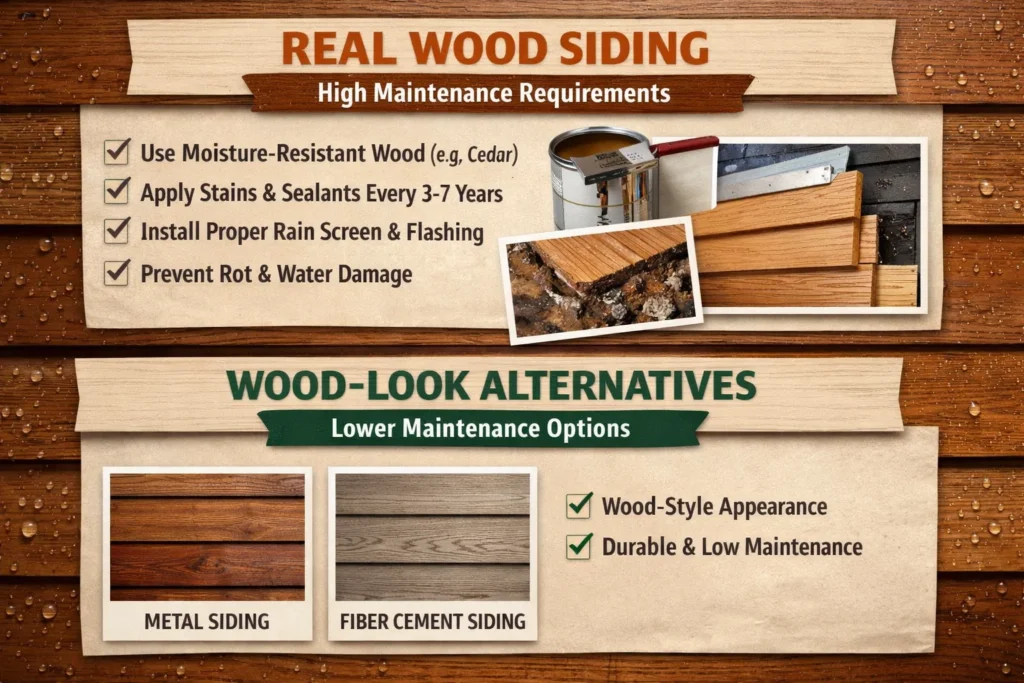
- High Maintenance: Wood requires routine staining, sealing, or painting, typically every 3 to 7 years, to defend against rot, insect infestation, and UV damage (Source 1.1).
- Durability: Less fire-resistant and more susceptible to moisture issues than metal or stone, making proper flashing and ventilation non-negotiable (Source 1.1).
- Data Insight: Natural wood siding materials typically range from $6 to $12 per square foot initially, but the ongoing maintenance adds to the lifetime cost (Source 1.1, 3.2).
Stone (Veneer/Natural): The Elegant and Grounding Foundation
Stone, whether natural or manufactured veneer, is your best choice for adding a sense of permanence, weight, and unmatched elegance to your barndominium exterior ideas.
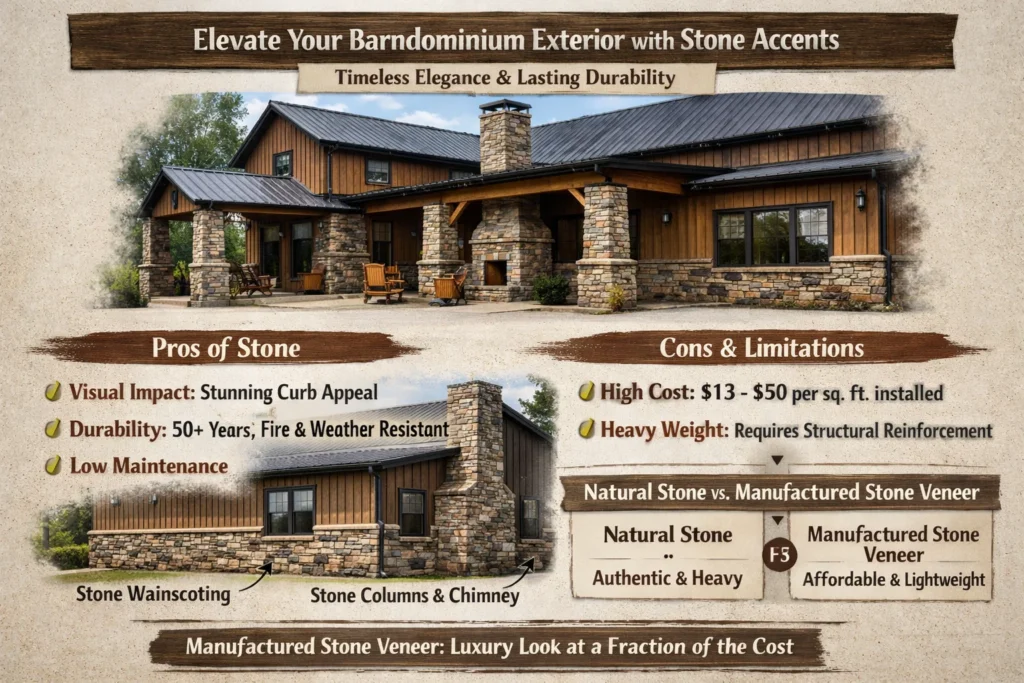
- Key Points & Aesthetic: Stone is primarily used to anchor the structure, often applied as a wainscoting (the lower portion of the wall) or for accenting columns and chimneys. It provides a three-dimensional texture that is crucial for a luxury look (Source 1.4).
- Pros:
- Visual Impact: Creates a stunning, timeless look that dramatically increases curb appeal.
- Durability: Extremely long-lasting (50+ years), fire-resistant, and highly effective against weather, requiring very little maintenance (Source 1.1, 3.5).
- Cons & Limitations:
- High Cost & Labor: It is the most expensive material. Natural stone can cost $30 to $50 per square foot installed, while manufactured stone veneer is more affordable at $13 to $22 per square foot installed (Source 3.2, 3.1).
- Weight: Natural stone, in particular, requires specialized labor and may necessitate structural reinforcement to support its weight (Source 1.1, 3.5).
- Comparison: Manufactured stone veneer provides a nearly identical aesthetic to natural stone at a fraction of the cost and weight, making it the practical choice for most barndominium projects.
Mastering Material Combinations: The Best Barndominium Exterior Ideas
The real artistry in barndominium design is in the blend. By combining the low-maintenance attributes of metal with the warmth of wood and the solidity of stone, you create a dynamic, highly durable, and uniquely appealing façade.
1. The Modern Lodge: Durability with High-Impact Warmth
This combination leverages the strengths of all three materials to achieve a high-end, contemporary-rustic aesthetic. It’s ideal if your priority is minimal long-term maintenance without sacrificing a cozy, welcoming feel.
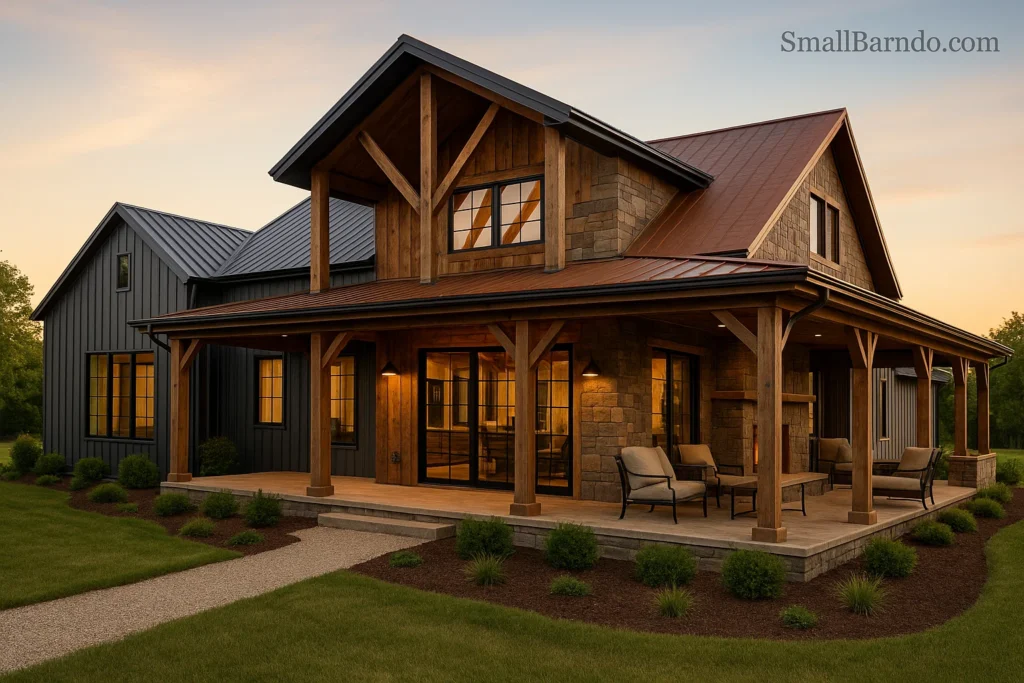
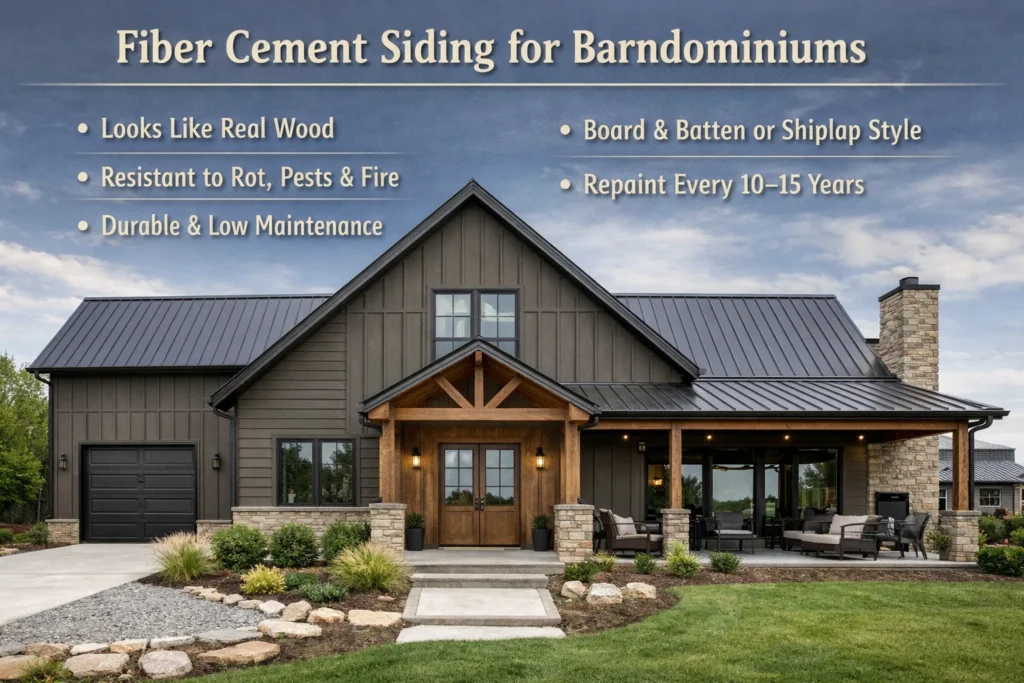
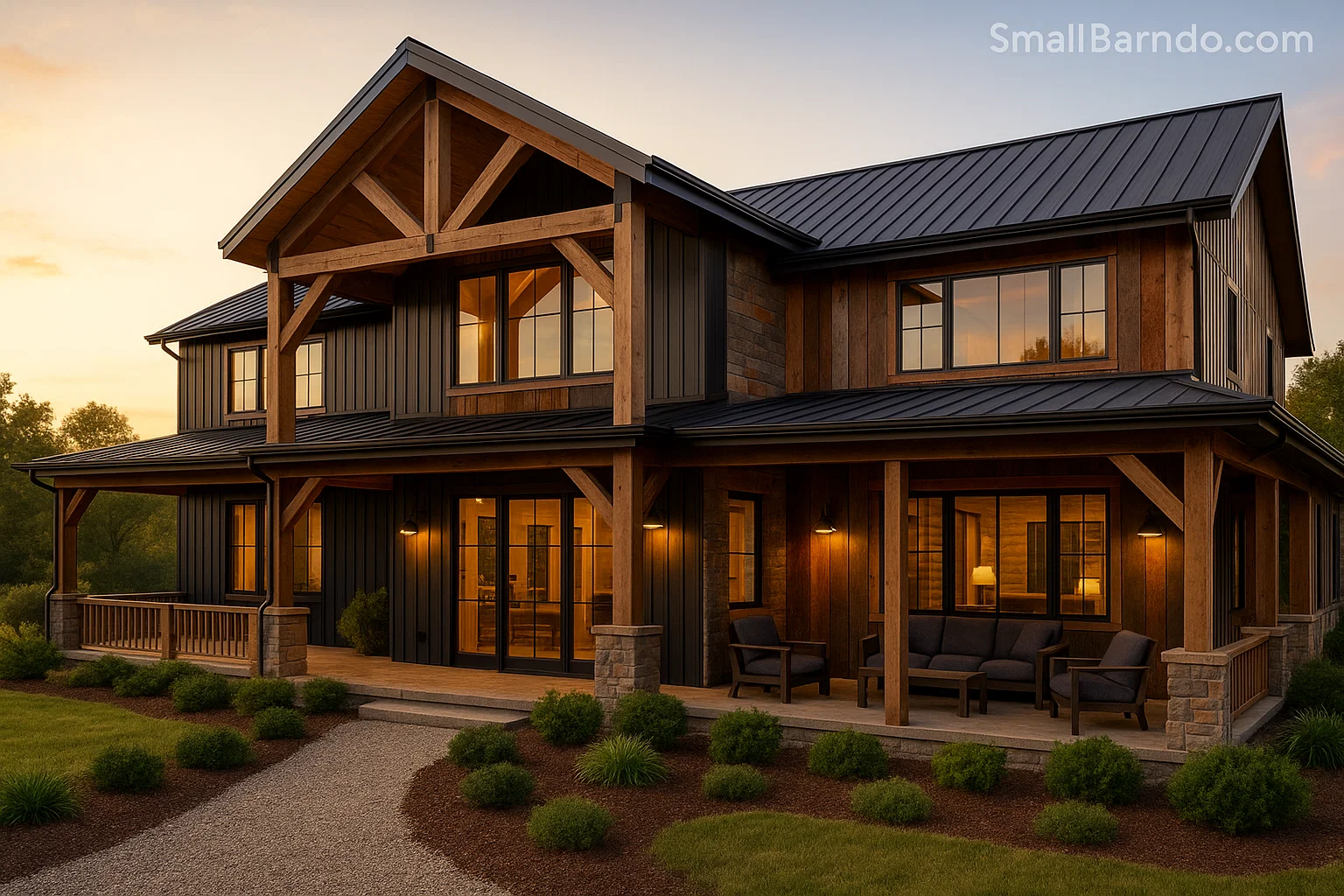
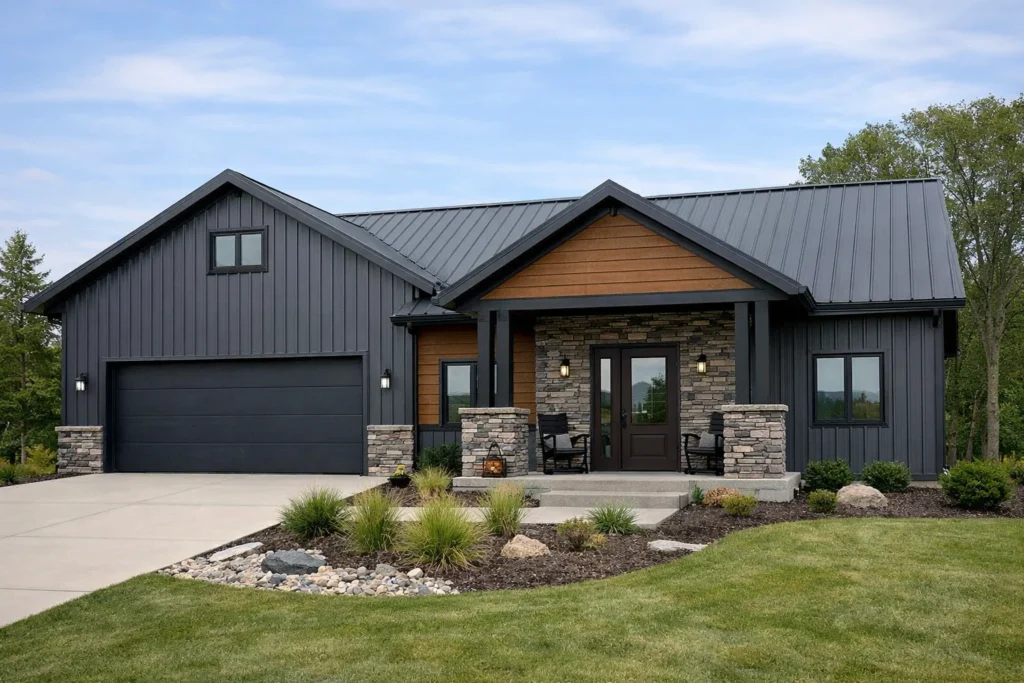
- Primary Material (The Body): Use dark metal siding (Charcoal Gray, Matte Black, or Deep Bronze) for the largest surface areas and the roof. These dark, matte finishes are highly trendy in 2025 and create a striking, sophisticated silhouette (Source 4.1).
- Wood (Accent): Incorporate stained cedar or faux-wood fiber cement for high-visibility accents, such as the soffits, porch ceilings, entryway siding, and thick decorative beams. This placement keeps the wood largely protected from direct weather, minimizing upkeep (Source 1.4, 2.5).
- Stone (Foundation): Wrap the bottom 3-4 feet of the foundation with a dry-stacked stone veneer. Choose a clean, angular profile in a light gray or cream color to contrast sharply with the dark metal body, visually grounding the home.
- Logical Flow: The eye moves naturally from the solid stone foundation up to the sleek metal walls, finally resting on the warm, protective wood of the porch ceiling a perfect transition from rugged earth to refined shelter.
2. The Farmhouse Classic: Crisp Lines and Timeless Texture
If your inspiration leans toward the traditional American farmhouse but needs the barndominium’s superior structure, this combination is the answer. It is characterized by high contrast and clean lines.
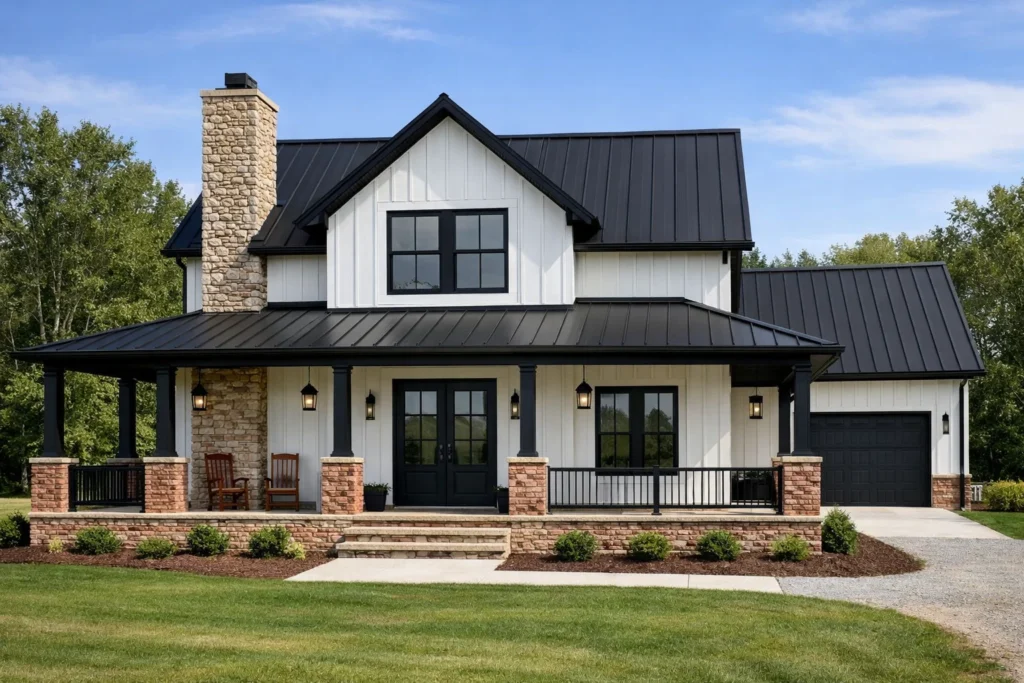
- Primary Material (The Body): Opt for White or Light Neutral siding, often achieved using vertical metal panels or fiber cement Board and Batten panels. This crisp, bright body is the hallmark of the Modern Farmhouse style (Source 1.2, 2.5).
- Metal (Roof/Trim): Use a contrasting dark metal roof (Black or Dark Bronze) and black trim for windows and doors. This creates the classic high-contrast look that defines the style and highlights the architectural details.
- Stone (Accent): Use red brick veneer or a light river rock stone for a classic chimney base, small entryway columns, or the skirt around a wraparound porch.
- Exception/Condition: If you choose natural, painted wood for your primary white siding (instead of fiber cement or metal), be aware that this choice requires the highest maintenance commitment, including scraping and repainting to maintain that flawless, crisp aesthetic.
3. The Industrial Chic: Sleek Minimalist Luxury
This design prioritizes the pure, clean lines of steel, using stone and wood very sparingly to add texture and break up the façade. This is the perfect option for those who favor a stark, ultramodern look.
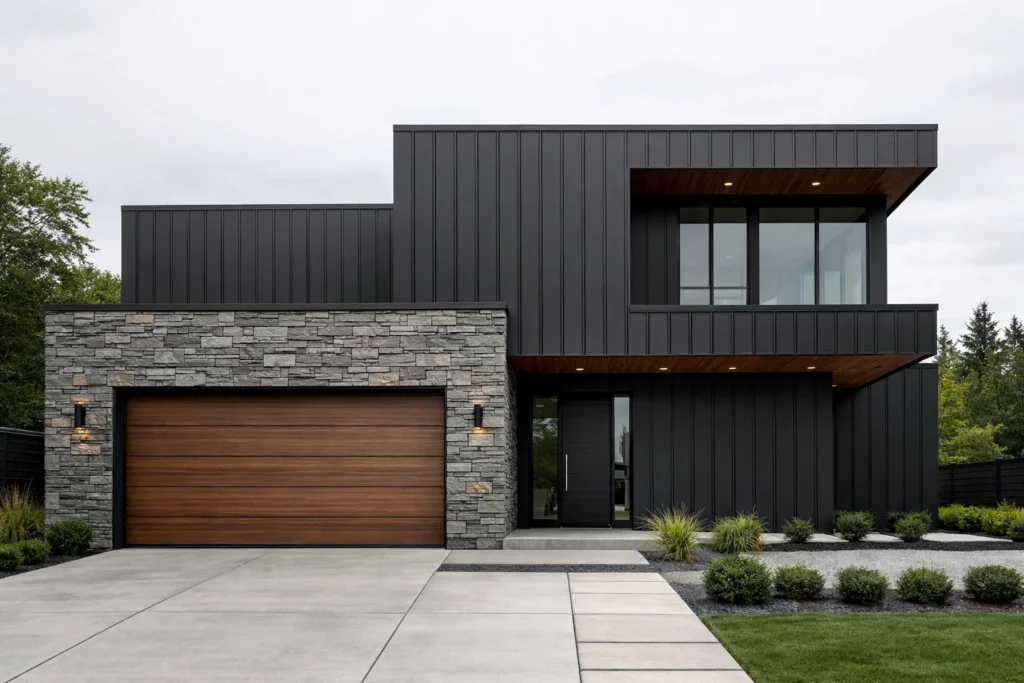
- Primary Material (The Body): Use Standing Seam metal panels in a sophisticated, muted tone like Zinc, Slate Gray, or even a bold black (Source 4.2, 4.3). This is the highest-quality, sleekest profile of metal siding.
- Stone (Accent): Employ thin, geometric, and angular stone on a single, strategic accent wall, such as the face of a garage or a single cantilevered portion of the home. The key is precision and restraint.
- Faux-Wood (The Maintenance Solution): Utilize aluminum or steel wood-look siding for small, sheltered areas like the underside of an awning or an industrial-style overhead door cladding. This delivers the idea of warmth without the maintenance complexity of real wood (Source 2.2).
- Comparison: This combination maximizes the fire-resistance and durability benefits of metal construction and offers the absolute lowest long-term upkeep compared to any combination relying on natural wood.
Strategic Placement and Color Palette for Maximum Curb Appeal
The visual power of your exterior is determined by how you apply the Rule of Thirds and the psychology of color. Thoughtful placement of your selected materials ensures a balanced, professional, and visually engaging facade.
The Rule of Thirds: Structuring Your Barndominium Exterior Ideas
A professional design trick is to conceptually divide the vertical space into three zones:
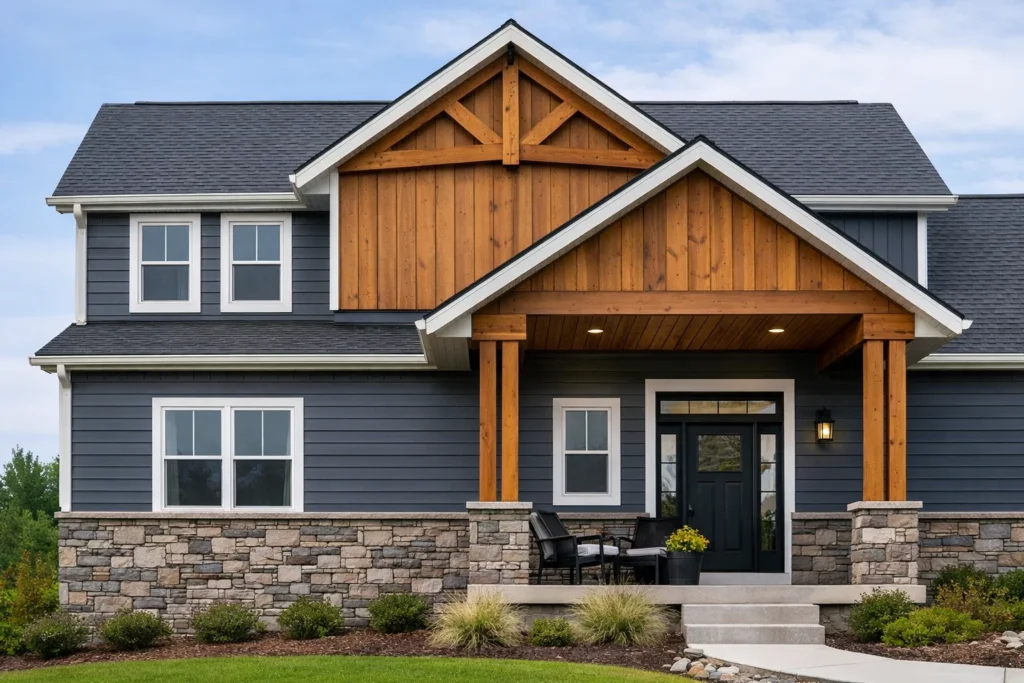
- The Grounding Layer (Bottom): Reserve the visually heaviest, most solid material, stone or brick veneer, for the bottom third of the wall. This protects the wall from splashback moisture and visually anchors the building, preventing the taller structure from looking top-heavy (Source 3.2).
- The Primary Layer (Middle): This is where your dominant material, typically metal siding, resides. This covers the most surface area and provides the core durability of the structure.
- The Accent Layer (Top/Features): Use your most contrasting material, often wood or fiber cement board and batten, for accent features like gables, window trim, or the porch ceiling. This draws the eye upward and adds the final touch of style.
Trending Barndominium Color Palettes for 2025
Color choice can either make your structure blend seamlessly into the environment or make it a striking focal point.
| Style | Primary Siding Color (Metal/Fiber Cement) | Contrasting Accent Colors (Wood/Stone) | Effect & Trend (2025) |
| Modern Farmhouse | Soft White or Creamy Beige | Black Trim, Natural Cedar Wood, Light-Colored Stone | Crisp, high-contrast, classic, and always in style. (Trending Neutral) (Source 4.5) |
| Rustic Lodge | Deep Hunter Green or Charcoal Gray | Dark Stained Wood Beams, Earthy Brown Stone or Brick | Blends organically into wooded or hilly landscapes; cozy and sophisticated. (Trending Earth Tone) (Source 4.2) |
| Industrial Chic | Matte Black or Slate Gray | Minimalist White Trim, Zinc or Brushed Steel Accents, Angular Stonework | Bold, dramatic, and minimalist; highly popular for contemporary builds. (Trending Dark) (Source 4.1, 4.3) |
Cost & Maintenance: Projecting the Long-Term Value of Your Siding
Your material choice is a direct investment in the long-term value and ease of living in your home. Smart builders look beyond the initial cost to calculate the durability dividend, the savings from reduced maintenance and replacement costs over decades.
A Financial Comparison: Initial Cost vs. Lifetime Value
| Material Type | Est. Initial Cost (Installed per Sq. Ft.) | Estimated Lifespan (Years) | Required Maintenance | Long-Term Value |
| Metal (Steel/Aluminum) | $5 – $10 (Source 3.3) | 50+ | Very Low (Occasional power wash) | Highest ROI due to longevity and low upkeep. |
| Fiber Cement (Faux-Wood) | $5 – $11 (Source 3.3) | 30 – 50 | Medium (Periodic cleaning/repainting) | Excellent, low-maintenance alternative to real wood. |
| Wood (Cedar/Pine) | $6 – $14 (Source 3.4) | 15 – 30 | High (Mandatory refinishing/sealing every 3-7 years) | Lowest ROI; highest lifetime cost due to upkeep. |
| Stone Veneer (Manufactured) | $13 – $22 (Source 3.1) | 50+ | Very Low (Occasional cleaning) | High ROI; exceptional durability and curb appeal boost. |
- The Durability Trade-Off: While natural wood may offer the highest initial warmth, its need for consistent, costly maintenance (re-staining and repairing) means its lifetime cost is significantly higher than metal or quality composite options (Source 3.3). Choosing metal or fiber cement as your primary material is the most financially astute choice for a barndominium designed for decades of low-stress living.
- Limitation of Information: The cost figures provided are up-to-date estimates for 2025; however, your specific project costs will be affected by your geographical location, the complexity of your design (more corners and windows equal higher labor costs), and the specific brands and finishes you choose (Source 3.3). Always obtain local quotes.
Protecting Your Investment: Essential Installation and Climate Considerations
No matter how high-quality your materials are, poor installation can lead to costly failures. Your barndominium exterior ideas must be a complete, cohesive system that protects the interior structure.
Critical Installation Best Practices
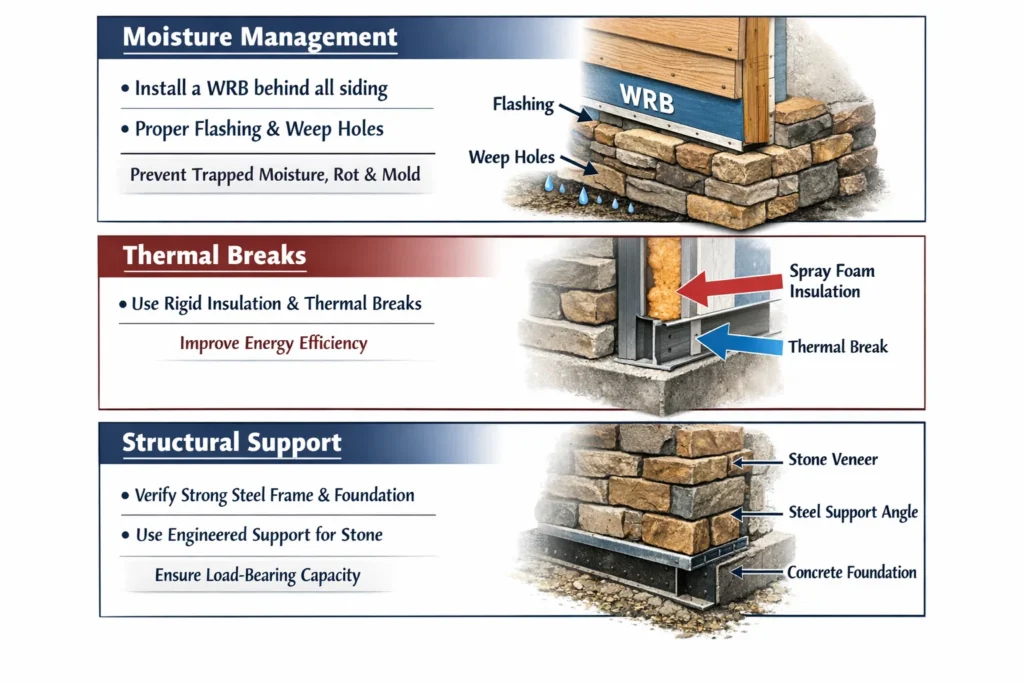
- Moisture Management: This is the most critical detail, especially where materials transition. Always ensure a properly installed weather-resistant barrier (WRB) behind all siding, particularly wood and stone veneer. Proper flashing and weep holes are non-negotiable to allow moisture to escape and prevent rot or mold (Source 1.1).
- Thermal Breaks: Since metal is highly conductive, it’s vital to incorporate thermal breaks into the structural framing and ensure robust insulation (like spray foam) to prevent the exterior temperature from transferring inside, which dramatically improves your home’s energy efficiency (Source 1.2).
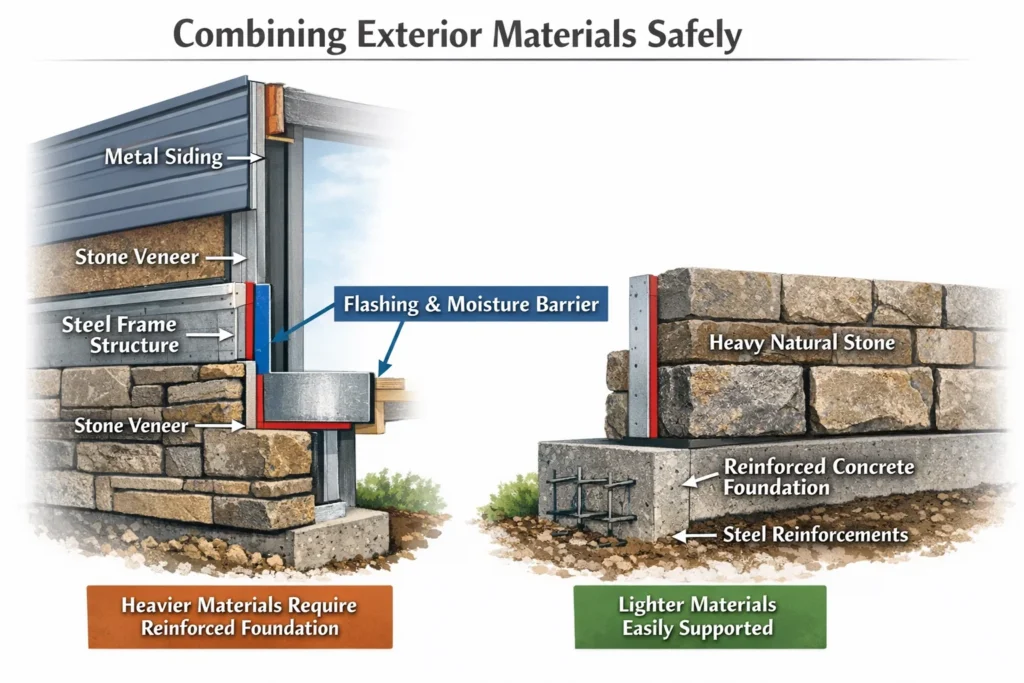
- Structural Support: If you are incorporating natural, heavy stone, you must verify that the underlying steel frame and foundation are engineered to handle the additional weight and load. Manufactured stone veneer significantly reduces this structural complexity (Source 1.1).
Adapting Barndominium Exterior Ideas to Your Climate
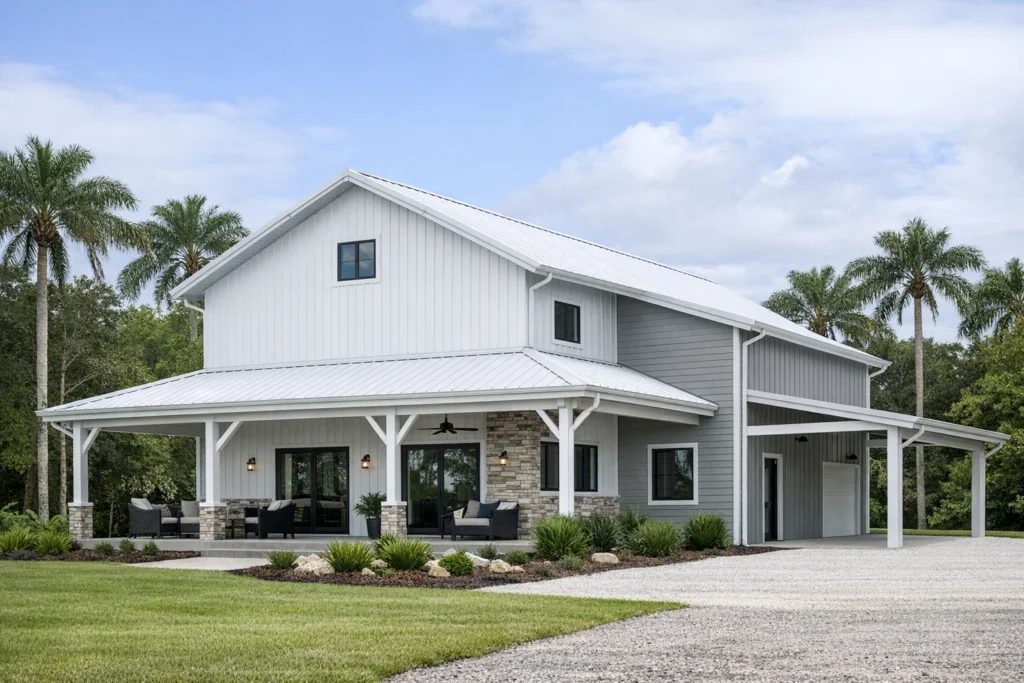
- Hot Climates: Prioritize light-colored metal roofs and siding (White, Light Gray) that reflect solar energy, minimizing heat gain. If you choose a dark color, insist on a reflective coating to counter heat absorption (Source 4.1).
- Wet/Humid Climates: Avoid natural wood in large, exposed areas. If you must use it, choose naturally resistant species like cedar or redwood and ensure a meticulous installation with exceptional ventilation. Metal or fiber cement is the superior choice here for its rot resistance.
- Wind/Storm-Prone Areas: Metal siding and a steel frame are inherently superior in high-wind conditions compared to traditional building materials, providing your barndominium with unmatched storm resilience (Source 1.3).
Conclusion: Building Your Uniquely Durable Dream
Designing the exterior of your barndominium is where practicality meets personality. You are not just building a structure; you are crafting a durable statement that will serve your family for generations.
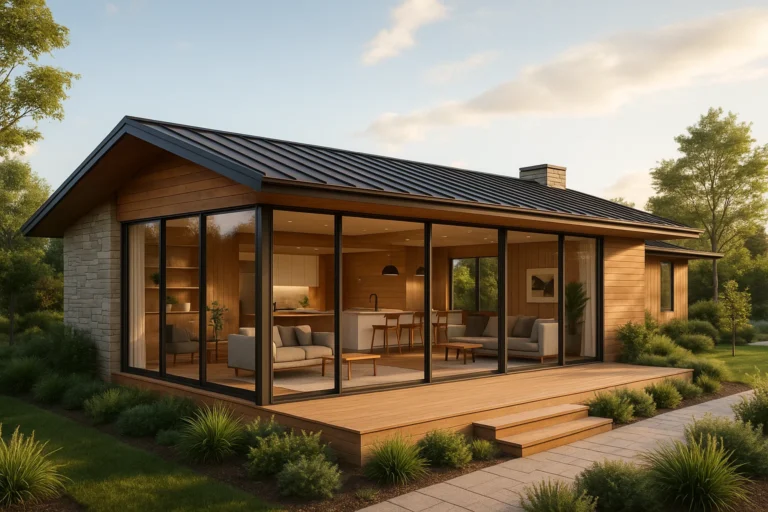
The ultimate strategy for achieving phenomenal curb appeal and long-term value is through the intelligent combination of the materials: leveraging the unbeatable longevity of metal as your primary defense, utilizing the timeless, grounded elegance of stone at the base, and strategically applying the essential warmth of wood or faux-wood accents to humanize the design.
By adhering to these principles of strategic placement, professional installation, and a color palette that aligns with both your style and your climate, your barndominium exterior ideas will translate into a low-maintenance, high-impact reality. Now, take the inspiration and research you’ve gathered and begin the exciting work of realizing your own masterfully designed, uniquely durable dream home.
FAQ: Common Questions on Barndominium Exterior Ideas
Q1: What is the most cost-effective and durable combination for a barndominium exterior ideas?
A: The most cost-effective and durable combination involves using metal siding (steel or aluminum) as the primary material for the majority of the structure and roof. Accent this with a lower-cost alternative like fiber cement siding (which mimics wood grain) or a smaller, strategic amount of manufactured stone veneer for high-impact areas. This blend maximizes durability while minimizing the expensive labor and maintenance associated with natural materials (Source 3.3).
Q2: Can I use real wood siding on my barndominium without it rotting quickly?
A: Yes, you can, but it requires diligent maintenance and strategic placement. To prevent rot, you must choose a moisture-resistant wood (like cedar), apply professional-grade stains and sealants every 3-7 years, and, most importantly, ensure it is installed with a proper rain screen system and superior flashing. For a lower-maintenance compromise that still offers the wood aesthetic, consider using wood-look metal or fiber cement (Source 1.1, 1.4).
Q3: How does combining different materials affect the structural integrity of the barndominium?
A: Combining materials does not negatively affect the structural integrity, provided the original steel frame is designed and engineered to handle the specific weights. Heavier materials like natural stone require reinforced foundation and framing, while lighter materials like metal and stone veneer are easily accommodated. The key is to ensure all transitions between materials have proper flashing and moisture barriers to maintain the building envelope (Source 1.1).
Q4: Are dark colors (like black or charcoal) a practical choice for my barndominium exterior?
A: Dark colors are highly popular and chic for modern barndominiums, but they require a practical consideration. They absorb more heat, which can lead to higher cooling costs in hot climates. If you choose a dark palette, it is strongly recommended to use a reflective coating on the metal panels and invest in high-quality insulation (like spray foam) to ensure the dark exterior does not compromise your interior comfort and energy efficiency (Source 4.1).
Q5: What is the benefit of using fiber cement in a barndominium exterior design?
A: Fiber cement siding (e.g., Hardie Board) is a superior, low-maintenance alternative that often fits within barndominium exterior ideas. It can convincingly mimic the texture of natural wood Board and Batten, or shiplap, but unlike real wood, it is resistant to rot, pests, and fire. It offers a premium look with durability comparable to metal, but typically requires repainting every 10–15 years (Source 2.5).