Flawless Small Craftsman Bungalow: Authentic Details, Built-ins, and Tapered Columns
Have you ever walked into a space and instantly felt a deep, intrinsic sense of peace and rightness? For many, that feeling is unlocked by the small Craftsman bungalow. It is a sanctuary built upon the foundational principles of the American Arts and Crafts movement a design philosophy that championed honest materials, superior construction, and the dignity of craftsmanship over the ornate excesses of the Victorian era.
The true allure of a Craftsman home is not found in its grand scale, but in its meticulous details. It’s the way the light catches the fumed oak trim, the sturdy, welcoming embrace of the front porch, and the satisfying efficiency of every built-in cabinet. This style, pioneered by influential figures like Gustav Stickley and the visionary architects Charles and Henry Greene, offers a profound connection to permanence and quality.
As you look toward buying, renovating, or simply appreciating this timeless style, allow us to guide you through the authentic details that make the small Craftsman bungalow a flawless example of American architectural genius. We will explore how these compact homes maximize functionality and warmth, proving that character always triumphs over size.
Table of Contents
Authentic Details: Unpacking the DNA of the Small Craftsman Bungalow
To understand the small Craftsman bungalow, you must first appreciate its fundamental architectural grammar. Every element, from the roofline to the foundation, was designed to emphasize structure and the beauty of natural materials, adhering to the core tenet of truth to materials.
The Signature Structure: Roofs, Eaves, and Rafters
When you first approach one of these homes, your eye is immediately drawn to the roof.
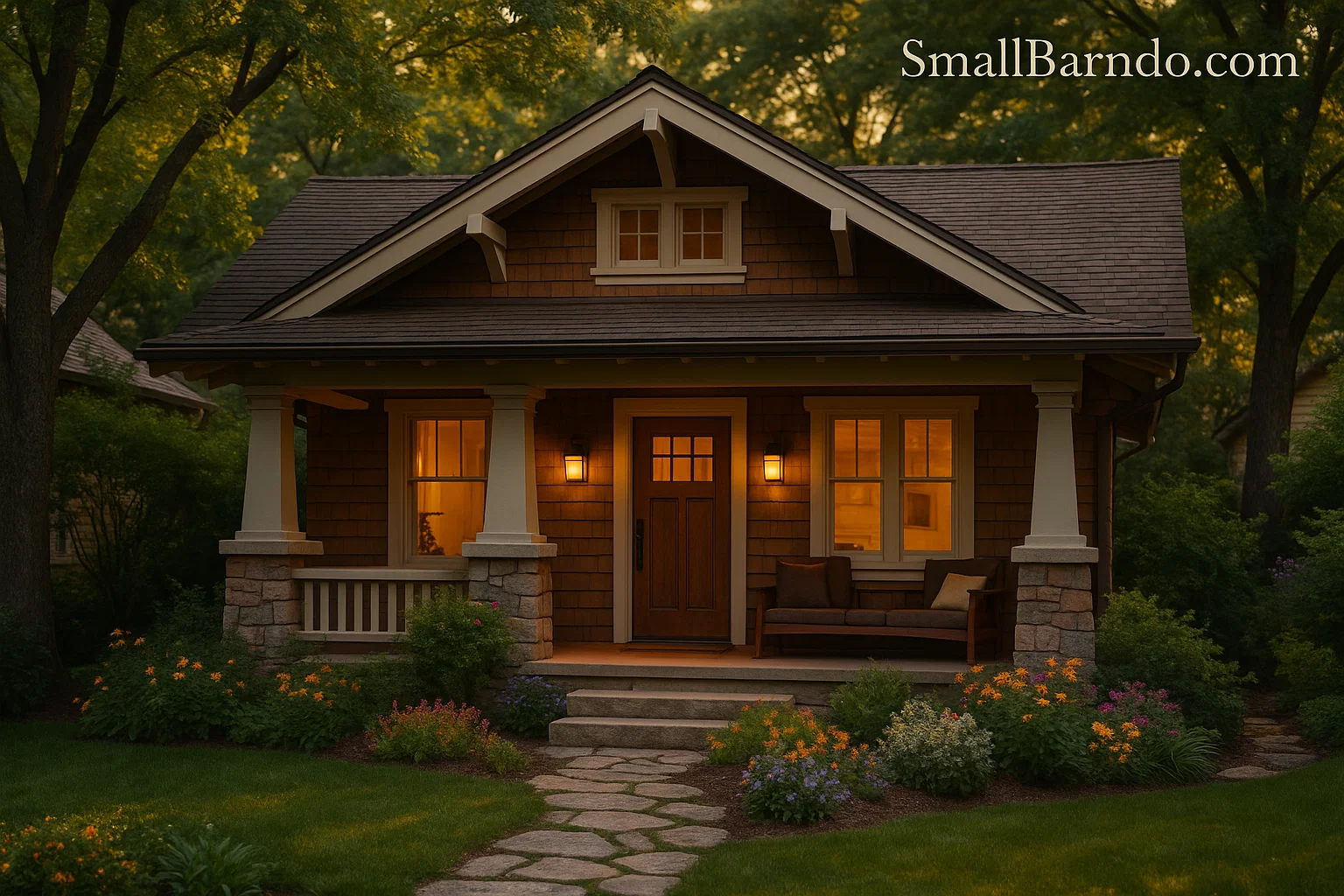
- The Low-Pitched Roofline: Craftsman homes feature a distinctly low-pitched roof, typically gabled or hipped. This design choice visually anchors the house to the earth, giving it a stable, protective, and grounded appearance.
- The Wide, Unenclosed Eaves: The roof overhangs are often wide and generous, designed to shelter the structure and windows from harsh weather and provide deep, shaded porches. This practical feature reduces solar gain in warmer months, improving the home’s passive cooling, a sophisticated piece of environmental design often overlooked today.
- Exposed Rafter Tails and Brackets: A critical identifying feature is the purposeful display of exposed rafter tails, purlins, and decorative knee brackets beneath the eaves. This wasn’t merely decorative; it was a way of showcasing the actual mechanics and construction of the home, transforming structural necessity into an aesthetic statement.
Materials over Modernity: The Authentic Exterior Palette
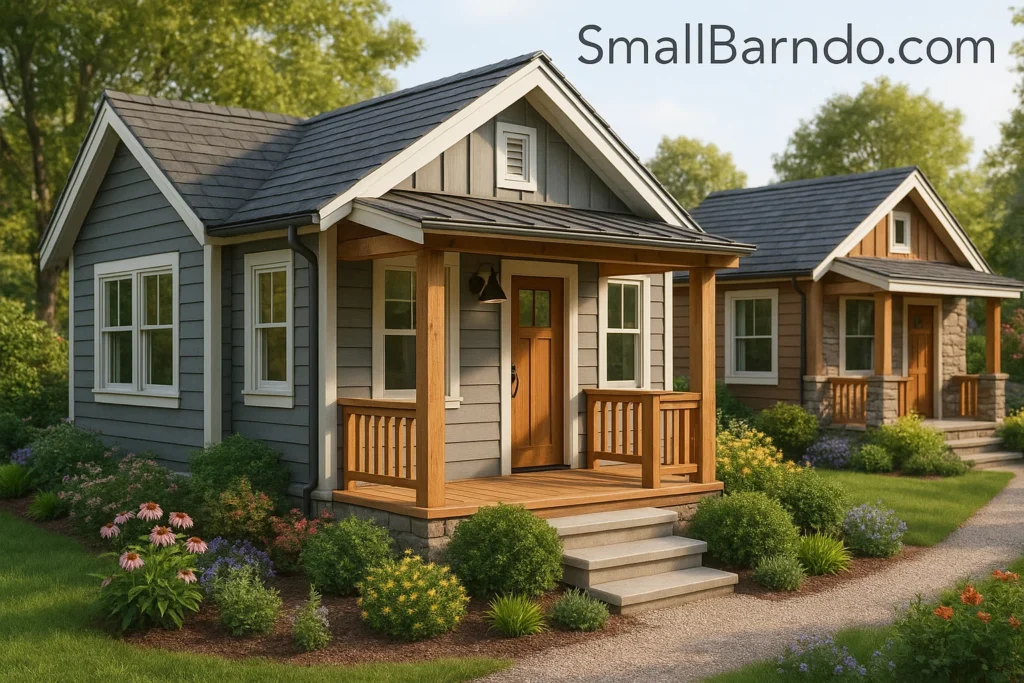
The authenticity of a Craftsman exterior is defined by the materials you see and touch. While modern construction often favors low-maintenance synthetic options, the original style called for the genuine article.
| Feature | Authentic Craftsman Material | Modern/Synthetic Replacement |
| Siding | Cedar shingles, rough-sawn wood siding, clapboard | Vinyl siding, fiber cement boards (often with simulated texture) |
| Foundation/Chimney | Local stone, river rock, clinker brick | Cultured stone veneer, faux brick panels |
| Windows | Double-hung with multi-paned upper sash (true divided lights) | Single-paned insulating glass with simulated dividers (grilles) |
Limitation of Information: While using authentic materials (like natural wood or stone) offers unparalleled beauty and historical accuracy, be aware that their long-term maintenance is significantly higher than that of modern, composite, or vinyl products. You must be prepared for the commitment to periodic staining, sealing, or repointing that this commitment requires.
The Pillar of Style: Understanding Tapered Columns and Porches
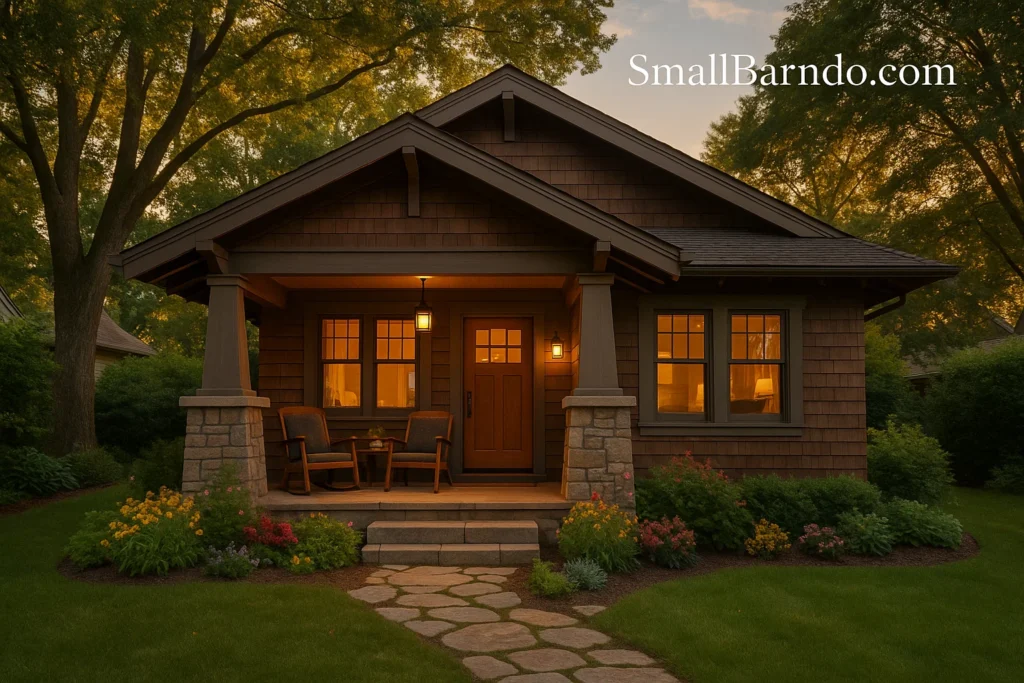
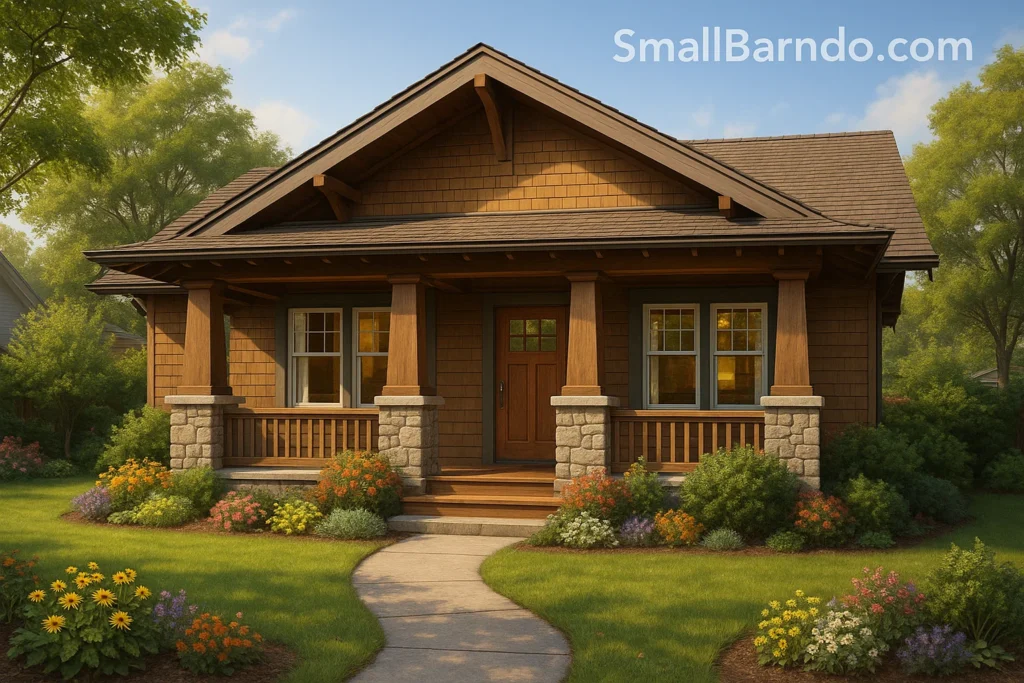
The front porch is the transition point between the public world and your private sanctuary, and it is here that the iconic tapered columns take center stage. They are the signature visual anchor of the Craftsman style.
The Anatomy of the Tapered Column
The Craftsman column is characterized by its mass, sturdiness, and simple form. It is the antithesis of the slender, decorative columns found on Neoclassical or Victorian homes.
- The Substantial Pedestal Base: These columns do not simply rest on the porch floor. They rise from a thick, often square or rectangular, pedestal base (or pier), typically constructed from natural materials like brick, stone, or clinker tile. This base provides a sense of permanent, unshakeable stability.
- The Tapered Shaft: The column shaft, often enclosed in wood siding or clapboard, is noticeably wider at the bottom and gradually narrows or tapers toward the top. This subtle detail adds visual weight and an illusion of height, enhancing the home’s grounded aesthetic.
- Proportional Design: The size and scale of the columns are always in harmony with the rest of the structure. For a small Craftsman bungalow, the columns may be more modest in height but retain the same substantial width and grounding base, ensuring the entire elevation feels balanced and cohesive.
The Porch as an Outdoor Room
The small Craftsman bungalow porch is more than just an entryway; it is designed as an extension of the living space, often spanning the width of the facade. This focus on an outdoor room for relaxation and neighborly connection speaks directly to the Arts and Crafts philosophy of wholesome living and community engagement, a multiple-angle view of the design. When evaluating a bungalow, look for:
- Deep Overhangs: Protection from sun and rain, allowing year-round enjoyment.
- Built-in Seating: Often, benches are integrated into the railings or walls, maximizing utility.
Exception and Condition: In extremely small bungalows, a full-width porch may be replaced by a smaller, cantilevered entry canopy supported by heavy knee braces, yet this design still respects the principle of sheltering the entrance with substantial, visible support structures.
Built-ins and Efficiency: Maximizing Space in a Small Craftsman Bungalow
The most profound secret to the functional brilliance of the small Craftsman bungalow lies in its interior: the pervasive and purposeful use of Craftsman built-ins. These features were revolutionary for their time, demonstrating how thoughtful design could dramatically improve spatial efficiency in a modest footprint.
The Hallmarks of Custom Cabinetry
Built-ins are permanent structures integrated directly into the walls, blurring the line between furniture and architecture. They allowed middle-class families to furnish their homes with custom, high-quality pieces designed specifically for their needs.
Here are the most common and valued Craftsman built-ins:
- Buffets and Hutches: Found most often in the dining room, these provide storage for china and linens, often featuring glass-front doors to display artisan items and a substantial lower cabinet section.
- Window Seats: Creating cozy, light-filled reading nooks, these nearly always conceal generous blanket or storage drawers beneath the cushion.
- Bookcases: Flanking the fireplace or integrated into the living room walls, they emphasize the intellectual and literary pursuits valued by the Arts and Crafts movement.
- Inglenooks: A sheltered seating area near the fireplace, often with a beam across the top, that defines a smaller, more intimate space for conversation within a larger room.
Depth of Analysis (The Efficiency Factor): By incorporating storage and seating directly into the structure, built-ins eliminate the need for bulky, freestanding furniture. This strategic design makes the small bungalow feel substantially more open, organized, and custom-tailored to the owner’s life.
Comparison: Consider the floor space consumed by a traditional, freestanding china cabinet versus a recessed, built-in buffet. The built-in saves square footage while providing equivalent or superior storage, a testament to the efficient, functional design inherent in the style.
Interior Flair: Millwork, Lighting, and the Organic Palette
The inside of a small Craftsman bungalow radiates warmth, primarily due to the extensive use of natural wood and an inviting, natural color scheme.
The Visual Impact of Dark Wood Trim
The woodwork is the backbone of the interior aesthetic.
- Rich, Simple Millwork: You will find robust, often dark-stained wood trim (typically oak or chestnut) used for door and window casings, baseboards, and wainscoting. The trim profiles are generally flat and wide, eschewing the intricate curves and bevels of Victorian style for a simpler, cleaner appearance.
- The Ceiling Treatment: Many authentic Craftsman homes feature exposed beams or coffered ceilings, which utilize wood to frame and define the living space, adding a cozy dimension to the room’s scale.
The Earthy Color Palette
The chosen colors for the walls and textiles were meticulously selected to harmonize with the wood and bring the outdoors in. The palette is distinctly organic.
- Earthy Tones: Think deep sage greens, warm ochres (mustard yellows), rich terracotta reds, and various shades of brown and tan. These colors complement the natural wood grain rather than competing with it, fostering a calming, unified environment.
- Natural Materials in Design: This organic approach extends to fixtures and accents, where materials like copper, hammered bronze, and mica-paneled light shades dominate, providing warm, diffused light that is both practical and evocative of the period.
FAQ: Everything You Need to Know About the Small Craftsman Bungalow
We address some of the most common questions from homeowners and buyers interested in this classic architectural style.
Is a small Craftsman bungalow a good investment?
Comprehensive Answer: Yes, a small Craftsman bungalow is generally considered an excellent long-term investment. They possess an evergreen, classic style that rarely falls out of favor. Their enduring value is rooted in:
- Superior Quality: Original construction often utilized high-quality, durable materials and superior joinery (visible craftsmanship).
- High Demand: The character and inherent charm of the style mean they consistently command premium prices and attract dedicated buyers who value architecture and history.
What is the main appeal of a small Craftsman bungalow?
The primary appeal lies in its unparalleled combination of coziness, function, and aesthetic honesty. It is a home where every element feels purposeful. You are drawn to the feeling of handcrafted quality, the sturdy built-ins, the welcoming porch, and the satisfying way the house settles into its landscape, making it a perfect blend of high-art design and practical, comfortable living.
How do you identify an authentically-styled Craftsman home?
You can confirm authenticity by looking for the convergence of several key elements:
- Exterior: Low-pitched, gabled roof with wide eaves and exposed rafters; large front porch supported by tapered columns on hefty pedestal bases; use of mixed natural materials (wood, stone, brick).
- Interior: Extensive use of built-ins (bookcases, window seats, buffets); thick, dark-stained wood trim; simple, geometric-patterned windows (often multi-paned upper sash).
The Timeless Legacy of the Small Craftsman Bungalow
The small Craftsman bungalow is more than an architectural footnote; it is a declaration that quality, intention, and artistry can be achieved on a modest scale. It is a style that speaks directly to a deep human desire for a home that is warm, efficient, and honest. Every tapered column, every window pane, and every carefully constructed built-in reminds us of the value of true craftsmanship. This design is not about excess; it is about providing the highest possible quality of shelter and beauty.
If you are seeking a home that offers character, functional elegance, and a sense of history that will never fade, the pursuit of an authentic small Craftsman bungalow is the perfect starting point.