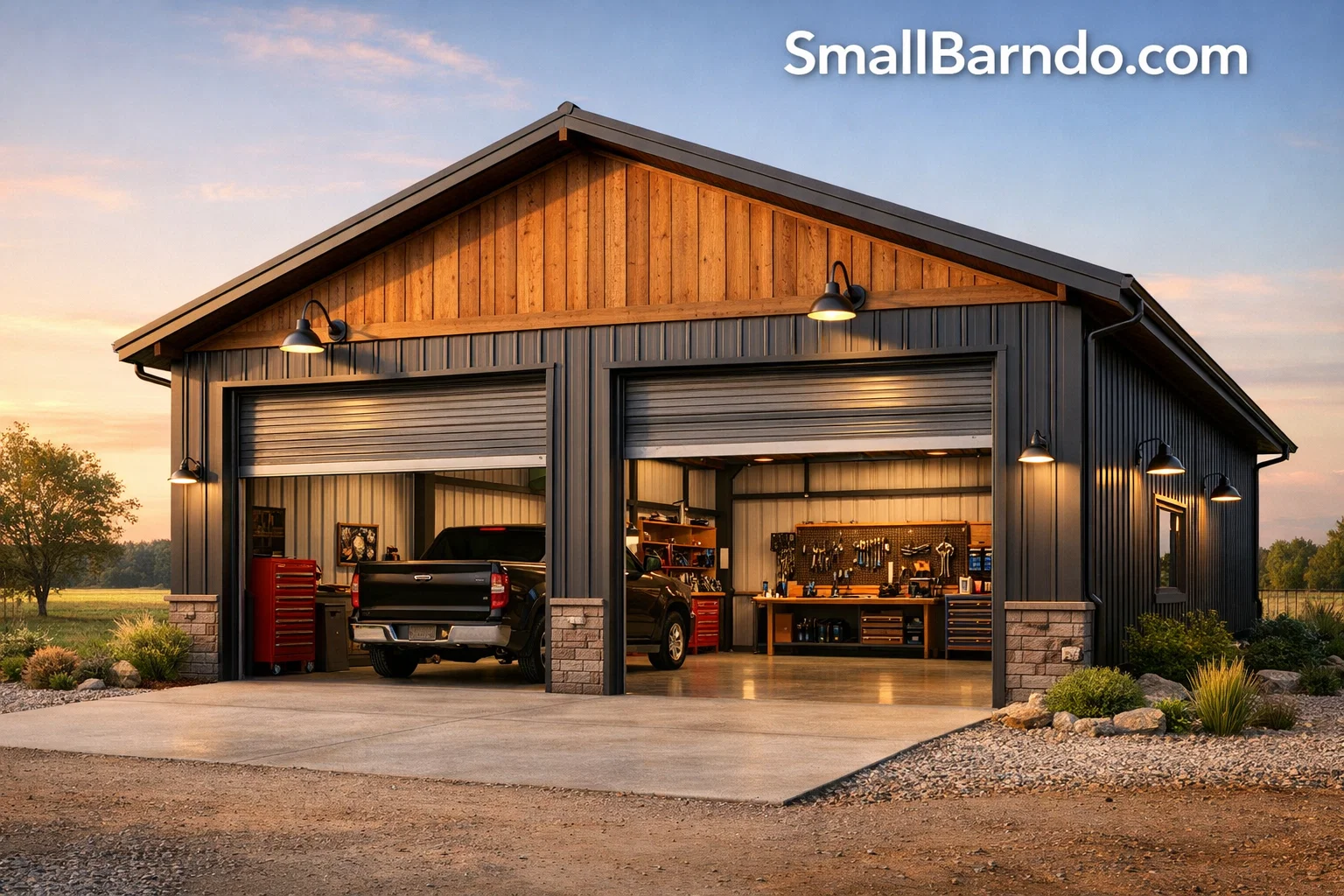
Incredible Barndos: 15 Barndo Garage Ideas for Workshops and Storage
Imagine standing in the center of a wide-open, steel-framed sanctuary that belongs entirely to you. The morning sun hits the metal siding, and as you roll up the massive 14-foot bay door, the smell of fresh sawdust or motor oil meets the crisp air. For many, a barndo garage isn’t just an addition to a home; it’s the primary reason for building one. It is your retreat, your laboratory, and your showroom all rolled into one.
When we talk about barndos, we aren’t just talking about buildings we’re talking about the freedom to create, store, and live without the cramped, low-ceiling limitations of a traditional suburban two-car garage. You deserve a space that works as hard as you do, and that is exactly what this guide will help you visualize.
Table of Contents
1. Why the Barndo Garage is the Ultimate Workspace
If you have ever tried to run a table saw in a standard garage, you know the struggle: you’re constantly tripping over a lawnmower, and the 8-foot ceiling makes it impossible to flip a sheet of plywood. Barndos, short for barndominiums, solves this by utilizing post-frame or steel-frame construction. This architecture allows for massive “clear spans,” meaning you don’t have to worry about load-bearing walls cluttering your shop floor.
In 2026, the “Shouse” (Shop + House) trend has reached a fever pitch. You are likely looking for a design where your garage occupies 50% or even 70% of the total footprint. This isn’t just about parking cars; it’s about having the vertical volume to install mezzanine storage, heavy-duty machinery, or even a full-scale vehicle lift. Because the structural integrity is held in the outer posts or steel bents, your interior layout is a blank canvas.
2. Barndo Garage vs. Traditional Stick-Built Garages
To truly understand why you should choose a barndo garage, you need to see the data. Traditional “stick-built” construction uses 2×4 or 2×6 studs spaced every 16 inches. While this is great for standard homes, it’s restrictive for high-performance workshops.
Comparison Table: 2026 Build Metrics
| Feature | Barndo (Post-Frame/Steel) | Traditional Stick-Built |
| Typical Cost (2026) | $65 – $160 per sq. ft. | $150 – $280 per sq. ft. |
| Ceiling Height | 14′ to 22′ standard | 8′ to 10′ standard |
| Maximum Clear Span | Up to 100’+ without pillars | Usually capped at 24’–30′ |
| Construction Speed | 3–6 months | 10–14 months |
| Durability | High (Fire/Pest resistant) | Moderate (Prone to rot/termites) |
Note: While barndos are generally more affordable per square foot, your final price will fluctuate based on whether you choose a “dry-in” kit or a fully finished turnkey build.
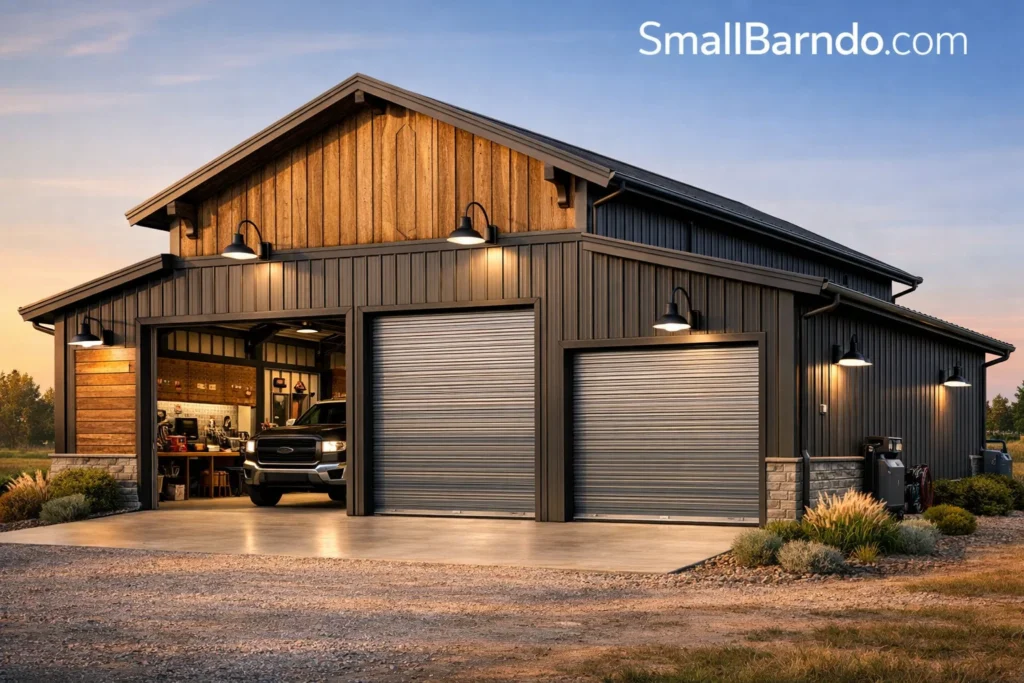
3. Top 15 Barndo Garage Ideas for Workshops and Storage
Finding the right layout for your barndo garage requires a blend of industrial utility and personal comfort. Here are 15 field-tested ideas to maximize your space.
High-Performance Workshop Ideas
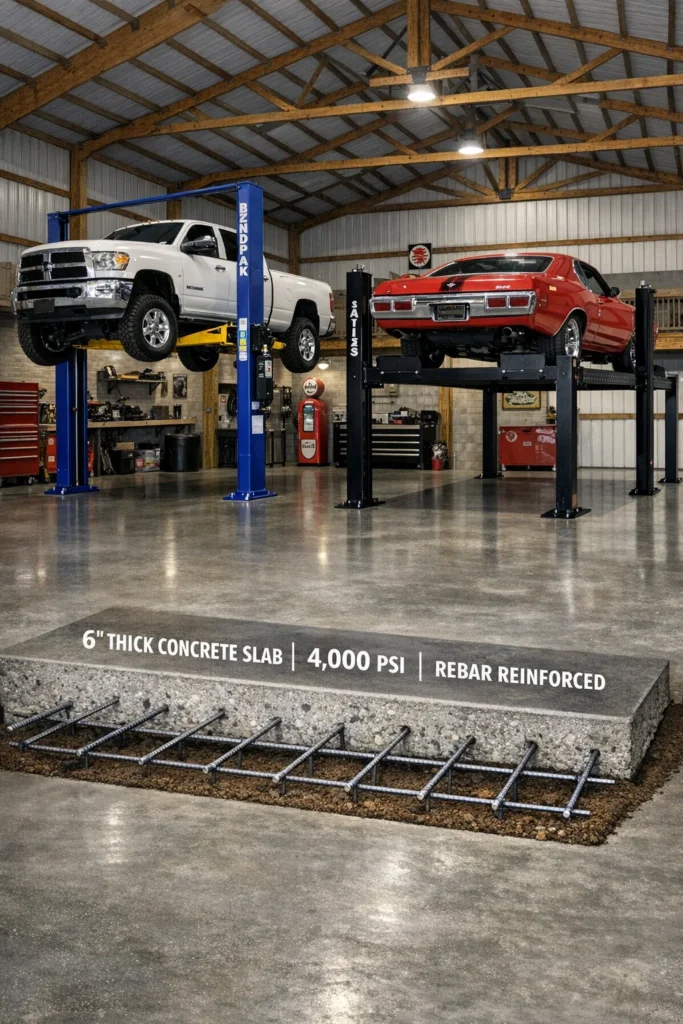
1. Industrial-Grade Hydraulic Lifts
If you are a gearhead, the high rafters of a barndominium are your best friend. Unlike a standard garage where a car lift might hit the ceiling, a barndo garage easily accommodates 2-post or 4-post lifts. To do this correctly, you must ensure your concrete slab is reinforced. In 2026, the standard recommendation is a 6-inch thick 4,000 PSI concrete pour with rebar reinforcement in the “lift zone” to handle the concentrated weight of a heavy-duty truck.
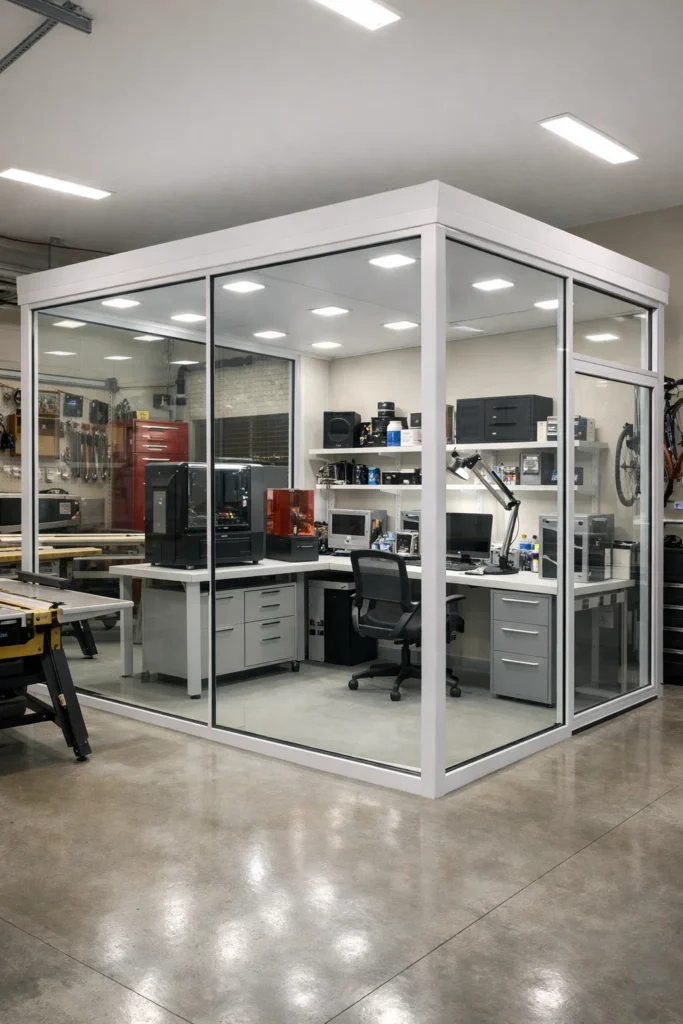
2. The “Clean Room” for Precision Crafting
Not every project is dirty. If you do 3D printing, electronics repair, or fine finishing, you need a dust-free environment. You can frame out a smaller, 12×12 room within your large garage using glass partitions. This allows you to keep an eye on the main floor while protecting your sensitive equipment from the sawdust generated by your table saw.
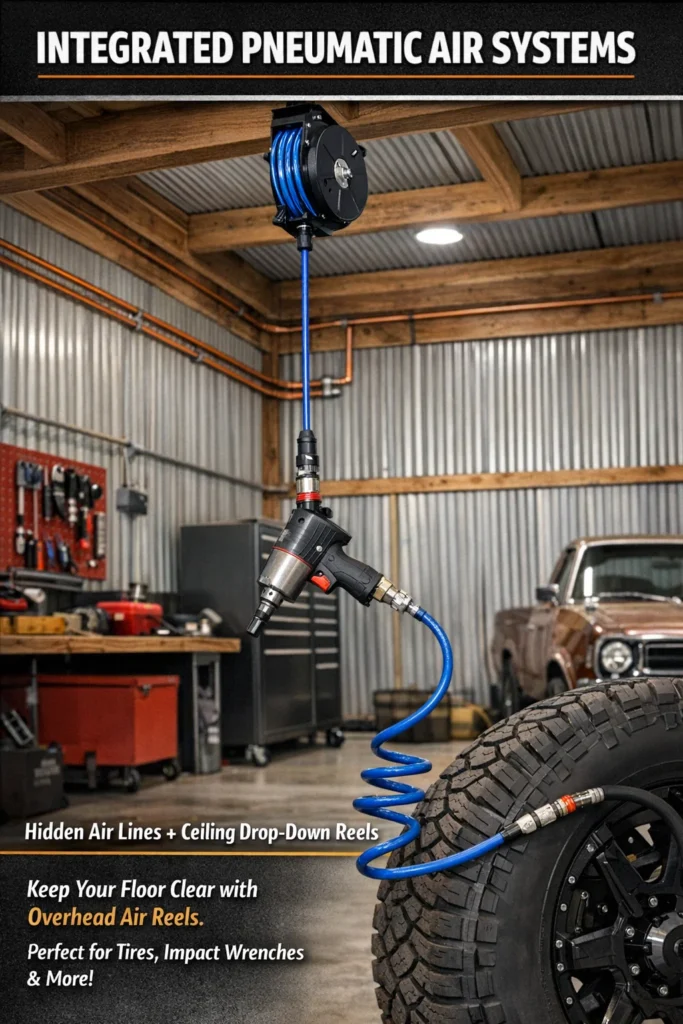
3. Integrated Pneumatic Air Systems
Tired of dragging a loud, heavy air compressor across the floor? In a barndo, you can run copper or high-grade PEX air lines behind the wall panels. Install “drop-down” reels from the ceiling in the center of the shop. This keeps your floor clear of tripping hazards and puts high-pressure air exactly where you need it, whether you’re airing up a tire or running an impact wrench.
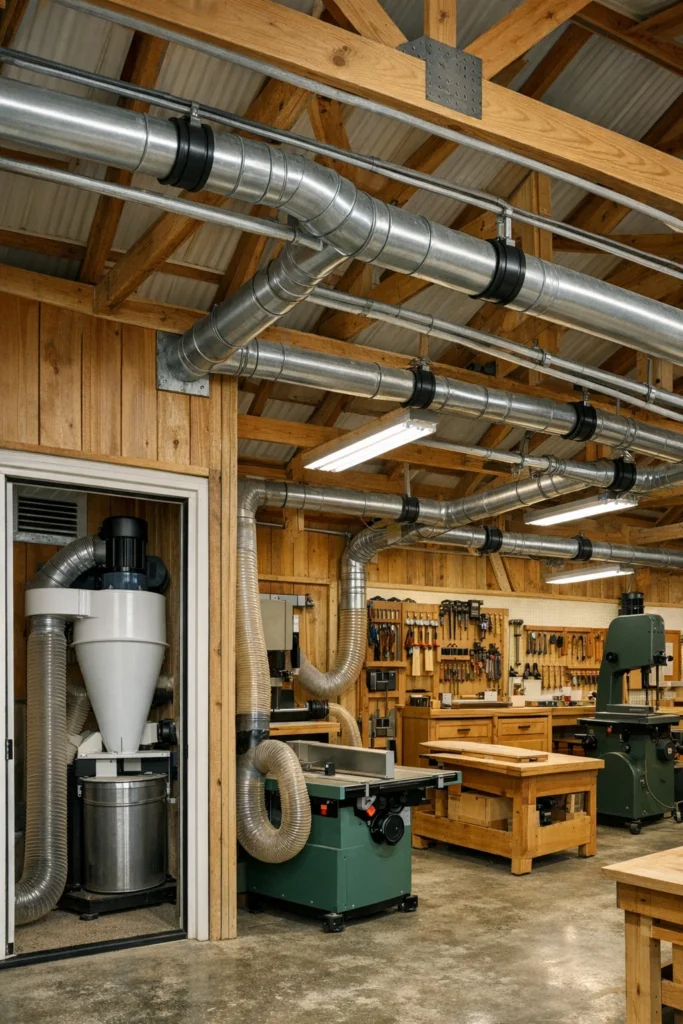
4. Specialized Dust Collection Hubs
For woodworkers, dust isn’t just a mess; it’s a health hazard. Because of the large volume of a barndo garage, you can install a 5-HP cyclone dust collector in a small exterior closet. By venting it outside or using a silencer, you keep the noise levels down while maintaining a pristine workspace. Use 4-inch PVC or metal ducting along the ceiling with blast gates at every machine.
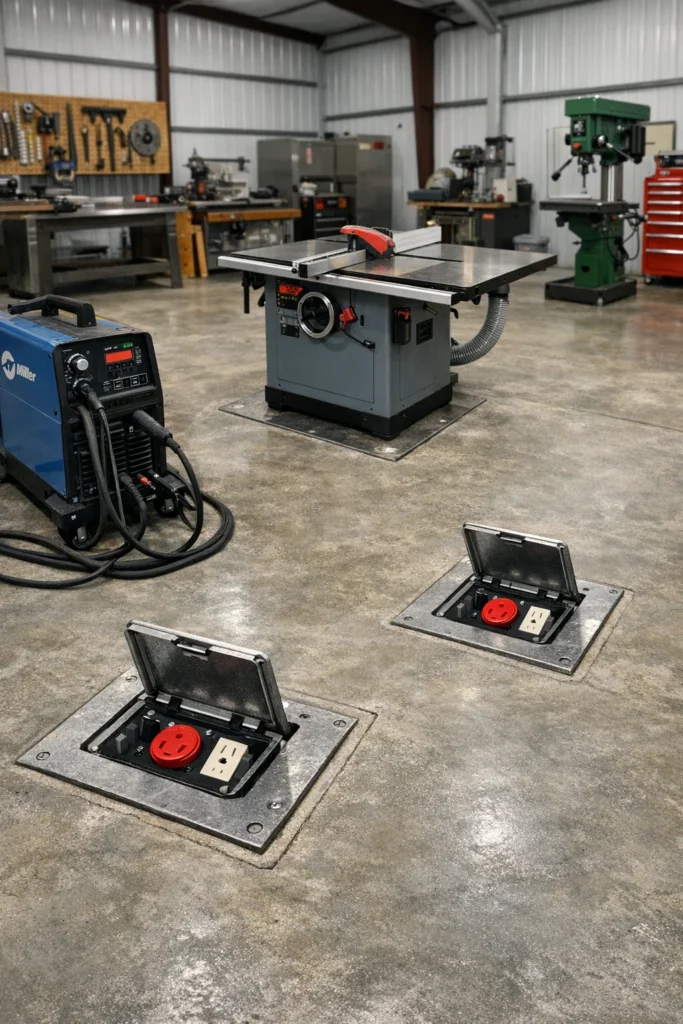
5. 220V Power “Islands”
Don’t limit yourself to the walls. When you’re building a barndo, you have the opportunity to run floor conduits before the concrete is poured. By installing 220V power boxes in the middle of your floor, you can place your heavy machinery, such as your welder or cabinet saw, right in the center of the room. This gives you 360-degree access to large workpieces without needing extension cords.
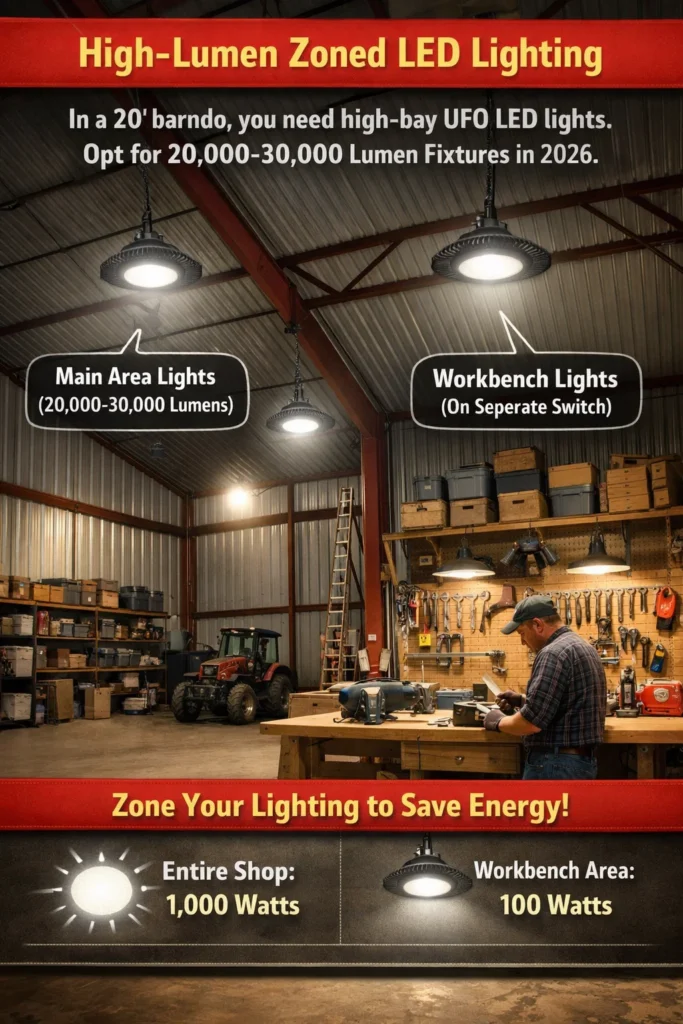
6. High-Lumen Zoned LED Lighting
Standard shop lights won’t cut it in a 20-foot tall barndo. You need high-bay UFO LED lights. In 2026, most owners are opting for 20,000 to 30,000 lumen fixtures. The key is to “zone” your lighting. Put your workbench area on a separate switch so you aren’t burning 1,000 watts of power just to sharpen a chisel.
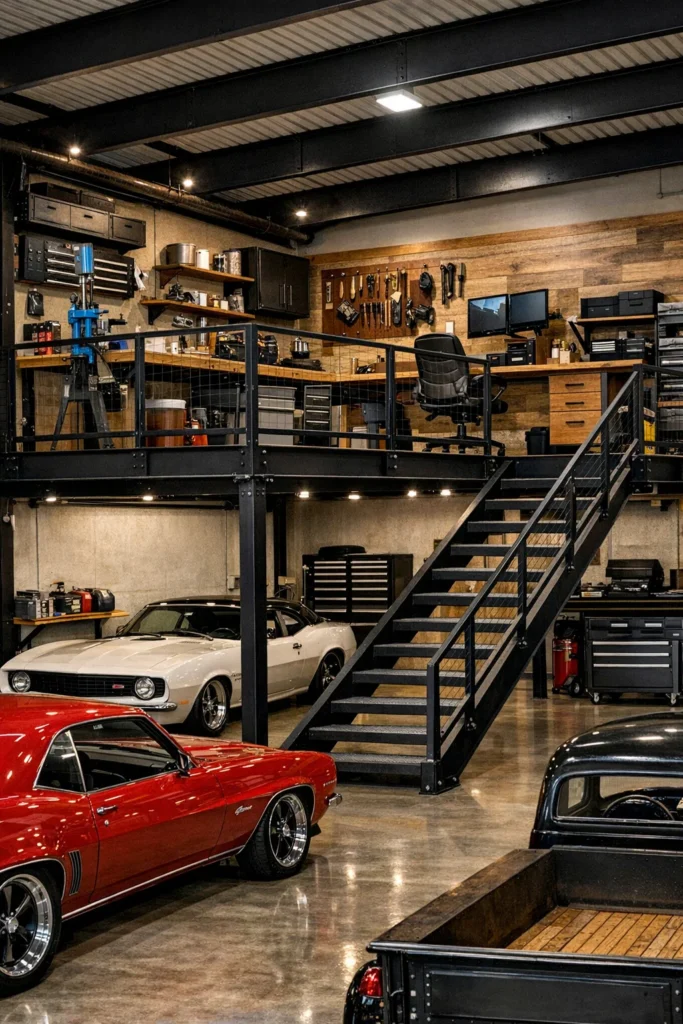
7. Reinforced Mezzanine Workspaces
Why waste the space above your head? A mezzanine can act as a secondary “light” workshop. You can use it for reloading ammo, leatherworking, or even a home office that overlooks your car collection. Ensure your mezzanine is engineered to hold at least 125 lbs per square foot if you plan on storing heavy tools up there.
Innovative Storage and Lifestyle Integration
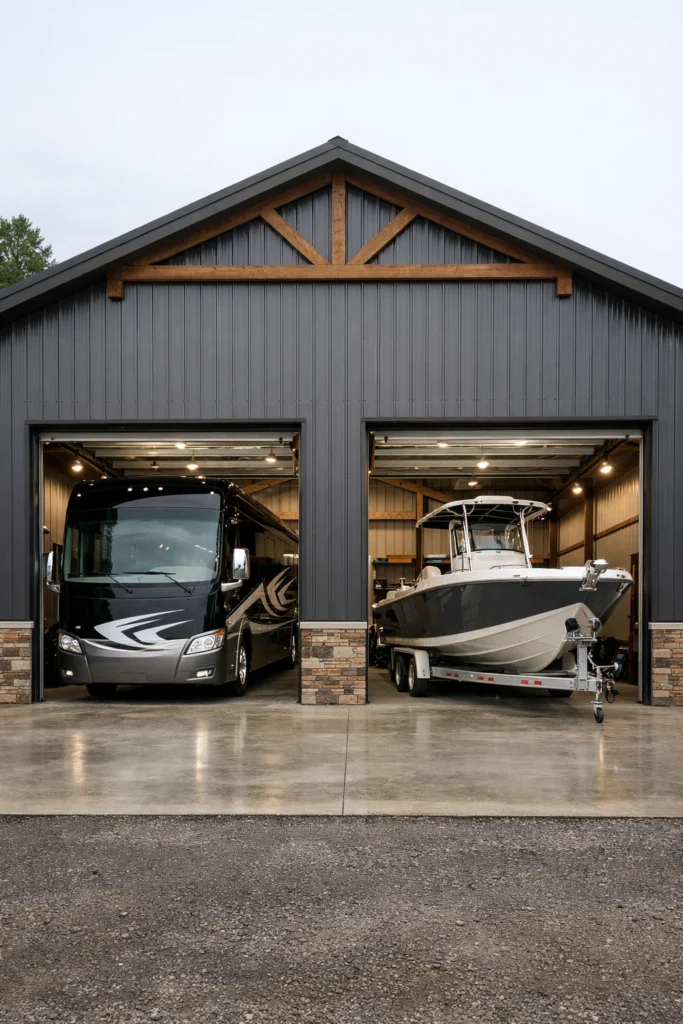
8. Oversized RV and Boat Bays
The beauty of barndos is that they can be built to fit your toys, not the other way around. By installing a 14’x14′ roll-up door, you can pull your Class A motorhome or your center-console boat directly into the garage. This saves you thousands in annual storage fees and keeps your investment protected from UV damage and winter snow.
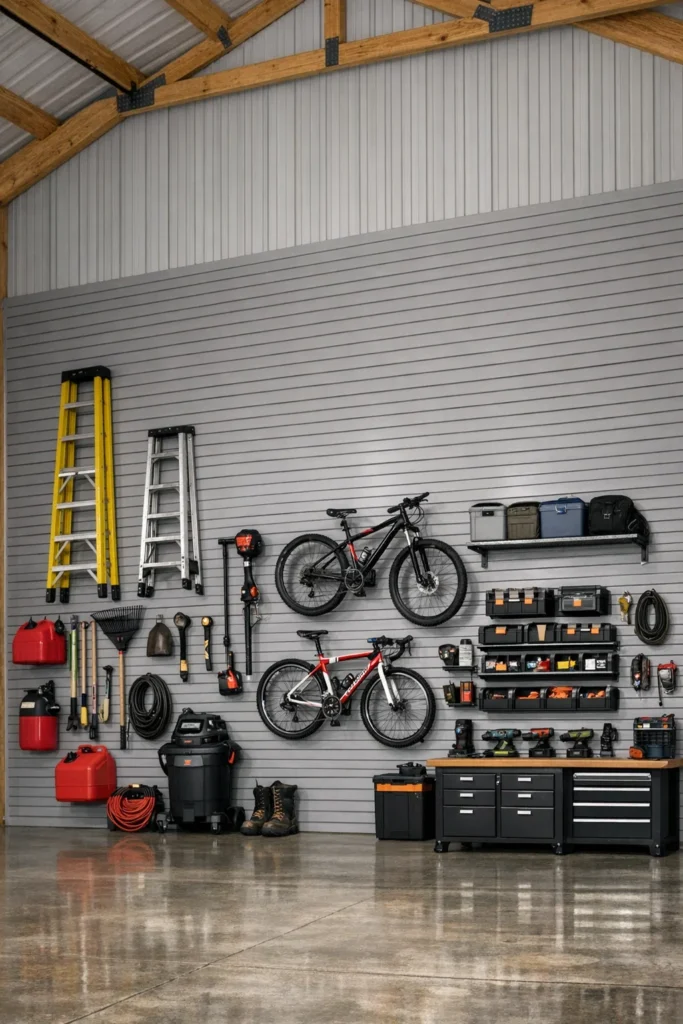
9. Slatwall and Modular Track Systems
With the massive wall height of a barndo, standard shelving looks puny. Use heavy-duty PVC slatwall from floor to ceiling. This allows you to hang everything from ladders and bikes to specialized tool bins. Because it’s modular, you can rearrange your entire garage in 15 minutes as your hobbies evolve.
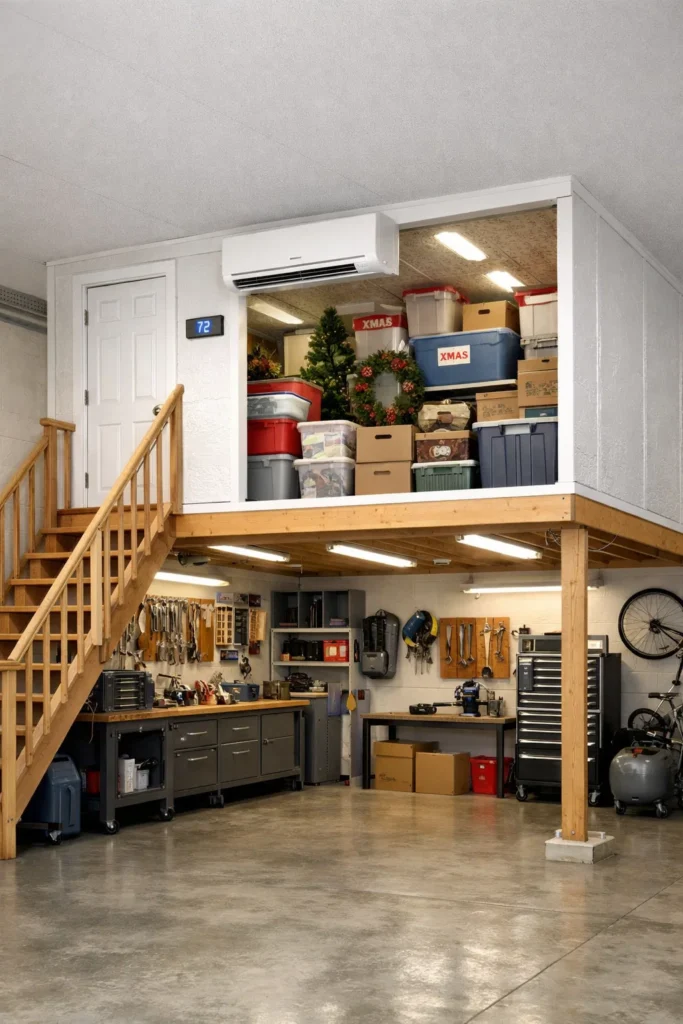
10. Climate-Controlled Storage Lofts
If you live in a region with high humidity, your sensitive items, like holiday decor or old photos, will rot in a standard garage. By building a sealed, insulated loft above your “clean room,” you create a mini-warehouse that stays at a steady 72 degrees year-round, even if the main shop is 90 degrees.
11. The “Decontamination” Mudroom
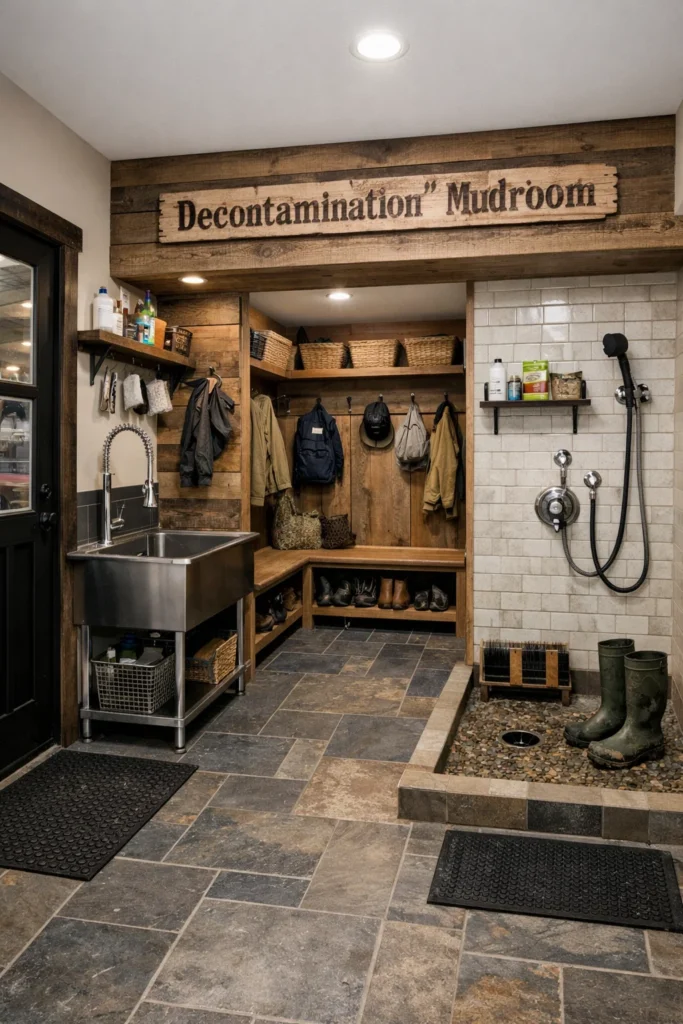
One of the best barndo layouts involves a mudroom that connects the garage directly to the kitchen or laundry room. Install a deep utility sink and a “boot wash” station. This ensures that the grease from your workshop stays in the workshop and doesn’t end up on your living room rug.
12. Industrial Glass Partition Walls
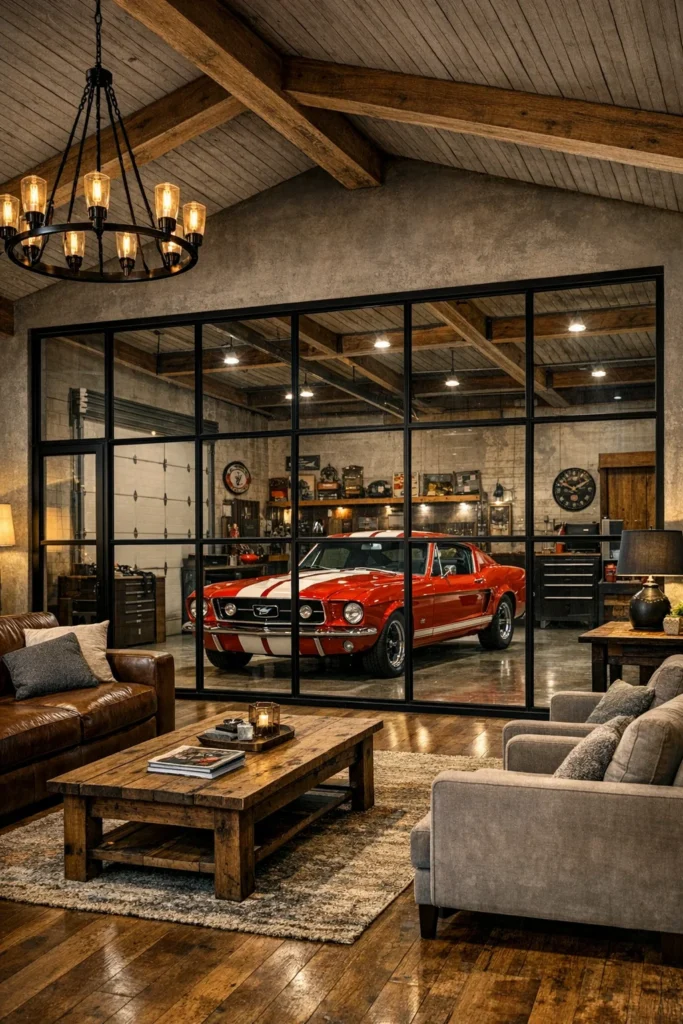
If you’ve spent years restoring a classic Mustang, you don’t want it hidden behind a drywalled wall. Many 2026 barndo designs feature a “viewing gallery,” a large internal glass wall between the living room and the garage. It turns your workshop into a functional art gallery.
13. Overhead Hoists and Pulley Systems
With steel rafters, you have incredible lifting points. Installing an electric hoist on a trolley beam allows you to lift engines out of cars or move heavy crates onto your mezzanine without breaking your back. It’s the kind of professional-grade utility that makes barndos so superior to standard houses.
14. Zoned Epoxy Flooring
Don’t just paint the floor; invest in a multi-layered epoxy or polyaspartic coating. You can use color-coding to define your space: grey for the parking areas, safety yellow for “caution” zones around machinery, and a decorative flake finish for the “showroom” portion of the garage.
15. Smart Tech Security Hubs
Your barndo garage likely contains $50,000 to $100,000 worth of tools and vehicles. Integrated smart systems in 2026 now include AI-monitored cameras that can distinguish between a stray cat and an intruder. You can also monitor your shop’s temperature and humidity from your phone, ensuring your tools don’t rust while you’re on vacation.
4. Engineering Your Dream: Technical Requirements
Building a barndo garage isn’t as simple as putting up four walls. To make it comfortable and legal, you need to navigate specific technical requirements.
HVAC and Climate Control
Because of the massive cubic footage, heating and cooling a barndo can be expensive if you don’t plan ahead.
- Radiant Floor Heating: This is the gold standard for workshops. By running PEX tubing through the concrete slab, the heat rises from the floor, keeping your feet warm even in the dead of winter.
- Mini-Split Systems: These are perfect for the living quarters or the “clean room” sections. They are highly efficient and don’t require ductwork, which can be difficult to run through a vaulted barndo ceiling.
Fire Safety and Building Codes
One of the most important “exceptions and conditions” you must know involves the separation wall.
- The Fire Barrier: According to the International Residential Code (IRC), if your garage is attached to your living space, you must have a fire-rated separation. This usually means installing 1/2-inch gypsum board (drywall) on the garage side.
- Habitable Rooms Above: If you build a loft or bedroom directly above the garage, the code gets stricter. You will likely need 5/8-inch Type X fire-rated drywall on the ceiling to provide at least a one-hour fire rating.
- Self-Closing Doors: The door between your barndo garage and your home must be a solid wood or steel door at least 1-3/8 inches thick, equipped with a self-closing hinge to prevent garage fumes (or fire) from entering the house.
5. Cost Breakdown and Investment ROI (2026 Data)
Is a barndo worth it? Let’s look at the numbers for a popular 40×60 (2,400 sq. ft.) build.
- Foundation (6″ Slab): $15,000 – $22,000 (depending on prep work).
- Steel Kit (Materials only): $45,000 – $65,000.
- Assembly/Erection Labor: $12,000 – $18,000.
- Electrical/Plumbing for Shop: $8,000 – $15,000.
Total for Shop Shell: Approximately $80,000 – $120,000.
ROI Analysis: In 2026, properties with large, high-quality workshops are selling for a 15% to 20% premium compared to standard homes. Why? Because the “Work From Home” era has evolved into the “Create From Home” era. Buyers are looking for pre-built infrastructure for their hobbies and businesses.
Conclusion
Creating an incredible barndo garage is the ultimate gift to your future self. It is a space where your projects aren’t limited by your surroundings. Whether you are building a professional-grade automotive shop or a massive climate-controlled storage hub for your family’s outdoor gear, the flexibility of barndos makes them the smartest choice for 2026 and beyond.
Don’t let your dream workshop stay a “someday” project. With the right planning and a focus on high-quality materials, you can build a legacy space that serves you for decades.
Ready to take the first step toward your own barndo? Would you like me to help you draft a specific list of materials for a 40×60 shop, or should we look at some floor plan layouts that separate your workspace from your living quarters?
FAQ: Navigating Your Barndo Garage Build
What is the biggest limitation of a barndo garage?
The most significant limitation is urban zoning. Many cities have “curb appeal” ordinances that prohibit metal-sided buildings or restrict the height of residential structures to 35 feet. Always check your local deed restrictions and HOA rules before purchasing a kit.
Can I use a post-frame building for my garage if I live in a snowy climate?
Absolutely. In fact, steel and post-frame barndos are often better for snow. They are engineered to handle specific “snow loads” based on your zip code. The metal roofing also allows snow to slide off more easily than asphalt shingles, preventing dangerous ice dams.
Do barndos rust over time?
In 2026, modern metal siding is treated with advanced coatings like Galvalume or high-grade Kynar 500 paints. These often come with a 30-to-50-year warranty against rust and fading. As long as you keep the base of the metal clear of standing water and wet soil, your barndo garage will stay pristine for a lifetime.
Is it cheaper to buy a kit or build from scratch?
Purchasing a barndominium kit is generally 15% cheaper because the engineering and material sourcing are done in bulk. However, if you have a highly unusual lot shape or very specific structural needs, a “build-from-scratch” approach using a local red-iron steel fabricator may be necessary.