Inspiring Inside Shipping Container Homes: Stunning Interiors and Layout Hacks
Have you ever felt the pressure of conventional living? The overwhelming mortgages, the standardized layouts, the feeling that your home is just like everyone else’s? We’ve all been there, dreaming of a space that truly reflects our unique spirit, a space that is sustainable, affordable, and profoundly personal.
That’s the powerful, emotional draw of inside shipping container homes. They represent more than just repurposing steel; they embody a philosophical shift. They challenge you to see the immense potential in a finite, box-shaped canvas. It’s about turning a limitation the standard 8-foot width, into the mother of invention, forcing layout hacks and design choices that are brilliant, efficient, and breathtakingly beautiful.
This article is your comprehensive guide to 25 of the most inspiring transformations, showing you exactly how architects and homeowners have taken the humble container and forged a dwelling with an expansive heart. Get ready to have your preconceptions shattered and your imagination soar! You are about to discover the ingenious interior strategies that make these compact spaces truly livable.
Table of Contents
Understanding the Canvas: Interior Limitations and Possibilities
Before you start sketching out your dream home, it’s crucial to grasp the fundamental constraints that shape the best inside shipping container homes. Savvy builders see these not as roadblocks, but as fixed design parameters that demand efficiency.
The Core Dimensions and Their Impact
The standard width of a container is 8 feet. Once you factor in interior framing, insulation, and the internal wall finish, the usable width of your living space shrinks dramatically, often down to 7.5 feet or less. This narrowness is the single greatest factor dictating your internal design, pushing you toward linear, corridor-style, or gallery layouts.
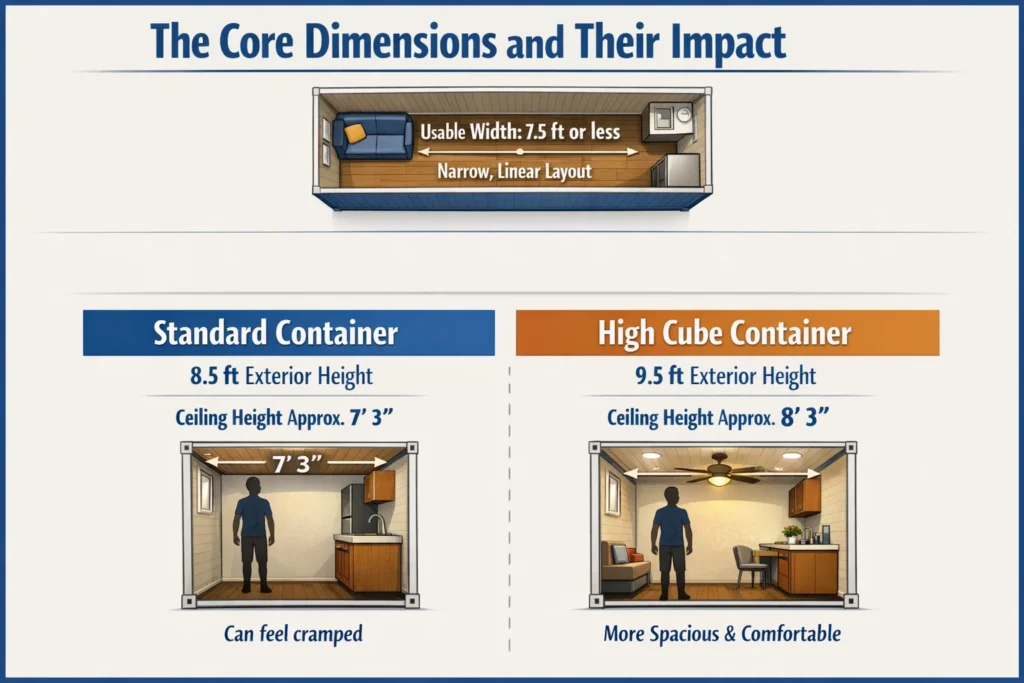
- Standard vs. High Cube (The Height Decision):
- Standard (8.5 ft. exterior height): After adding 4 to 6 inches for insulation and flooring, your final ceiling height can be approximately 7 feet 3 inches. This can feel cramped, particularly for taller individuals or in longer 40-foot units.
- High Cube (9.5 ft. exterior height): The extra foot is a game-changer for your comfort. It results in a finished ceiling height closer to 8 feet 3 inches. This extra vertical space is invaluable for running utilities, adding recessed lighting, and integrating ceiling fans, making the High Cube the overwhelming preferred choice for comfortable, spacious-feeling inside shipping container homes.
Essential Modifications for a Livable Interior
Your steel shell needs key structural and environmental modifications before it becomes a safe, comfortable home.
| Modification | Purpose | Space-Saving Hack/Alternative | Limitation of Information |
| Insulation | Thermal regulation (preventing overheating/freezing) and crucial anti-condensation/anti-rust protection. | Exterior insulation (e.g., rigid foam board with external cladding) preserves maximum interior width compared to interior spray foam, which is excellent but voluminous. | R-value compliance varies drastically by climate; check local building codes first. |
| Cutting & Reinforcement | Installing doors, windows, and combining units. | Must be executed by a professional structural engineer. Reinforcing the cut openings with steel tube framing is non-negotiable, as you are removing the container’s primary load-bearing material. | This is the most expensive and complex modification; DIY cuts can compromise the entire structure. |
| Wall Linings | Covering the corrugated steel for aesthetics and comfort. | Lightweight, thin materials like marine-grade plywood, bamboo paneling, or V-groove paneling minimize space loss and can be installed directly onto metal or thin furring strips. | Using standard drywall will eat up valuable inches of space. |
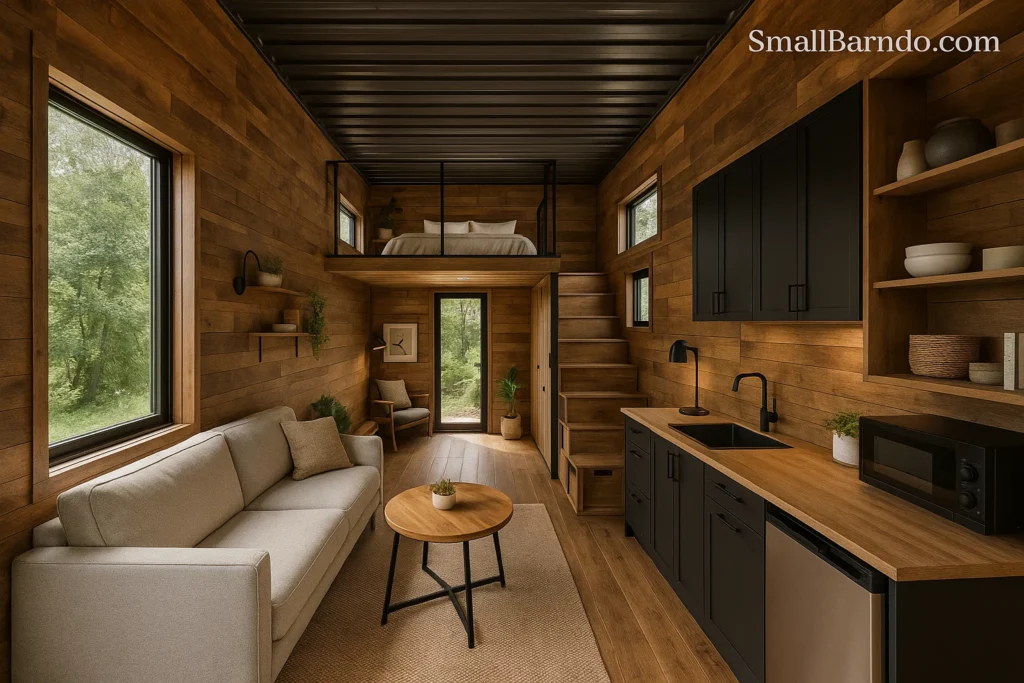
Layout Hacks for Single-Container Inside Shipping Container Homes (The Tiny Marvels)
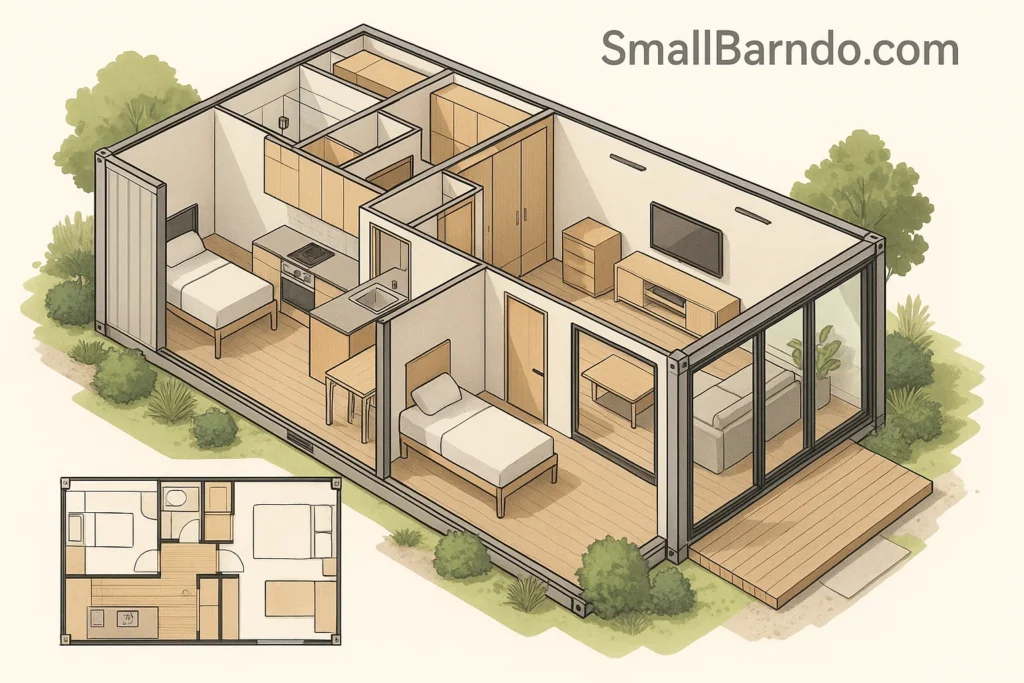
The design of a single 20ft (approx. 150 sq ft finished interior) or 40ft (approx. 300 sq ft finished interior) container is the ultimate test of efficiency. Every inch must serve a purpose.
The Art of Zoning in 20ft & 40ft Containers
You must think linearly. The narrow shape naturally lends itself to a galley layout.
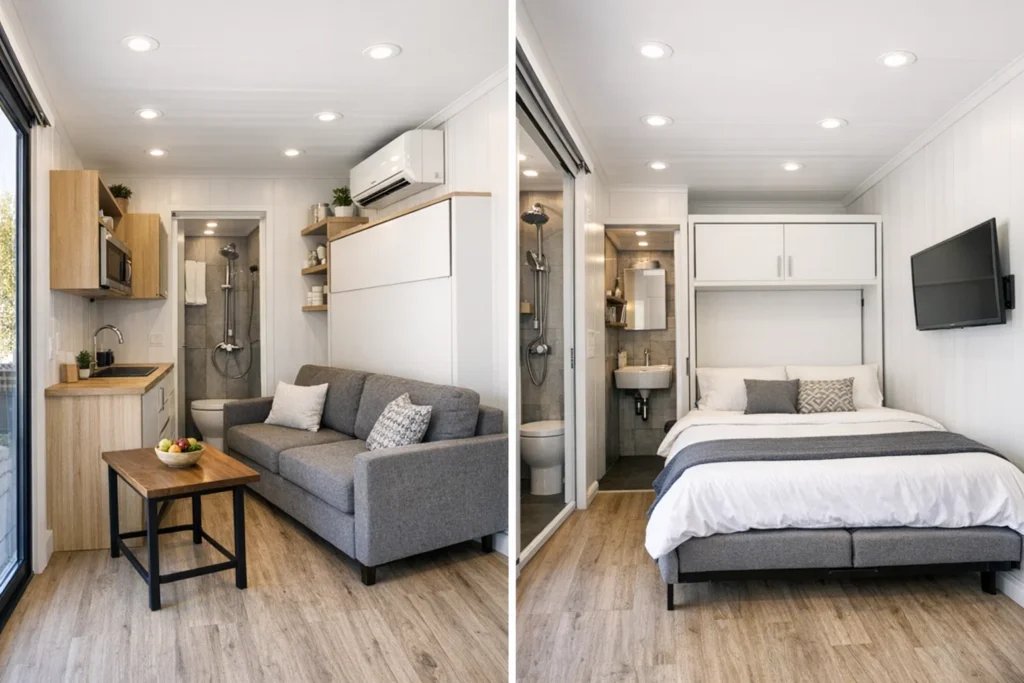
- 20ft Container Homes (The Studio/Guest Suite):
- Layout: The only viable option is a studio-style layout where the living, sleeping, and kitchen areas are all in one main room.
- Key Hack: The use of a Murphy bed or a convertible sofa bed is essential. This allows the sleeping area to disappear during the day, transforming the space back into a living or working zone.
- Inspiration Example: A successful 20ft design will feature a wet-bath (where the toilet, sink, and shower are combined or share a space) at one end, saving several square feet of crucial space compared to a divided bathroom.
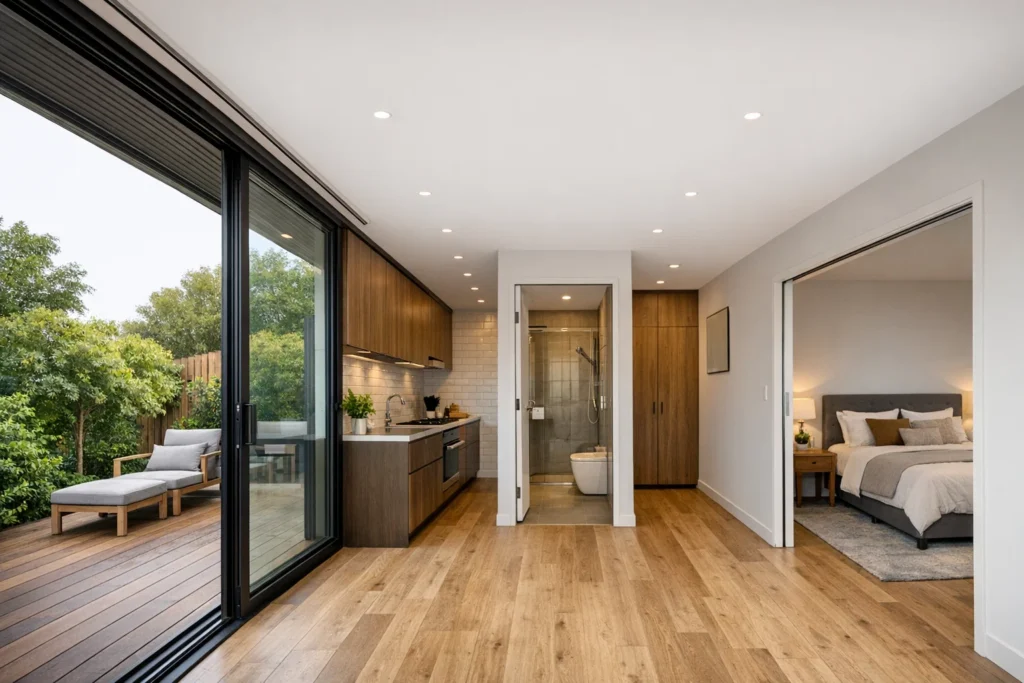
- 40ft Container Homes (The 1-Bedroom):
- Layout: The extra length allows you to create separate, private rooms. The most common and functional arrangement places a bedroom at one end and the main living area/kitchen at the other, with the bathroom centrally located.
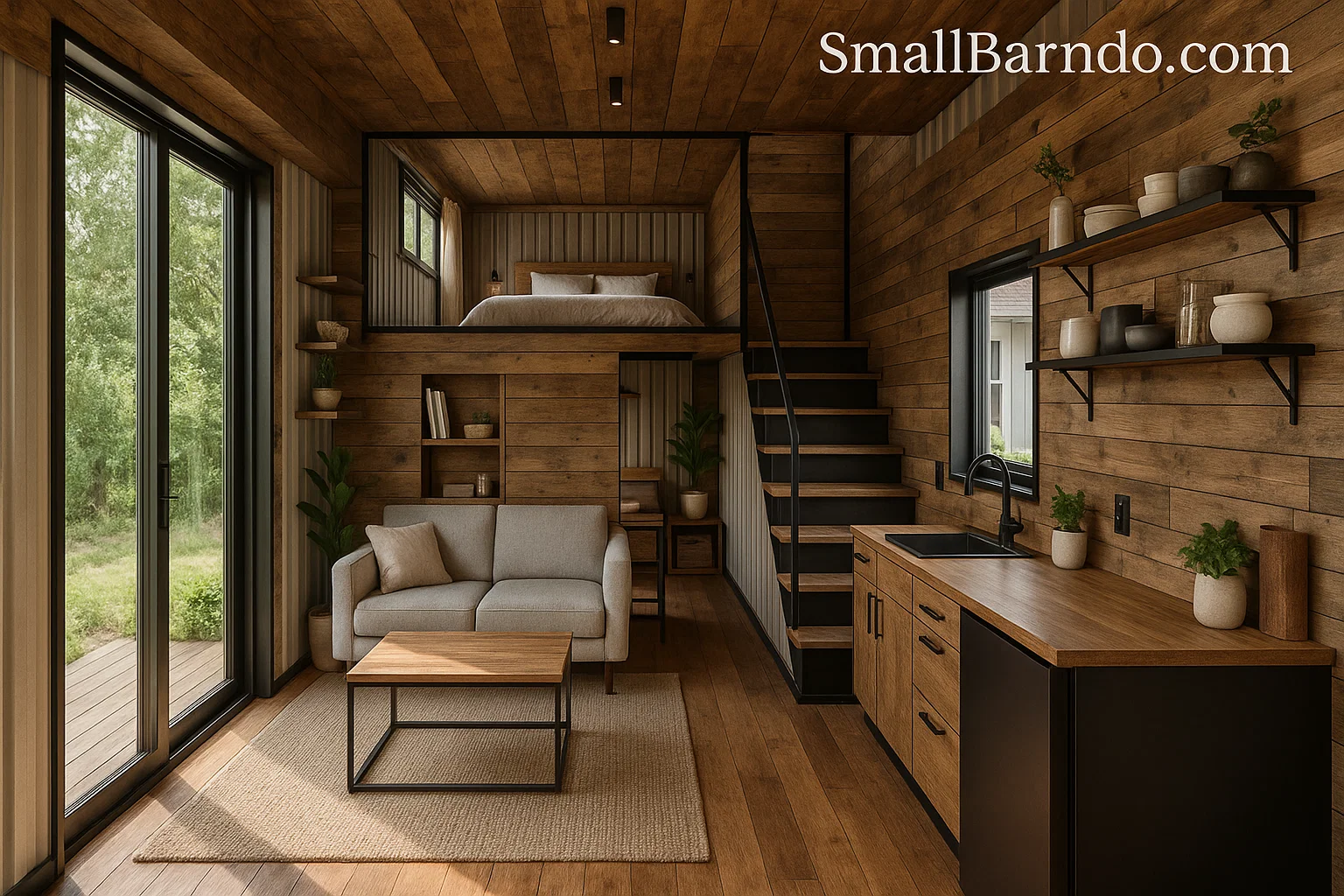
- Key Hack: Use a galley-style kitchen along one wall. This maximizes the main corridor width. Furthermore, installing large, floor-to-ceiling glass sliding doors on one of the long sides is a must. This completely opens up the space, making the interior feel 2-3 times larger by blurring the line between inside and out.
Maximizing Vertical and Hidden Storage
In a container home, you run out of floor space long before you run out of wall space.
- Lofts and Vertical Space: If you use a High Cube container, utilize the extra height for a storage loft above the bathroom or kitchen area. Even if it’s not a sleeping loft, this is ideal for seasonal items or bulk goods.
- Built-in, Multi-functional Furniture: Avoid freestanding, bulky furniture. Opt for:
- Integrated benches with lift-top storage.
- Fold-down desks and dining tables that hinge flat against the wall when not in use.
- Bed frames with deep drawers underneath.
- Wall-Mounted Fixtures: Choose wall-mounted sinks and taps in the bathroom and kitchen to save countertop space and make cleaning easier, further simplifying the linear flow.
Stunning Interior Design Aesthetics and Finishes
The internal finishes are what truly elevate the industrial shell into a comfortable, stylish residence. Your choice of materials, color, and texture will define the atmosphere of your compact space.
Style Comparison: Industrial Chic vs. Modern Rustic
You have two primary aesthetic directions that work exceptionally well within the container’s structure.
| Design Element | Industrial Chic | Modern Rustic | Depth of Analysis |
| Walls | Exposed, sealed corrugated steel sections, complemented by plaster or dark wood accents. | Light shiplap, natural pine, bamboo paneling, or white-painted surfaces. | Comparison: The exposed steel acknowledges the container’s origins, while wood paneling fully conceals it, maximizing warmth. |
| Flooring | Polished concrete (if the subfloor allows), dark, durable vinyl plank, or slate tile. | Light-colored engineered hardwood, laminate, or neutral carpeting in the sleeping area. | Hack: Use light, continuous flooring across all zones to create an uninterrupted sightline, visually stretching the narrow space. |
| Color Palette | Blacks, charcoals, deep blues, copper, and stainless steel hardware. | Whites, creams, light grey, sage green, and natural, earthy tones. | Tip: Light colors on the walls and ceiling are not just aesthetic; they are the single most effective illusion hack for making your inside shipping container home feel wider and taller. |
The Power of Light and Reflection
A small space needs ample light to avoid feeling like a cave. You must incorporate layered lighting and reflection.
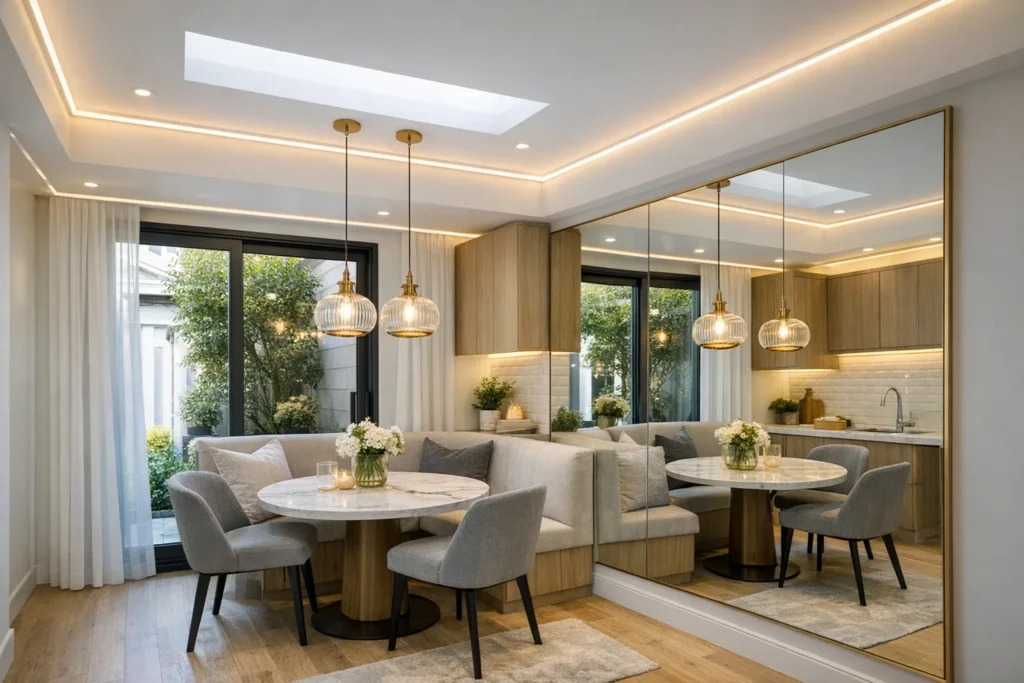
- Natural Light Integration: Beyond the large sliding doors, consider skylights or clerestory windows (high up on the wall). These bring in light without sacrificing valuable wall space needed for cabinets or furniture.
- Artificial Lighting: Rely on recessed LED strips for ambient, uniform light. Avoid bulky floor lamps that take up precious real estate. Use decorative pendant lights only to define a central area, such as above a dining nook or kitchen counter.
- Reflection: Strategically place large mirrors directly opposite windows. This doubles the perceived natural light and gives the illusion of a much longer, wider space.
Grandeur in Multi-Container Inside Shipping Container Homes (The Ultimate Layouts)
When space is not limited to a single 8-foot-wide tube, you can achieve layouts comparable to traditional homes. Combining two or more containers allows you to cover multiple angles of the housing need, from simple studios to multi-bedroom family residences.
Popular Multi-Container Configurations
- Side-by-Side (The Wide Open Space):
- Layout Hack: Joining two 40ft containers lengthwise (parallel) and removing the majority of the internal corrugated walls creates a living area that is approximately 15 to 16 feet wide.
- Result: This is the most effective way to create an open-concept kitchen, living, and dining room that feels truly expansive. The central connecting seam must be reinforced with a supporting steel beam as per structural engineering standards.
- Stacked (The Vertical Design):
- Layout Hack: Placing a 40ft container directly atop another 40ft container creates a traditional two-story home, ideal for narrow urban lots.
- Key Design: You separate public zones (kitchen, living, utility) on the first floor from private zones (bedrooms, office) on the second. Use a spiral staircase inside or an external straight staircase to maximize the internal usable floor area.
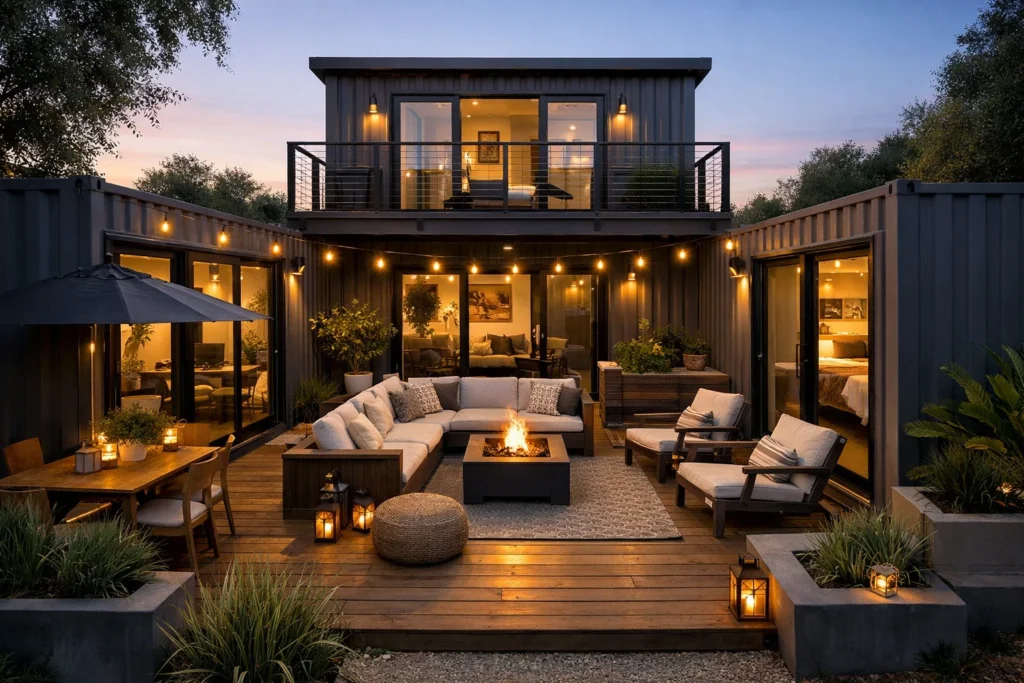
- L-Shaped or U-Shaped (The Courtyard Connector):
- Layout Hack: Arranging 3+ containers to form an ‘L’ or ‘U’ shape automatically creates a sheltered, naturally defined courtyard or deck area in the center.
- Key Value: This arrangement seamlessly connects the inside shipping container home with the outdoors, making the interior feel larger and providing a private, secure outdoor living space.
Exceptions and Conditions in Multi-Unit Construction
- Criss-Cross Stacking Limitation: Be wary of architectural renders showing containers stacked offset or criss-cross. While visually interesting, this configuration requires extensive, complex, and costly additional steel reinforcement and custom engineering far beyond standard container modification because containers are designed to bear loads only on their corner posts. Sticking to aligned, corner-to-corner stacking is the economical condition for your build.
Top 25 Inspiring Inside Shipping Container Homes: Key Takeaways
The 25 most impressive inside shipping container homes share a common thread: they solve the inherent challenge of the “steel box” with clever, focused layout hacks.
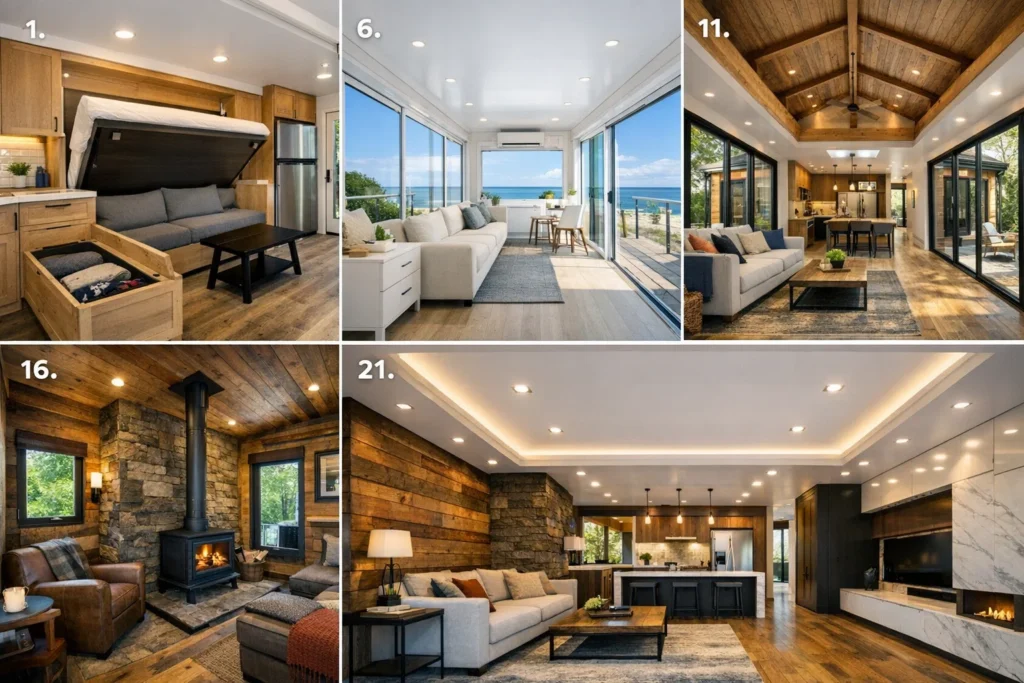
- The Off-Grid Studios (1-5): Master the multi-functional furniture philosophy. Look for built-in benches that lift to reveal deep storage or beds that fold away entirely, making 150 sq ft feel like 300 sq ft.
- The Coastal Retreats (6-10): Prioritize transparency. These homes use white interiors and large, full-length glass panels on the long walls to let the exterior view become the artwork, masking the container’s narrowness.
- The Modern Family Homes (11-15): The key is bridging. Examples often feature two parallel containers with a traditional roof structure spanning the gap, creating a large, open common area that is not steel-walled.
- The Rustic Cabins (16-20): Focus on texture and warmth. They use rich, reclaimed wood paneling and dark stone accents, coupled with a central feature like a small wood-burning stove, creating a deliberately cozy, compressed atmosphere instead of fighting the size.
- The Luxury Builds (21-25): The hack here is ceiling work. These premium inside shipping container homes often have false ceilings to hide all HVAC, electrical, and plumbing runs, creating a clean, high-end finish that is impossible in a stock container.
Conclusion: Your Next Step Towards Container Living
The journey through 25 incredible inside shipping container homes proves one thing: limitations fuel creativity. From the clever use of vertical space in a 20ft studio to the expansive, light-filled living areas of a multi-container mansion, the possibilities are only restricted by your imagination and careful planning. You don’t have to sacrifice comfort or style to pursue a sustainable, unique, and often more affordable way of living.
Your next step is to align your budget with your layout. Decide if you can afford the space-saving necessity of a High Cube container and whether your design will feature simple cuts or complex structural welding. The information you’ve read here should empower you to design an interior that not only utilizes every inch but also feels like a spacious, custom-built sanctuary.
FAQ About Inside Shipping Container Homes
1. Is it expensive to finish the interior of a shipping container home?
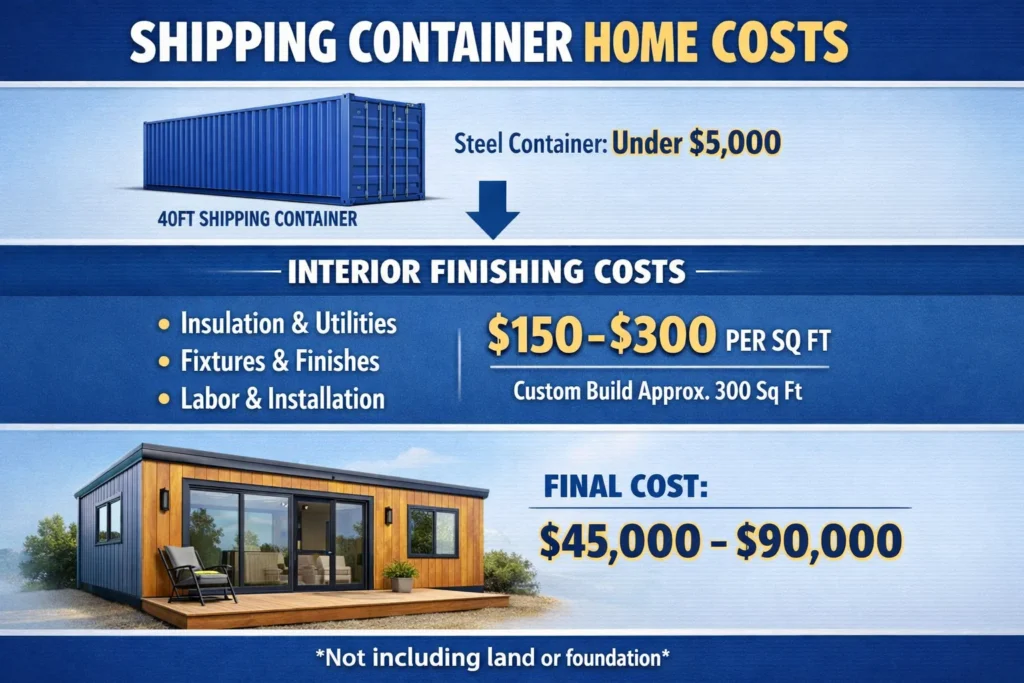
The cost is highly variable, but you must be realistic. While the steel shell is affordable (a 40ft container is often under $5,000), the interior finishing (insulation, utilities, fixtures, and labor) is where the main cost lies. A full, high-quality residential finish can cost anywhere from $150 to $300 per square foot for a custom build, bringing the final price of a finished 40ft inside shipping container home (approx. 300 sq ft) into the $45,000 to $90,000 range, not including land or foundation.
2. How do you deal with insulation and condensation inside shipping container homes?
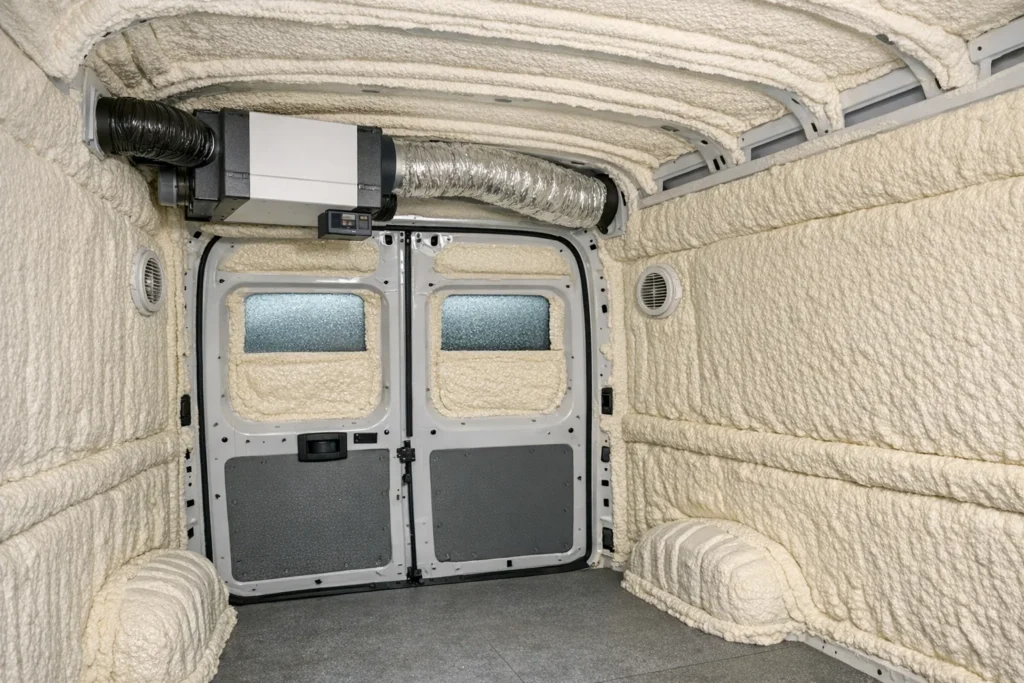
This is the most critical technical challenge. Steel is a thermal conductor, meaning it rapidly transfers heat and cold, leading to significant condensation (sweating) on the interior walls. This causes rust and mold. The solution is proper insulation and ventilation. Closed-cell spray foam is the industry standard for interior application because it is an excellent insulator and moisture barrier, but it reduces your interior width by several inches. You must also include an HRV/ERV (Heat Recovery/Energy Recovery Ventilator) to cycle air and manage humidity.
3. Do you have to get permits to build inside shipping container homes?
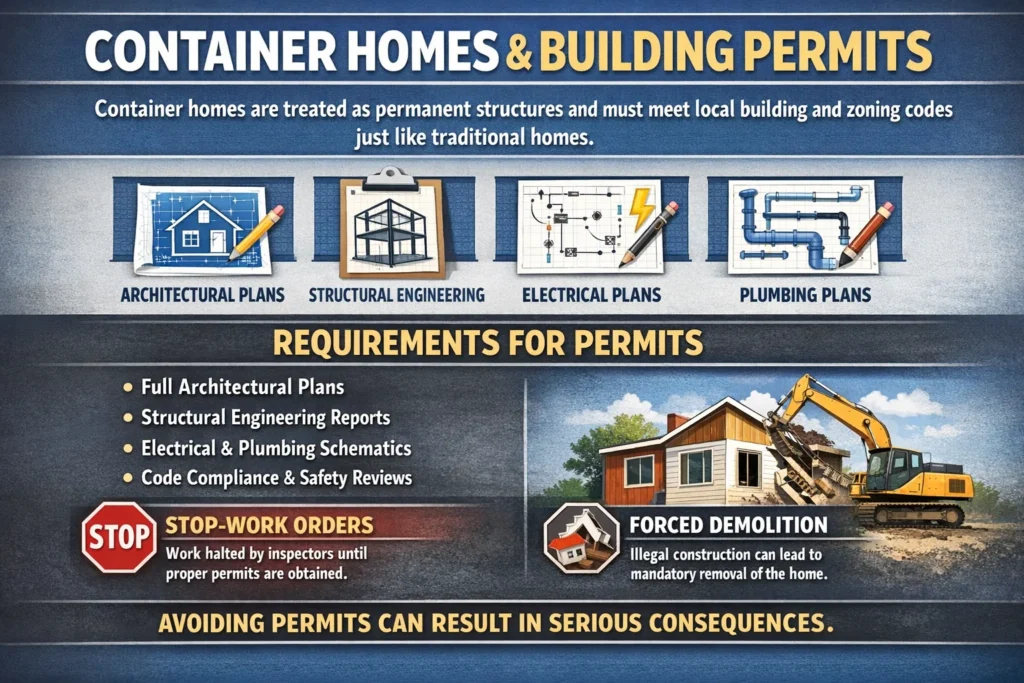
Yes, in almost all residential areas. Container homes are treated as permanent, modular structures and must comply with the same local building and zoning codes as traditional stick-built homes. You will need full architectural, electrical, plumbing, and structural engineering plans to pull the necessary permits. Attempting to bypass this can result in stop-work orders or forced demolition.
4. How long does a well-built shipping container home last?
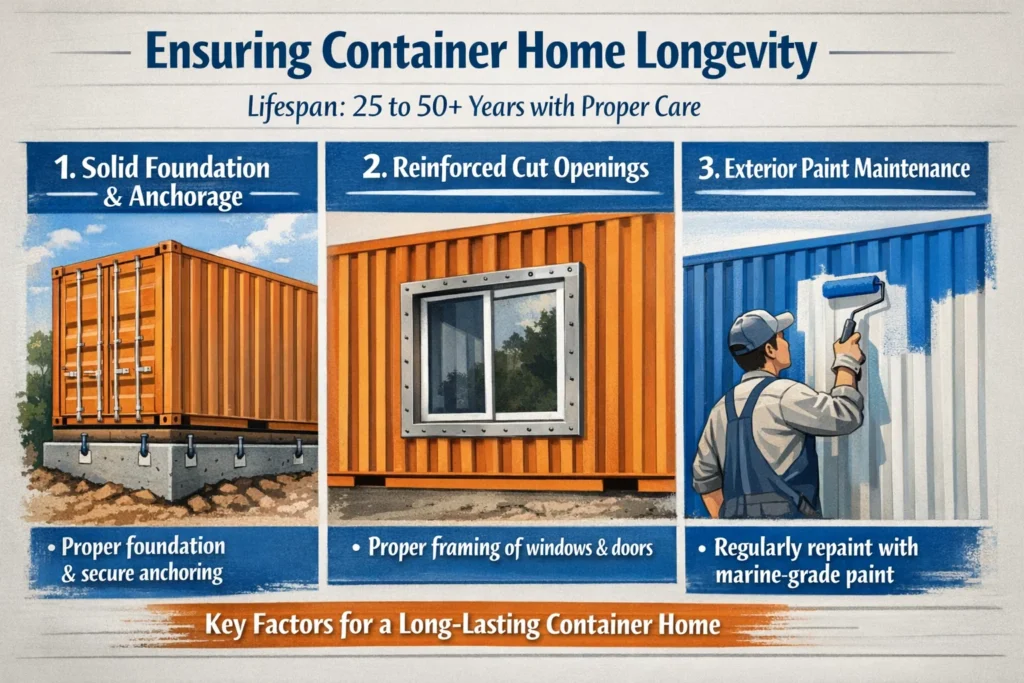
A properly reinforced and well-maintained container home has a life expectancy comparable to a traditional home, 25 to 50 years or more. The durability of the steel is not the issue; the longevity depends entirely on: 1) The quality of the foundation and anchorage, 2) The correct reinforcement of all cut openings, and 3) Consistent maintenance of the exterior marine-grade paint to prevent rust.