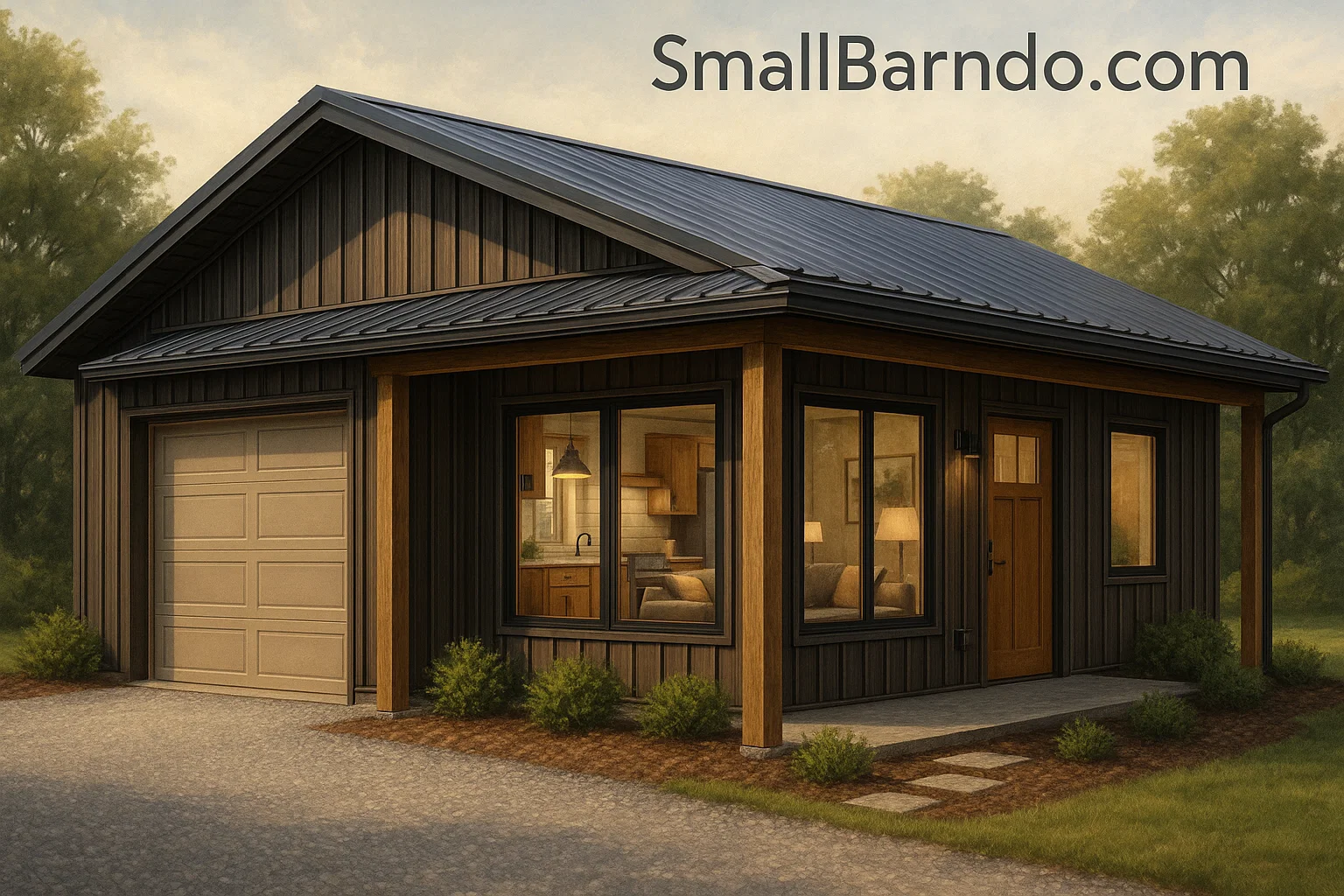
Smart Small Pole Building Homes: The Complete Cost Breakdown for 2026
There’s a quiet revolution happening in home construction, driven by a yearning for affordability, efficiency, and a connection to simpler living. Perhaps you’ve spent years scrolling through endless listings for traditional homes, watching the price tags climb higher and higher. You dream of a custom-built space, a home that’s perfectly sized, smart, and doesn’t anchor you to a 30-year mortgage that feels like an impossible burden.
This feeling of seeking a smarter path is what leads many to discover the compelling potential of small pole building homes (also known as post-frame construction homes). These aren’t your grandfather’s drafty barns; they are structurally robust, highly customizable, and crucially for 2026, a significantly more cost-effective alternative to traditional stick-built housing.
If your goal is to dramatically cut construction costs without compromising on modern quality or smart features, you’ve arrived at the right blueprint. Forget vague estimates. This comprehensive 2,000+ word guide breaks down the complete cost you can expect to build a finished, smart pole building home in 2026, revealing every expense from the groundwork to the final smart-home flourish. Your journey to owning an affordable, custom-designed property starts with understanding the numbers.
Table of Contents
The Pole Barn Home Cost Per Square Foot in 2026: Shell vs. Turnkey
The first, and most important, step in budgeting your project is understanding the wide price range within the industry. The cost to build a small pole building home can vary dramatically based on the level of completion you choose. Do you plan to finish the interior yourself (DIY), or are you looking for a move-in-ready, turnkey solution? This decision will be the single largest factor in your final expenses.
The Current Price Landscape for Finished Pole Building Homes
To set realistic expectations for your small home, you must distinguish between the low-end, fully DIY shell and the high-end, custom-finished structure. The finished, livable cost for a pole building home typically falls between $50 to $150 per square foot in 2026. This range offers a stark contrast to the average conventional stick-built home, which often demands $180 to $280+ per square foot.
- Low-End (~ $50/sq ft.): Primarily utilizes a DIY approach for the interior, with basic fixtures, minimal smart-home tech, and simple finishes like polished concrete floors.
- Mid-Range (~ $80 – $120/sq ft.): Represents a balanced approach, incorporating professional shell assembly, professional utility installation, and mid-grade interior materials (e.g., laminate flooring, quality cabinetry, mid-efficiency HVAC).
- High-End (~ $150+/sq. ft.): Includes a full general contractor management fee, custom interior layouts (e.g., lofts, vaulted ceilings), premium finishes (e.g., hardwood, granite), and extensive smart home integration.
Small Pole Barn Home Examples (Finished Cost Estimates)
The smaller the footprint, the more economical your build becomes.
| Dimensions | Approximate Square Footage | Total Finished Cost (Range: $50 – $150/sq. ft.) |
| 25′ x 40′ | 1,000 sq. ft. | $50,000 – $150,000 |
| 30′ x 40′ | 1,200 sq. ft. | $60,000 – $180,000 |
| 30′ x 50′ | 1,500 sq. ft. | $75,000 – $225,000 |
Limitation of Data: These figures are crucial for initial budgeting but serve as national averages. Your final price can fluctuate significantly based on local labor rates, material availability, and the complexity of your chosen design. Always seek local quotes early in your planning process.
Cost Comparison: Pole Barn Shell vs. Turnkey Finish
The key to maximizing your savings lies in the structural advantage the shell.
| Build Stage | Cost Per Square Foot (2026 Estimate) | What’s Included |
| Shell Only (Kit + Assembly) | $15 – $40 | Framing, trusses, exterior metal roofing/siding, exterior doors, and windows. This is the dried-in exterior structure. |
| Interior Finishing (DIY/Labor) | $35 – $110 | Site preparation, concrete slab foundation, utility hookups, insulation, drywall, flooring, lighting, kitchen/bath installation, and fixtures. |
| Turnkey Pole Barn Home | $50 – $150 | A fully livable home, from ground-breaking to move-in day (excluding the price of the land itself). |
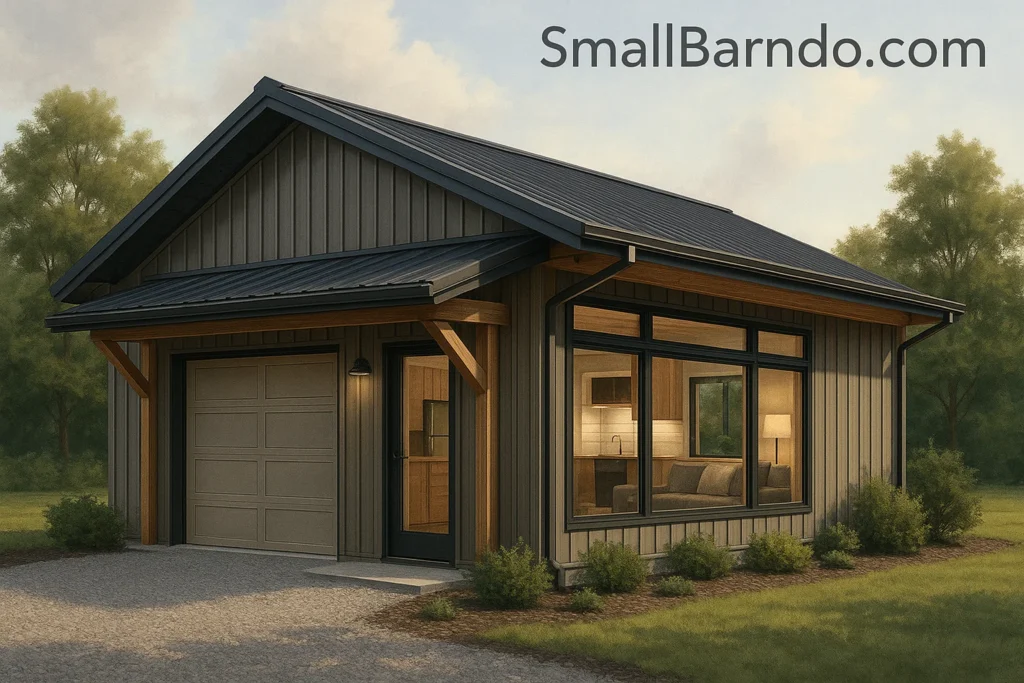
The Fundamental Breakdown: Non-Negotiable Upfront Costs
Before the first post is set, you need to budget for the site and foundation. These initial expenses are often the same, or at least comparable, to traditional builds, meaning they limit the total savings of a pole barn home compared to a conventional house.
Land Acquisition and Site Preparation (The Hidden Cost)
If you don’t already own the property, the land cost will be your most expensive single item. The national average cost of residential land is roughly $110,000 per acre, though this is highly location-dependent; a parcel in a rural area will be dramatically less expensive than one near a metropolitan center.
- Site Work & Grading (A Major Cost Driver): The state of your land is critical. You must prepare it for building.
- Land Clearing: For an average site, expect $1,200 to $3,700 for clearing trees, brush, and debris.
- Excavation/Grading: This averages from $0.40 to $2.00 per square foot. If your terrain is rocky, heavily sloped, or has poor soil quality, this cost can quickly rise to $8,000 or more.
- Permits, Plans, and Surveys: Don’t overlook the bureaucratic hurdles. Building permits alone can cost $500 to $2,000. Custom blueprints, if you are not using a standard kit plan, will add another $2,000 to $20,000+.
The Post-Frame Foundation Advantage
One of the largest inherent cost-saving benefits of post-frame construction is the simplified foundation.
- Pole Barn Foundation: This construction style eliminates the need for an expensive, continuous concrete perimeter foundation required by stick-built homes. Instead, the load-bearing vertical posts are embedded directly into the ground (often resting on a concrete footing or pier), which saves significantly on concrete, material, and labor.
- Concrete Slab Flooring: While the pole structure is set, you still need a floor. Pouring a 4-inch concrete slab for the main interior floor typically costs $5 to $14 per square foot. This must be accounted for in addition to the post footings.
- Comparison Exception: Basements: Adding a full basement to a pole barn home is generally not recommended purely for cost reasons. It defeats the cost-saving nature of the post-frame foundation and requires intensive excavation and a continuous foundation wall, adding an extra $40,000 to over $60,000 to the total budget. If you must have a basement, the cost gap between a pole barn and a traditional home narrows substantially.
Utility and Infrastructure: Connecting Your Smart Small Pole Building Home
A house isn’t a home without power, water, and climate control. These costs are often fixed regardless of the structure type; they are determined by the distance to existing infrastructure.
Essential Utility Hook-Up Costs
Running utilities on vacant land can be a major expense, especially if your property is remote. You should budget for a wide range of $9,000 to $34,500+ for the complete connection package, depending on location and distance.
- Electrical Installation:
- Service & Wiring: Budget for approximately $20,000 for service installation, full interior wiring, and a modern panel box. Distance from the main utility pole is a massive variable; you may pay $5 to $15 per linear foot to run new lines.
- Smart Integration: Wiring for smart security systems, energy monitoring, and automated lighting adds complexity and cost to the electrical package, but delivers long-term savings and convenience.
- Plumbing & Water/Sewer:
- Pipes & Fixtures: Rough-in plumbing alone can range from $2,300 to $5,100. Choosing high-end fixtures (sinks, shower heads, toilets) or complex layouts increases this substantially.
- Septic System vs. City Sewer: If you are connecting to a municipal sewer system, the cost is typically $1,500 to $5,700. However, for rural properties requiring a new septic system, the average cost is around $6,000 to $11,500, depending on soil testing and local regulations. A new well can cost $5,000 to $10,000.
Insulation and Energy Efficiency for 2026
For a truly “smart” and comfortable pole building home, high-quality insulation is essential for long-term energy cost savings. The large open bays between the posts of a pole building offer a distinct advantage for thicker, more effective insulation compared to the narrow 2×4 or 2×6 cavities of a stick-built home.
- Insulation Types and Cost Impact:
- Batt Insulation (Affordable): Good, basic R-value and suitable for walls.
- Spray Foam (Premium): Offers the highest R-value and creates an excellent air seal, though the upfront cost is higher. Investing in spray foam pays dividends by reducing the long-term load on your HVAC system.
- Cost Range: Insulation generally costs $1 to $3 per square foot for material alone, but the full installation and interior wall finishing can add an additional $10–$30 per square foot to the finished interior.
Interior Finishing: Where “Small” Becomes “Smart” and Costs Accrue
This is the phase where you transform a metal shell into your custom, functional living space. The quality, material choices, and labor costs for interior finishing will consume the largest percentage of your budget and directly dictate where your final price falls within the $50 to $150 per square foot range.
Essential Interior Finishing Costs (The Bulk of the Budget)
Finishing the interior typically costs $35 to $110 per square foot, covering everything inside the shell.
- Wall Systems: You must frame interior walls around the embedded posts to create rooms. This includes lumber, drywall, and paint.
- Flooring:
- Basic Concrete Polish: The most economical option if you poured a slab, keeping costs minimal.
- Mid-Range (Laminate/Vinyl Plank): Expect $5 – $10 per sq. ft. installed.
- High-End (Hardwood/Tile): Expect $10 – $15+ per sq. ft. installed.
- Kitchen & Bathrooms: These areas are always the most expensive per square foot. A high-quality, custom kitchen (cabinets, countertops, appliances) can easily cost upwards of $15,000 to $30,000 for a small home.
- HVAC System: Installation of a full heating and cooling system is a significant line item. A mid-range system will cost around $10,000 to $15,000, while a high-efficiency geothermal or heat pump system will cost more upfront but deliver substantial energy savings for your smart home long-term.
The Smart Home & Custom Feature Multiplier
Adding modern amenities and custom features is what moves your house from a basic structure to a truly optimized living space.
- Lofts/Mezzanines: A common strategy to maximize square footage in a small pole building home. Adding a loft floor can add $10 to $20 per square foot of the lofted area to your overall cost, but it’s much cheaper than adding a full second story.
- Porches or Overhangs: Functional outdoor space is key to small-home living. A covered porch or entryway can add $5 to $15 per square foot of the covered area.
- High-End Doors/Windows: Energy-efficient, custom-sized windows, and highly insulated main doors are a wise investment. They will be more expensive than basic contractor-grade options but will dramatically improve your thermal envelope and reduce long-term energy consumption.
Comprehensive Cost Comparison: Pole Building Home vs. Traditional Home
H3: Why Small Pole Building Homes Save You Money
The significant cost savings of a small pole building home stem almost entirely from the structural framing and foundation simplicity:
- Simplified Foundation: The post-in-ground structure requires less concrete and less intensive excavation than the footer and continuous wall foundation of a stick-built home. Savings on the foundation alone can be substantial.
- Efficient Framing: The large posts and trusses create wide, clear spans with fewer intermediate framing members, requiring less structural lumber than a stick-built home of the same size.
- Labor Speed: The shell construction is inherently faster due to the simpler post-frame structure, reducing total labor hours for the initial framing and dried-in stage. Recent industry data suggests post-frame shells can go up approximately 50% faster than traditional stick-frame builds.
| Category | Pole Building Home Cost (Per Sq. Ft.) | Traditional Home Cost (Per Sq. Ft.) | Savings Potential |
| Foundation/Framing (Shell) | $15 – $40 | $50 – $80 | High (Up to 50% less) |
| Finishing/Utilities (Identical) | $35 – $110 | $130 – $200 | Minimal to None |
| Total Finished Cost | $50 – $150 | $180 – $280 | Significant (Often 30% – 50% less) |
Exceptions and Limitations on Savings
It is important for you to be aware of where the savings end and costs converge with traditional building:
- Design Complexity: If your design features multiple complex rooflines, numerous offsets, and requires custom-sized components, the cost savings become less pronounced. The simpler the rectangle, the greater the savings.
- High-End Finishes: Choosing premium finishes (e.g., European appliances, custom tile work) inflates the cost of any home, negating the savings achieved on the shell. If you opt for luxury finishes, you will be in the top range of the $150 per square foot estimate.
- Location: In highly urbanized areas, the availability of specialized post-frame builders may be limited, and high labor costs will erode your savings.
(FAQ) About Small Pole Building Homes
This section addresses the most common financial inquiries to help you finalize your budget.
Q: What is the average total cost to build a finished 1,200 sq. ft. small pole building home?
A: Based on current 2026 estimates of $50 to $150 per square foot, the total average cost for a finished 1,200 sq. ft. small pole building home would be between $60,000 and $180,000, assuming standard finishes. This figure excludes the cost of acquiring the land.
Q: Is it cheaper to build a pole barn home kit or hire a general contractor for the entire build?
A: Building a pole barn home using a pre-designed kit and completing the interior finish yourself (DIY) offers the largest potential cost savings, as you eliminate the contractor’s project management fee (typically 10-20% of the total cost). However, hiring a general contractor for a “turnkey” solution provides professional management, faster completion, and guaranteed quality, which is often worth the added expense for those who lack construction experience or time.
Q: How much does a pole barn home cost per square foot for the shell only?
A: The shell structure, including the kit materials, delivery, and professional assembly, typically costs in the range of $15 to $40 per square foot. This is the core structural element that delivers the most dramatic savings compared to stick-built framing.
Q: What is the estimated cost of utility hook-ups for a new pole barn home on vacant land?
A: The cost is highly variable, but you should budget a substantial amount. For vacant land that requires both a new well/septic system and electrical service extension, the total cost for utility hook-ups can range from $9,000 to over $34,500, depending on the distance to existing infrastructure and the complexity of the required systems.
Conclusion: A Smart Investment in Your Future
The decision to build a small pole building home is more than a construction choice, it’s a financial and philosophical statement rooted in independence and smart design. You now possess the comprehensive cost breakdown for 2026, from the foundational savings of the post-frame structure to the budgetary impact of modern, smart finishes.
By leveraging the structural efficiency of the pole barn, your project can be realized at a cost significantly below that of a conventional home, providing you with the financial flexibility to invest in the quality insulation, energy-efficient systems, and custom features that will make your modest footprint feel like a luxurious, future-ready haven. It’s an investment in a smarter, more sustainable way of living.