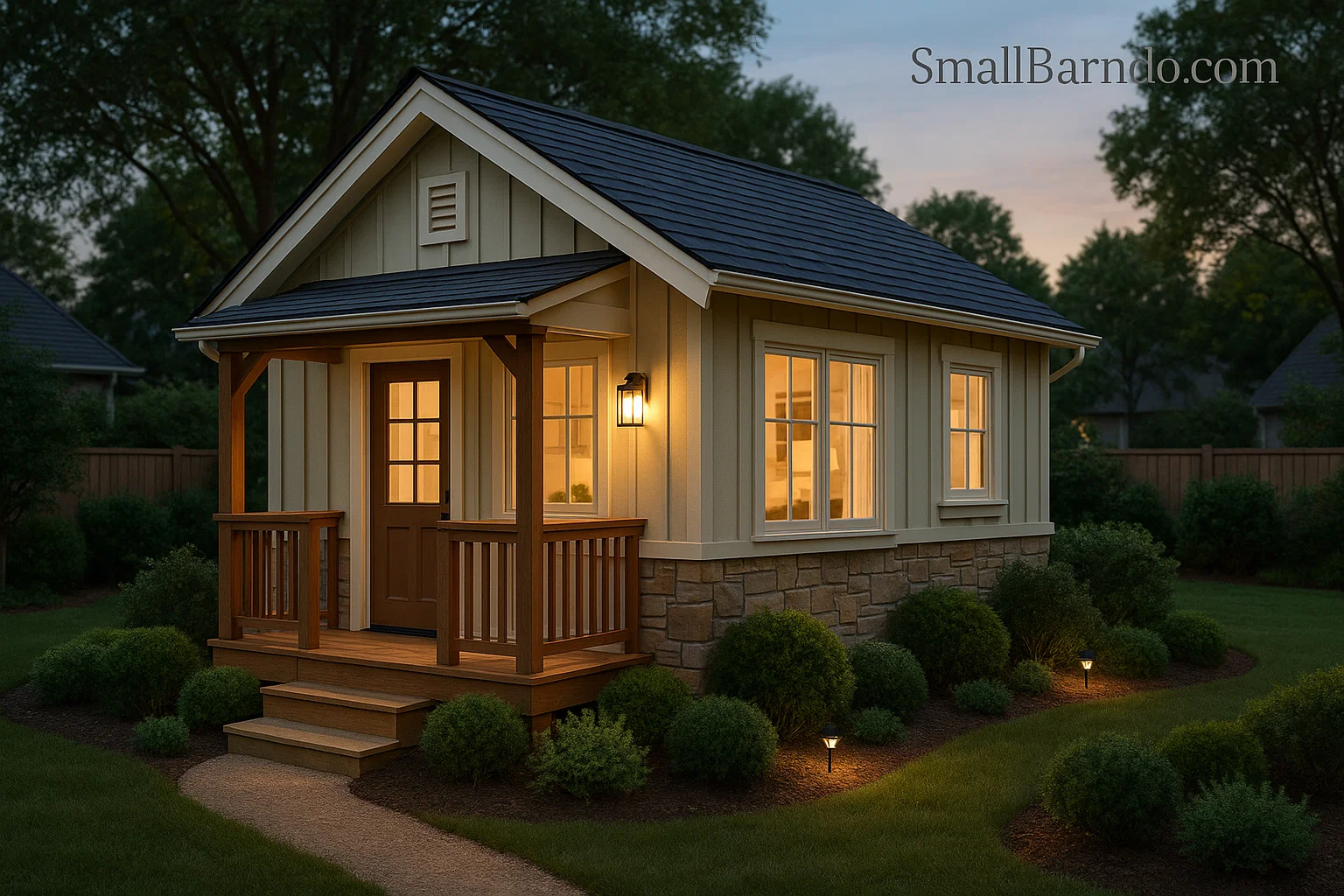
The Superior Granny Pod House Guide: Costs, Safety Features, and Zoning Laws
For many of us, the decision of how to care for an aging parent or loved one is a profound, emotionally charged one. You face a choice between the comfort of home and the necessity of care. The thought of moving them into an unfamiliar, institutional facility can feel heartbreaking, yet the reality of providing round-the-clock, intensive caregiving in your main house can quickly become overwhelming, draining both your time and your finances.
This is precisely where the granny pod house, also known by its official planning name, an Accessory Dwelling Unit (ADU), or affectionately, an “elder cottage,” emerges as a compassionate, practical, and truly modern solution. It’s about preserving the dignity and fostering the independence of your loved one, while keeping the family bond strong, secure, and easily accessible within the boundaries of your own backyard. This comprehensive guide will meticulously walk you through the financial realities, the essential, cutting-edge safety technology, and the complex legal landscape you must successfully navigate to build your own granny pod house. Your journey to creating a safe, proximate, and financially sensible home for your loved one begins here.
Table of Contents
Understanding the Granny Pod House: A Modern ADU Solution
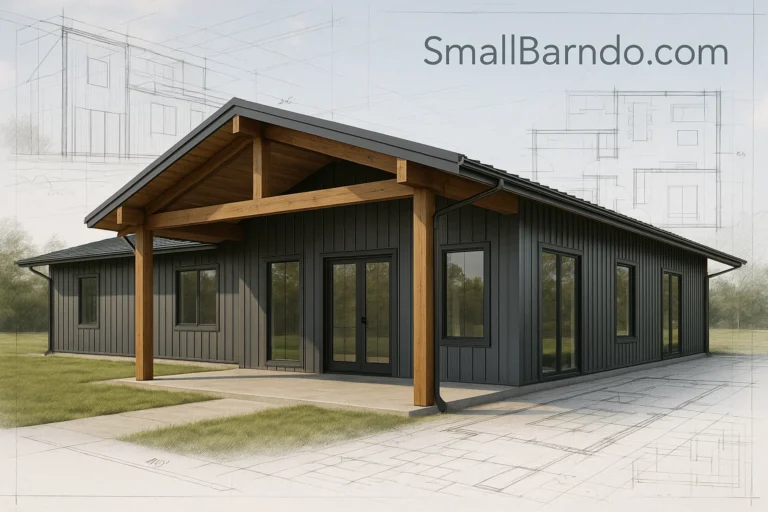
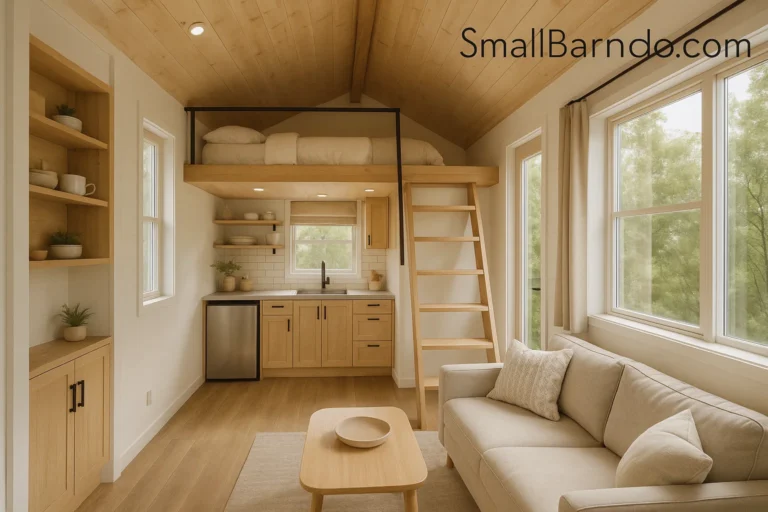
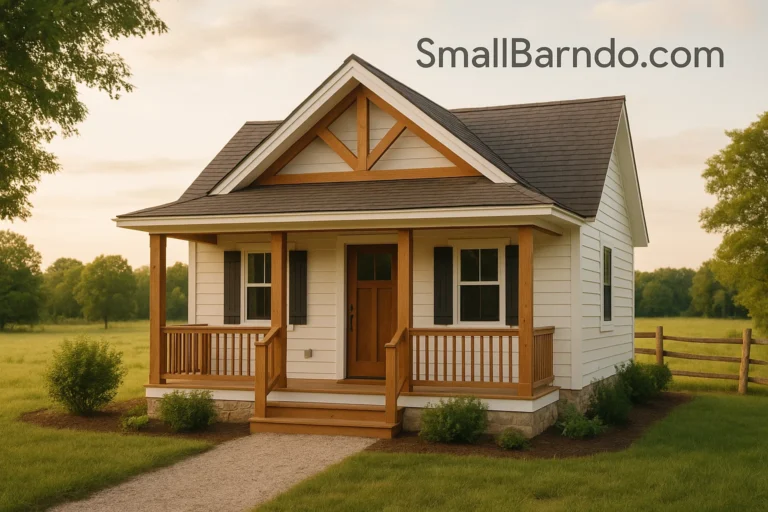
Before you begin the planning process, you must first fully grasp what a granny pod house is and what it is not. At its core, it is a small, self-contained living structure that is legally secondary to the primary residence on a single lot. Unlike a typical guest house, these units are specifically designed and built with the unique needs of an aging or mobility-impaired resident in mind.
The core philosophy is centered on aging-in-place, providing your loved one with true independence and a fully-equipped home, all while retaining the priceless security of being mere steps away from family caregivers.
- Key Characteristics of a Granny Pod:
- Size: Generally small, ranging from basic studio models (around 250 to 400 square feet) up to comfortable one- or two-bedroom layouts (up to 800 or 900 square feet), depending heavily on local zoning rules.
- Self-Contained: Must include a separate bathroom, cooking facilities (kitchenette or full kitchen), and a living area, functioning as a complete, independent home.
- Focus: Unlike a typical guest house, the design prioritizes accessibility, safety, and health-monitoring technology above all else.
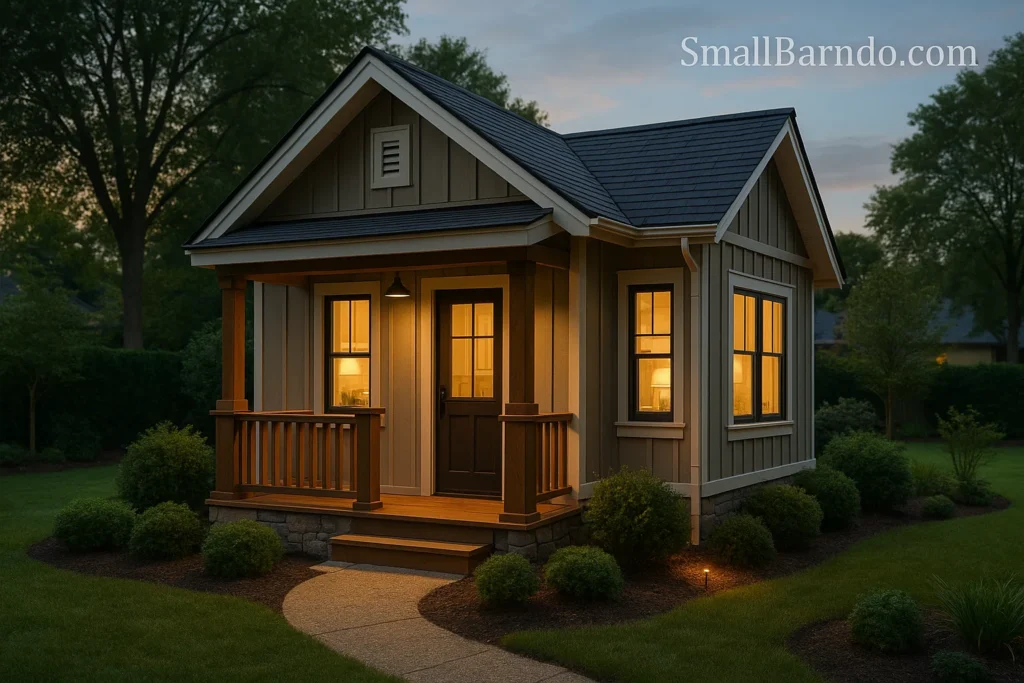
Granny Pod vs. Traditional Housing Alternatives: A Critical Comparison
When considering a granny pod house, you are often weighing it against two primary alternatives for long-term care: institutional living and full-time in-home care within your primary residence. Understanding these differences is key to making the best choice for your family.
The financial and emotional calculus heavily favors the backyard solution over the long haul.
| Feature | Granny Pod House (ADU) | Assisted Living Facility | In-Home Care (Main House) |
| Independence/Privacy | High Separate, private unit with total control over daily life. | Medium Private room, but highly scheduled and communal setting. | Highest Located in your backyard, with immediate response capability. |
| Proximity to Family | Highly designed specifically for the senior’s current and future needs (e.g., specific medical equipment). | Low Off-site, requires travel for all visits. | Highest Immediate contact, though proximity can be too close. |
| Customization | Highly designed specifically for the seniors’ current and future needs (e.g., specific medical equipment). | Low Standardized rooms/layouts with limited personal modification. | Medium Limited by the main house’s existing structure and layout. |
| Average Monthly Cost | Low (After initial build is paid off, only running costs remain). | High (Typically $\$4,000$ to $\$6,000$+ per month). | Variable (Costs of professional caregivers/staff, can be high). |
The Long-Term Economic Advantage
The initial investment in a granny pod house is substantial, but you must look beyond the upfront cost. The national median monthly cost of assisted living is approximately $\$4,000-\$6,000$ per month. Over five years, that is $\$240,000$ to $\$360,000$ purely an expense. In contrast, a granny pod’s one-time cost of $\$150,000$ to $\$200,000$ is an investment that increases your property value and eliminates those massive, recurring monthly fees. You are trading an ongoing liability for a permanent asset.
The Financial Landscape: Granny Pod House Costs and ROI
Financing your granny pod house requires a detailed, multi-layered approach. The total cost is composed of more than just the building itself; site work and compliance can often account for a significant portion of your budget.
Breakdown of Granny Pod Construction Costs
Your choice between a modular/prefabricated unit and a custom-built unit will be the single greatest determinant of your overall budget and timeline.
1. Prefabricated/Modular Granny Pods
- The Unit Cost: These units are built in a factory setting and then transported to your site for final assembly. You can expect a price range of roughly $70,000 to $150,000 for a basic, feature-rich shell.
- Pros: Significantly faster build time (often 2-4 months after permits), higher consistency in quality, and inclusion of many accessibility features upfront.
- Cons: Limited customization in design and materials; you must work within the manufacturer’s floor plans.
2. Custom/Site-Built Granny Pods
- The Unit Cost: These are built from the ground up on your property, like a traditional home addition. Costs can range from $120,000 to over $250,000, depending on the size, complexity of the design, and the quality of finishes you select.
- Pros: Full customization for layout, aesthetics, and specific medical needs; maximizes space on uniquely shaped lots.
- Cons: Much longer construction time (6-12 months or more), higher potential for unforeseen site and labor costs.
The Unforeseen Costs (Do Not Overlook These)
When budgeting for your granny pod house, it is a critical error to focus only on the shell price. The following costs can easily add $30,000 to $60,000+ to your final bill:
- Foundation & Site Work: Pouring a concrete slab, leveling the site, and ensuring proper drainage. (Estimate: $\$5,000$ – $\$20,000$).
- Utility Connections (The Big Variable): Extending electrical, water, sewer, and gas lines from the main house to the ADU. If the distance is significant or if your existing main utility lines need upgrading to handle the extra load, this can be extremely costly. (Estimate: $\$10,000$ – $\$40,000$).
- Permits, Fees, and Inspections: Local municipal fees, engineering reviews, and mandatory inspections. (Estimate: $\$1,000$ – $\$8,000$).
- Landscaping and Access: Creating an accessible, non-slip pathway (e.g., concrete or pavers) between the two dwellings, including any necessary ramping.
Financing and Maximizing Long-Term Value
Securing the upfront capital can be the biggest hurdle. Consider these options:
- Financing Options: Home Equity Lines of Credit (HELOCs) or Home Equity Loans are common due to low-interest rates. ADU-specific construction loans are also becoming increasingly available through lenders familiar with the burgeoning tiny home market.
- Investment Return: A well-designed, permitted ADU is generally seen as a significant value-add to your property. It provides immediate utility as a care solution and long-term utility as a rental unit or guest house. While market conditions vary, you can typically expect a strong return on investment (ROI) that partially or fully offsets the initial building cost upon resale.
Essential Safety Features and Design for a Senior-Friendly Granny Pod
A truly superior granny pod house is defined by its commitment to safety, accessibility, and technology. The goal is to maximize independence by minimizing physical hazards and integrating non-intrusive monitoring.
Universal Design and Accessibility Requirements
Designing the ADU using universal design principles ensures the unit is functional not just now, but as your loved one’s needs evolve. You must design for a future where mobility aids (walkers, wheelchairs) are necessary.
- The Foundation of Access:
- Zero-Step Entry: No steps or thresholds at any exterior door to prevent trips and allow seamless access for wheelchairs.
- Wider Doorways and Hallways: Doorways should be at least 36 inches wide, and hallways a minimum of 42 inches wide, easily accommodating mobility devices.
- Single-Level Floor Plan: Eliminate stairs entirely.
- The Safe Bathroom (Highest Priority):
- Roll-In Shower: A zero-threshold shower with a bench seat and an adjustable, handheld shower fixture is non-negotiable.
- Grab Bars: Strategically placed, securely anchored grab bars in the shower and next to the comfort-height toilet.
- Non-Slip Flooring: Use slip-resistant tile or waterproof vinyl in the bathroom and throughout the unit.
- Kitchen Modifications:
- Pull-Out Shelving: Drawers or low-cabinet pull-outs are easier to access than reaching into deep wall cabinets.
- Induction Cooktops: These use magnetism to heat the pot directly, making them safer than gas or electric coils because the surrounding surface stays relatively cool, reducing burn risk.
High-Tech Health and Monitoring Systems
The integration of smart technology is what truly separates a modern granny pod house from a basic apartment. These systems provide you with peace of mind without stripping your loved one of their privacy.
- Virtual Caregiver Technology:
- Voice-Activated Controls: Smart hubs (like Amazon Echo or Google Home) allow your loved one to control lights, climate (thermostat), and media (TV) using voice commands, crucial for those with limited mobility or dexterity.
- Two-Way Intercom/Video: A reliable system linking the pod to your main house for instant communication.
- Automated Medication Management: Smart dispensers that organize and dispense medication at the correct times, automatically alerting you if a dose is missed.
- Advanced Safety Monitoring (Passive Systems):
- Fall Detection Sensors: These are not cameras, but passive sensors (often pressure or radar) placed discreetly in the living space that can detect the signature of a fall and automatically alert you or an emergency service.
- Wearable Vitals Trackers: Devices that monitor heart rate, sleep patterns, and activity levels, flagging significant changes to a medical professional or family caregiver.
- Ankle-Level Cameras (Exception/Condition): While often controversial, these can be installed in a limited capacity (e.g., in the living room only) to provide a non-invasive view that is specifically designed to detect a fall without showing full body or face images, adhering to privacy boundaries.
Navigating the Complexities of Granny Pod Zoning Laws and Permits
Building your granny pod house requires passing the most significant hurdle: the local zoning board. You must understand that building codes and zoning ordinances are hyper-local, varying drastically not just by state, but by county and city. This step is non-negotiable and requires meticulous research.
Understanding ADU Classifications and Local Regulations
Most municipalities treat a granny pod as an Accessory Dwelling Unit (ADU), but you may encounter other classifications.
Key Zoning Definitions
- Accessory Dwelling Unit (ADU): The standard, permanent classification. Due to housing crises, many states (like California, Oregon, and Massachusetts) have passed state-level laws that encourage ADU construction, overriding some restrictive local ordinances.
- Temporary Health Structures (THS): Less common, but sometimes available. This classification allows for a temporary structure to be placed on the property specifically for a medical necessity. The limitations of THS are significant: the unit must typically be removed within a short time (e.g., 60 days) after the impaired person no longer lives there, and proof of medical necessity is required.
Common Legal Hurdles & Restrictions You Will Face
- Size Limitations: Your local code will restrict the ADU’s maximum size, often limiting it to a maximum square footage (e.g., 800 sq. ft.) or a percentage of the main home’s living space.
- Setback Requirements: Strict rules mandate the minimum distance the unit must be placed from your property lines and the primary residence. These are crucial for fire safety and neighborhood aesthetics.
- Occupancy & Relationship Clauses (Exceptions and Conditions): Historically, many areas required the ADU resident to be a direct family member of the main homeowner. While many progressive areas now allow ADUs to be rented out to non-family members, you must verify your local code. The exception is that if the ADU is classified as a THS, it is only for the qualifying resident and cannot be used for any other purpose.
- Parking Requirements: Some older codes still mandate that an additional paved parking space must be created to accommodate the ADU.
The Permit and Approval Process
You must approach this process with patience and precision.
- Initial Consultation: Begin with your local Planning or Zoning Department. Do not start building before this step. Ask about current ADU/THS ordinances, setback rules, and the application fee schedule.
- Design and Engineering: Hire a contractor or architect familiar with local ADU building codes. They must ensure your plans meet all structural, safety, and energy efficiency requirements.
- Permit Submission: Submit your detailed plans and pay all necessary fees. Be prepared for several rounds of revisions.
- HOA Limitations: Be aware that even if the city permits your ADU, your Homeowner’s Association (HOA) may have separate, more restrictive covenants that prohibit accessory structures. You must obtain their written approval, which is a significant condition that can stop a project entirely.
(FAQ) About the Granny Pod House
Using the main keyword, the granny pod house, in key questions enhances search visibility and addresses immediate reader concerns.
- Q: Can a granny pod house be rented out to non-family members once my loved one no longer needs it?
- A: This is a key condition that depends entirely on the initial classification and zoning laws applied to your unit. If the unit was permitted as a standard, permanent ADU, it can usually be rented out for long-term income, turning a care expense into a revenue stream. However, if it was permitted as a Temporary Health Structure (THS) under a medical hardship exemption, it must be removed or cease to be occupied as a residential unit once the qualifying resident moves out or passes away. Always clarify the occupancy clause in your final permit.
- Q: How long should I budget for the entire process, including permits and construction?
- A: A realistic timeline for a prefabricated granny pod house is 6 to 10 months from the moment you submit plans to the final inspection. The permit process alone often takes 3-6 months. Custom-built units can extend this to 12 to 18 months, as site-built construction is slower than factory assembly. The limitations of information here are that permitting times vary wildly; some cities are ADU-friendly and fast-track applications, while others move at a glacial pace.
- Q: Will building a granny pod house significantly increase my property taxes?
- A: Yes. Since you are adding a permanent, habitable structure (the ADU) that increases the square footage of living space on your lot, your assessed property value will rise. This will, in turn, increase your annual property tax bill. It is highly advisable to consult your local tax assessor before construction begins to get a reliable projection of this increase, ensuring you can manage the long-term carrying costs.
Conclusion: The Future of Multigenerational Living
The decision to build a granny pod house is an investment in both your family’s future and your personal peace of mind. It is far more than a simple backyard structure; it represents an intelligent, compassionate intersection of real estate, technology, and caregiving.
By carefully considering the upfront costs, implementing superior safety and accessibility features, and meticulously navigating the necessary local zoning laws, you are choosing a powerful alternative to the immense financial and emotional toll of traditional long-term care. You are ensuring your loved ones can age with the comfort of retained independence and the priceless security of being just a few steps away. You are not just building a house; you are fortifying the heart of your home.